


 Monetization
Ireland Weighs Lifting 1999 Nuclear Ban as Data Centers Hit 23 Percent of National Power
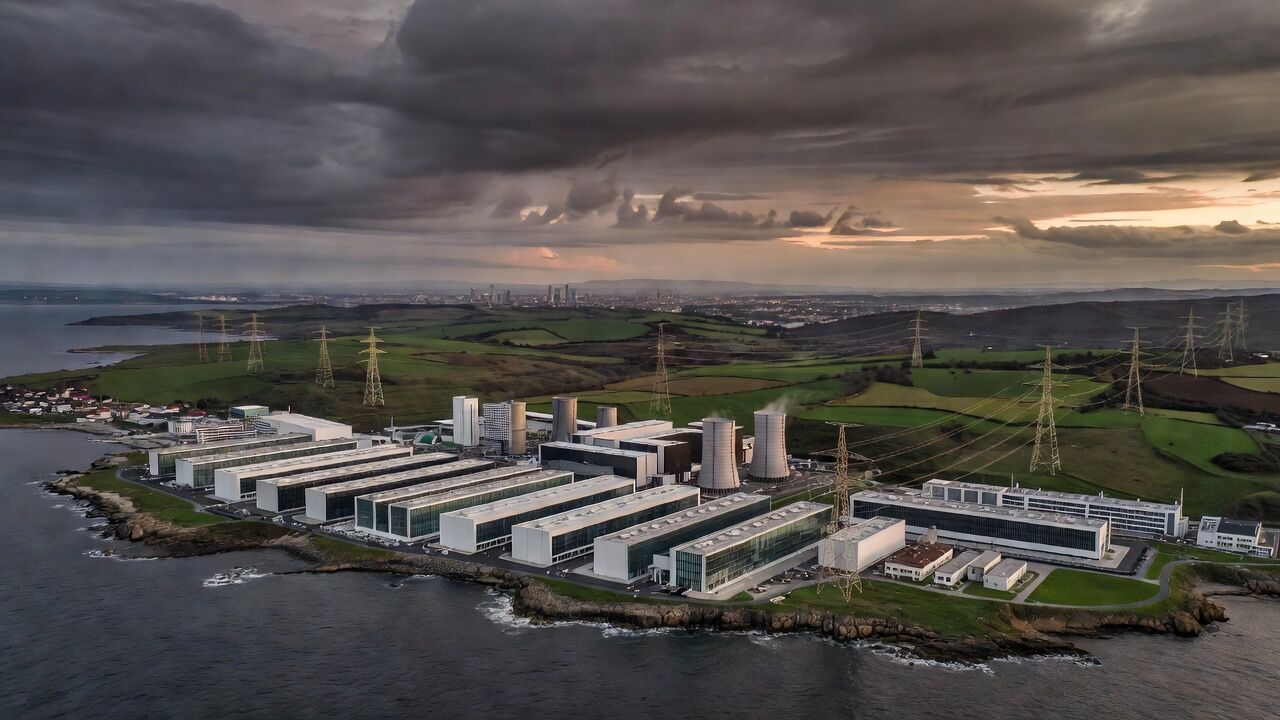
Ireland is about to have a fight it has avoided for 27 years, and the thing forcing the conversation is not a power plant, a grid upgrade, or a climate target. It is the data center. The country that banned nuclear fission electricity generation in 1999 is now openly debating whether to lift that ban, and the reason can be measured in a single number: data centers consumed 23 percent of Ireland's total metered electricity in 2025, up 518 percent since 2015, with more than 80 facilities now on the grid. That is roughly what every Irish household uses, combined. When your digital economy eats as much power as your entire residential population, the old rules stop working.
What the Bill Actually Does
The immediate trigger is a private member's bill from Fianna Fáil TD James O'Connor, the Electricity Regulation (Removal of Nuclear Fission Prohibitions) Bill 2026. It would repeal Section 18(6) of the 1999 Electricity Regulation Act, the provision that bans nuclear fission generation, along with the matching prohibition in the Planning and Development Act 2024. O'Connor frames it as a once-in-a-generation reset toward what he calls 'energy sovereignty,' arguing that domestic power demand is set to rise 45 percent over the next eight years and that Ireland cannot sit on a blanket ban while its grid runs out of headroom.
This is not a fringe position anymore. The Financial Times reported that Taoiseach Micheal Martin told a business dinner Ireland is 'open to that' when asked about nuclear, a marked shift from the official line last summer that nuclear was 'not on the table.' A government that spent a decade insisting the question was closed is now publicly leaving the door open. That is what a grid crisis does to political positions.
The 23 Percent Problem
Let me be blunt about the scale here, because most coverage buries the lede. Ireland is a small island with a big cloud presence. Those 80-plus data centers, concentrated heavily around Dublin, are now drawing nearly a quarter of the country's metered electricity. The load grew 518 percent in a decade. And the pipeline is not slowing down, because hyperscalers keep signing leases for capacity that the grid has not yet been built to serve.
The FT's own headline put the number even higher, at around 25 percent of national power. Different meters, different counting methods, same conclusion: Ireland has become the canary in the coal mine for what happens when an entire country's energy policy collides with AI-era computing demand. Every other government watching hyperscaler buildouts, from Virginia to Singapore to the Netherlands, should be taking notes, because this is their future too.
How Ireland Got Here
This did not happen overnight, and it did not happen by accident. EirGrid, the transmission system operator, spent years warning that Dublin's grid was at its limit. New connections were effectively frozen in the greater Dublin area for the better part of three years, and the message to the industry was unambiguous: bring your own power or do not come at all.
The policy codified that. Under the Large Energy User Action Plan, or LEAP, any data center above 10 megawatts must now provide at least 80 percent of its energy demand through new onsite renewable generation and storage. That is a stunning requirement by global standards, and it has turned every new data center application in Ireland into a mini energy-infrastructure project. Developers who used to worry about cooling and connectivity now have to think like utilities. Power infrastructure has become the real cost of entry, and for a lot of applicants, that is the part that kills the deal.
The Nuclear Timetable Problem
Now here is where I put the skepticism on the table, because nuclear does not fix a 2026 problem on a 2026 timeline. The critics are not wrong, they are just stating the obvious. Hannah Daly, a sustainable energy professor at University College Cork, told the FT that 'nuclear is certainly not something that can address any of those challenges in the next 15 to 20 years.' Green Party leader Roderic O'Gorman calls it 'slow and expensive to implement.' Both of those statements are true.
Look at the real-world evidence. The Finnish plant at Olkiluoto 3, the modern conventional reactor that Irish officials have floated as a case study, was the definition of slow and expensive: more than a decade late and billions over its original budget. Small modular reactors sound better on paper, but they are not a commercial fleet yet, and the first wave of SMR projects is still years from producing serial power at scale. The Sustainable Energy Authority of Ireland is studying both SMRs and conventional plants, with a white paper due by the end of 2027. That is a report, not a reactor. Even in the most optimistic scenario, a decision in 2027 means shovels in the ground in the 2030s and power in the 2040s.
What This Means: Power Is the New Real Estate
So why does the debate matter if the timeline is so long? Because the signal is bigger than the schedule. Ireland reopening nuclear is the market's loudest possible confirmation that renewable buildout alone is not keeping pace with AI-driven demand, and that countries are now willing to break decades-old taboos to keep the data economy growing.
For hyperscalers and their investors, this is the real prize. Every serious data center operator in Europe is already jockeying for power purchase agreements, and the moment Ireland's legal door cracks open, the SMR vendor pitches and site scouting will move ahead of any actual legislation. A passing bill is worth billions in forward positioning, because the entities that lock up power options early will be the ones still building in 2030. The ones that wait will be the ones staring at eight-year interconnection queues.
For everyone else running infrastructure, the lesson is simpler and cheaper: power is the new real estate. The companies that treat energy procurement as a core engineering problem, not a utility bill, are the ones that will survive the buildout. The ones that assume the grid will simply scale with them are already behind.
What Comes Next
Watch the Dail. The O'Connor bill faces committee scrutiny and real Green Party opposition inside the coalition, and it may get stripped before any floor vote. But the political ground has already shifted, and that shift does not reverse easily. The SEAI white paper due by the end of 2027 is the concrete checkpoint: if it endorses SMRs on cost, expect operator memorandums of understanding and site deals to move fast.
Ireland's real decision is not whether to build a reactor. It is whether the country wants to stay in the data center business at all, and if it does, what it is willing to pay for the power to do it. Every other market facing the same squeeze should watch closely. The 1999 ban is dying. The question is what replaces it, and how many other grids hit the same wall before their own taboos come up for review.
— Allan Ali, Sylt.ing
 Turkish
 English
 Arabic
 French
 Spanish
 Portuguese
 Deutsch
 Dutch
Dutch
 Italiano
 Russian
 Romaian
 Portuguese (Brazil)
 Greek
Greek