


 Monetization
Silicon Valley Bet on the Wrong Backlash: The AI Fight Is About Power and Land
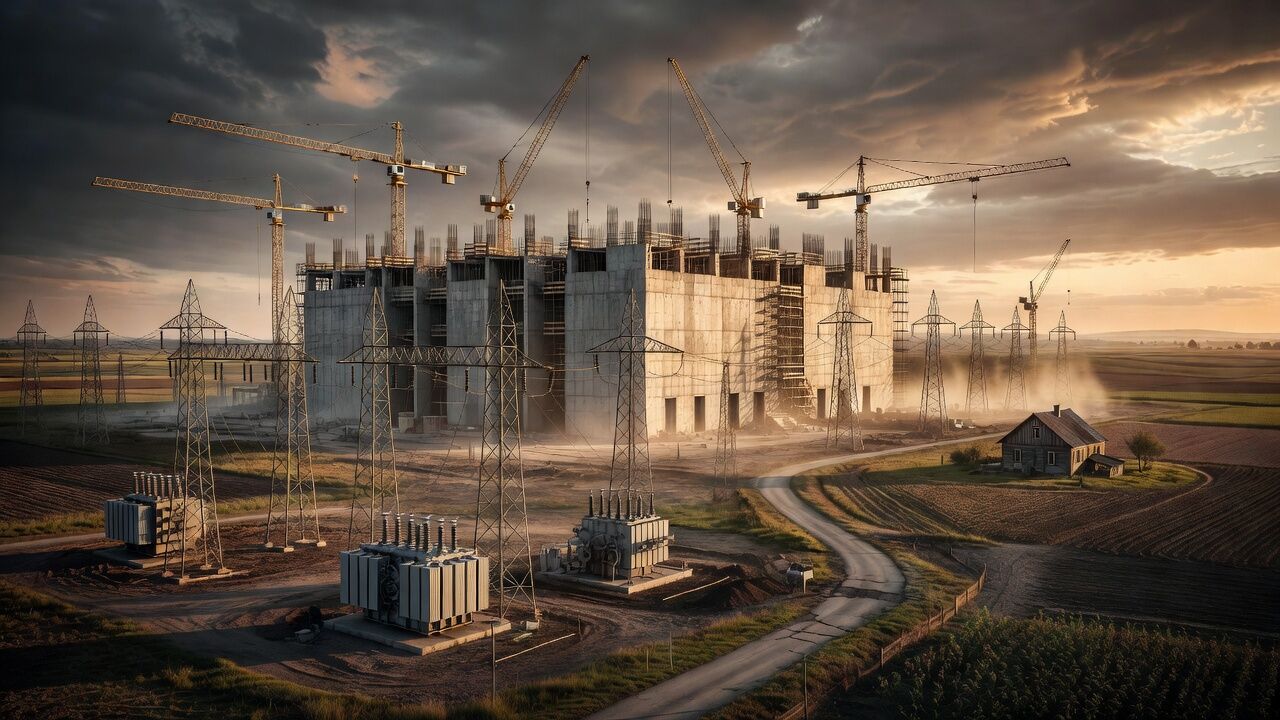
The Backlash Silicon Valley Didn't See Coming
Let's get one thing straight right out of the gate. The AI industry spent the last two years preparing for a very specific kind of public revolt. They hired comms teams to explain why the robots weren't going to take your job. They wrote white papers on existential risk and alignment. They braced for protests from white-collar workers worried about their jobs. And then Jasmine Sun went to Wisconsin and Michigan and found out the actual fight is about transformers, cooling towers, and the size of a concrete slab. The Bloomberg Odd Lots episode with Sun is the most grounded piece of AI analysis I have heard in months, precisely because it looks at the physical reality of what it takes to run this stuff. The industry predicted a robot apocalypse protest and got a transformer-and-water fight instead. That misread is going to cost them billions.
It Was Never About the Robots
Here is the fundamental error. Silicon Valley treats AI as a digital, ephemeral technology. You type a prompt, you get an answer, it lives in the cloud. But the cloud is a lie. It is a marketing term for a giant warehouse full of servers that draw more power than a small city. Sun's reporting makes it painfully clear that the real constraint on AI build-out is not capital. There is infinite money chasing this. The constraint is power, land, and the regulatory approvals to actually pour concrete. The industry thought the debate would be about the philosophical implications of artificial general intelligence. The public is asking a much simpler question: why is a fleet of diesel trucks driving past my kid's school to deliver generators for a building that employs twelve people? The backlash is not about the software. It is about the hardware. It is about the physical footprint that the SaaS boom never had. When you are shipping bits, nobody cares. When you are shipping megawatts, everybody cares.
The Trust Deficit Is the Real Story
Sun's on-the-ground finding is the one that should terrify every developer and every hyperscaler. The gap among anti-data-center activists was not about information. It was about trust. These communities have been through the industrial cycle before. They have seen promises of jobs and environmental stewardship evaporate at the ribbon-cutting, watched factories close, mines play out, and corporate landlords walk away from cleanup costs. So when a developer shows up with a slick deck about AI innovation and economic growth, locals hear the same pitch from the last three companies that left them holding the bag. You cannot message your way out of a trust deficit. You cannot put a friendly face on a history of broken promises. The industry keeps explaining AI's benefits to people who aren't asking about AI. They are asking about the water table, the noise at 2 AM, and whether the property tax abatement is actually going to pay for the school repairs. Until the industry understands that this is a relationship problem, not a communications problem, they will keep losing.
Property Taxes Yes, Jobs No
Let's talk about the developer pitch, because it is weak. The main selling point is property taxes. Look at Loudoun County, Virginia. Data centers fund a massive share of public services there, and that is a real benefit. But here is the problem. The jobs pitch is a joke. Construction creates temporary work, sure. But the permanent operational headcount for a data center is tiny. Sun compares it to a solar farm, and that is the right analogy. You get a few dozen people to monitor the systems, and that is it. So the community absorbs the traffic, the noise, the grid strain, and the water usage, and in exchange gets a tax bill that helps the county budget but does nothing for the local labor market. The abstract AI is impossible to sell. Sun heard residents asking why their community should take the hit of a giant data center in order to produce some coding agents that help people in San Francisco. That is the question that kills the deal. You cannot justify a physical imposition on a community with a product that has no physical presence for them. The tax revenue is real, but it is not enough to overcome the sense that they are being used as a utility for someone else's profit.
Why NIMBY Went Bipartisan
This is the part that should worry the industry the most. Data centers are becoming a rare bipartisan issue. You have New York Governor Kathy Hochul implementing a moratorium on new data center construction. You have Texas Governor Greg Abbott announcing curbs on state development. That is not a red state versus blue state thing. That is a 'nobody wants this in their backyard' thing. NIMBY is intensifying on both sides of the political spectrum, and it is unifying people who agree on nothing else. The environmental left hates the water usage and the carbon footprint. The fiscal conservative right hates the subsidies and the lack of permanent jobs. The local resident just hates the noise and the trucks. When you can get Hochul and Abbott on the same side of an issue, you have a structural problem, not a PR problem. The industry assumed the political fight would be about the future of work or the dangers of superintelligence. Instead, it is about land use. And land use is the most local, most emotional, most intractable political issue there is. You cannot spin your way out of a zoning board meeting.
What This Means: Power Is Shifting to the Locals
Here is the shift that matters. The power dynamics are changing. Communities are realizing they do not need to hand out excessive tax subsidies to get a data center. They are starting to understand that the developer needs them more than they need the developer. The capital is chasing the power, and the power is controlled by local boards and county commissions. Sun's reporting highlights that NDAs in data center deals breed distrust. When a developer refuses to say who the tenant is, or what the actual power draw will be, the community assumes the worst. And they are usually right. The focus is moving to tangible community benefits and transparency. That means actual commitments to water recycling, to grid upgrades that benefit the town, to workforce training that leads to permanent jobs, not just construction gigs. The days of the developer showing up with a check and a non-disclosure agreement are over. The locals have the leverage now, and they are starting to use it. This is what happens when an industry that thinks in datacenter racks forgets there are people, counties, and a grid outside the fence.
What Comes Next
The AI build-out will be decided by local boards, not model benchmarks. That is the takeaway from this episode, and it is the reality that every hyperscaler needs to internalize. The next frontier is not a better GPU. It is a better relationship with a county planning commission in rural Michigan. The winners will show up early, drop the NDAs, and make legally binding commitments to the community. The losers will keep treating this as a purely technical problem. The physical footprint of AI is the story. The backlash is not about the robots. It is about the transformers. And the industry is only now waking up to that fact. The smart money is on the developers who understand that the grid is the bottleneck, the trust is the currency, and the local zoning board is the real regulator. Everything else is just noise.
— Allan Ali, Sylt.ing
 Russian
 English
 Arabic
 French
 Spanish
 Portuguese
 Deutsch
 Turkish
 Dutch
Dutch
 Italiano
 Romaian
 Portuguese (Brazil)
 Greek
Greek