
 Monetization
China Just Stepped on the World Stage and Declared AI Is Everyone's Game
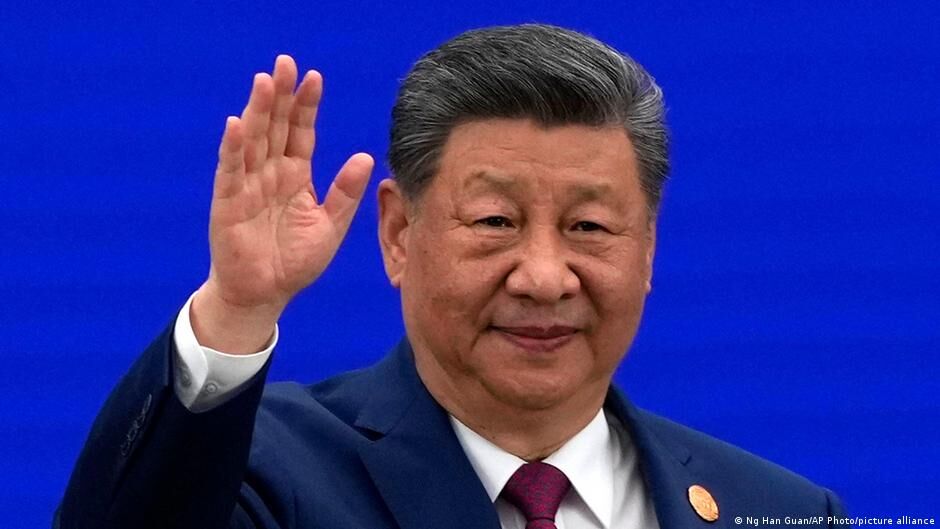
China Just Stepped on the World Stage and Declared AI Is Everyone's Game
Shanghai is absolutely buzzing right now, and not just because it's July. The 2026 World Artificial Intelligence Conference — WAIC 2026 — kicked off today, and folks, it's not your typical tech conference. This is a statement.
For the first time in the event's nine-year history, Chinese President Xi Jinping took the stage for a keynote address. And he didn't come to play nice — he came to draw a line in the sand. The message? AI is not America's game. It's not China's game. It belongs to everyone.
But let's be real for a second. When a sitting president shows up to a tech conference for the first time ever and starts talking about "international cooperation," you can bet there's more happening beneath the surface. A lot more.
The Quote That Cut Through the Noise
Xi said something today that I can't stop thinking about. He stood at the podium and told the room that artificial intelligence "should not be a solo performance by a single country, but a symphony of international cooperation."
Now, I love a good metaphor as much as the next person. But here's what that line really means: China is positioning itself as the patron of open, shared AI development. The alternative being the current US-led approach of export controls, chip bans, and closed-door frontier labs.
And the timing? Impeccable. This speech came just hours after Donald Trump accused China of what he called the "largest compromise of election data in history." So Xi is standing in Shanghai, in front of global leaders and the UN Secretary-General, talking about openness and cooperation while the other side is pointing fingers. The optics are deliberate, and they're powerful.
Xi also called for what he described as a "people-centered" approach to AI — making sure the technology serves humanity rather than the other way around. And he warned against creating what he called "new historical injustices" in the AI age. Translation: don't let the rich countries run away with this while the rest of the world gets left behind.
29 Countries, One Vision: The World AI Cooperation Organization
This might be the biggest news coming out of WAIC that isn't getting enough attention. Twenty-nine countries have signed onto a new framework called the World AI Cooperation Organization — WAICO for short.
The goal is straightforward: give developing nations a real seat at the AI governance table. Because right now, the conversation about how AI should be regulated is happening mostly in Washington, Brussels, and Beijing. Everyone else is watching from the bleachers.
WAICO aims to change that. It's designed as a platform for international cooperation on AI safety, standards, and equitable access. And it comes with the backing of the United Nations — Antonio Guterres himself was in Shanghai, shaking hands and taking photos with Xi and other world leaders before the conference kicked off.
Guterres had his own sharp take: "The world cannot govern what it cannot understand." He's not wrong. If AI governance stays locked inside a handful of wealthy nations, we're setting ourselves up for a divided technological future. WAICO is an attempt to prevent that.
Whether it actually works — or becomes another bureaucratic talking shop — remains to be seen. But the intent is clear. China wants to lead the global conversation on AI governance, and it's building the institutions to do it.
Hardware Wars: Huawei's Atlas 950 Is the Star Nobody's Talking About Enough
Let's talk about the actual tech, because there's a monster hiding in plain sight at this conference. Huawei unveiled the Atlas 950 SuperPoD, a massive AI computing system packing 8,192 of its own Ascend chips.
This is a big deal. Why? Because the US has spent the last few years doing everything it can to cut China off from advanced AI chips — Nvidia's H100s and B200s, AMD's MI300s, you name it. The message was clear: if China wants to compete in AI, they'd have to build their own hardware stack.
Well, meet the answer. The Atlas 950 is Huawei's statement that they did exactly that. It's not just a flex — it's a signal that the Chinese AI supply chain is maturing faster than many in the West expected.
And it's not just Huawei. The conference is showcasing over 300 global product debuts across 100,000 square meters of exhibition space. We're talking the world's first AI agent phone, next-gen humanoid robots, cutting-edge AI models from Moonshot AI and MiniMax, and AI-powered everything — from manufacturing lines to medical diagnostics to smart city infrastructure.
Shanghai alone reported that its 394 major AI companies generated CNY637 billion in output last year — that's roughly $93.7 billion, up nearly 40 percent from the year before. The city has become an AI powerhouse, and WAIC is its annual victory lap.
The Geopolitical Elephant in the Exhibition Hall
I can't write about WAIC 2026 without addressing the context. This conference is happening at a moment when the US-China tech war is arguably hotter than it's ever been.
Export controls on AI chips. Tariffs on Chinese goods. Accusations of data breaches flying back and forth. And now, a Chinese president standing on a stage in Shanghai, calling for global AI cooperation while his country is being accused of election interference by the sitting US president.
The tension is real, and it's not going anywhere. But here's what I find interesting: while the US and EU are focused on restricting access, China is focused on building alternatives. Open-source AI models from Chinese labs like Moonshot, Alibaba's Qwen, and Baidu's Ernie are attracting global users — largely because they cost a fraction of what US frontier models charge.
When Xi talks about preventing "new historical injustices," he's tapping into a very real sentiment in the Global South. Developing countries don't want to be locked into expensive American AI subscriptions forever. They want options. And China is offering them.
That doesn't mean we should all start flying Chinese flags. There are legitimate concerns about data privacy, surveillance, and human rights that come with closer AI ties to Beijing. But pretending the current US-led model is the only path forward is naive. The world is bigger than Washington's vision for AI.
What This All Means for You
Here's where I land on all of this: WAIC 2026 matters because it marks a shift in how we talk about AI's future. For years, the narrative was simple — Silicon Valley builds, the rest of the world adopts. That era is ending.
What we're seeing now is a multipolar AI landscape taking shape. America has its frontier labs. China has its own ecosystem. Europe has its regulatory framework. And the Global South is starting to demand a seat at the table.
The question isn't whether AI will transform the world — that's already happening. The question is who gets to decide how it's built, who it serves, and who profits from it. WAIC 2026 is China's answer to that question, delivered with full diplomatic force.
Xi Jinping's first-ever WAIC keynote wasn't just a speech. It was a declaration that China intends to be a co-author of AI's rulebook, not just a reader. And whether you see that as an opportunity or a threat probably depends on where you're sitting.
But one thing is certain: the AI future is not going to be decided in one country. It's going to be a global conversation — messy, contested, and absolutely essential. And conferences like WAIC are where that conversation starts.
Stay informed. Stay skeptical. And pay attention to Shanghai this week — because the decisions being made there will affect the technology in your pocket for years to come.
— Jessica Sylting, Sylt.ing
===SUMMARY=== WAIC 2026 kicked off in Shanghai today with Xi Jinping delivering his first-ever keynote at the event, declaring AI "should not be a solo performance by a single country, but a symphony of international cooperation." Twenty-nine nations signed onto the World AI Cooperation Organization, Huawei debuted its 8,192-chip Atlas 950 SuperPoD, and over 300 products launched. With the US-China tech war intensifying, China is positioning itself as the champion of open, accessible AI for the developing world. Jessica breaks down what it all means and why you should care. English
 Arabic
 French
 Spanish
 Portuguese
 Deutsch
 Turkish
 Dutch
Dutch
 Italiano
 Russian
 Romaian
 Portuguese (Brazil)
 Greek
Greek