


 Monetization
AI-Powered Design Tools Are Putting Professional Results Within Everyone's Reach
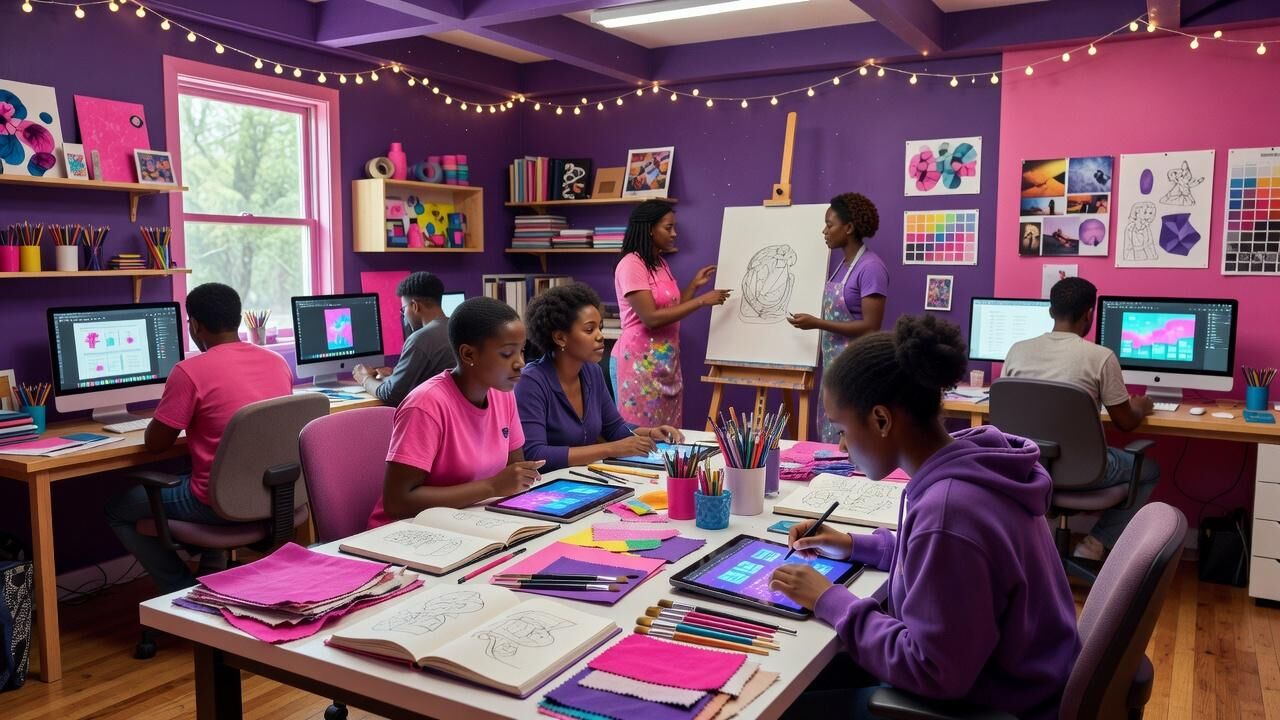
AI-Powered Design Tools Are Putting Professional Results Within Everyone's Reach
The Shift from Specialized Studios to Everyday Access
For decades, high-quality design required hiring specialists or investing years in learning complex software. That barrier is collapsing as AI handles the technical heavy lifting. Tools now generate layouts, suggest color palettes, and refine typography in seconds, letting non-designers produce work that meets professional standards without the traditional learning curve.
Canva's Magic Studio, launched in 2023, illustrates the change in scale. The platform reported that users who activated its AI features completed projects 65 percent faster than those relying on manual methods alone. Within the first month after launch, more than 15 million designs were created using these tools, showing rapid adoption across small businesses and individuals who previously outsourced work.
Adobe's Firefly model, trained exclusively on licensed content, reached one billion images generated within its first year. Enterprise accounts at Adobe saw design teams cut iteration cycles from an average of five rounds to two, directly lowering project timelines from weeks to days. This data comes from Adobe's internal usage reports shared in 2024 earnings updates.
How Leading Platforms Embed AI for Immediate Results
Figma introduced AI-assisted features through its acquisition of Diagram and subsequent beta tools in 2023. Teams using the early AI plugins reported a 40 percent reduction in time spent on repetitive tasks such as resizing assets for multiple screen sizes. The platform's user base, already exceeding four million, gained these capabilities without needing additional software licenses.
Microsoft Designer, powered by DALL-E integration, reached 10 million monthly active users within six months of wider release. The tool offers tiered access starting at the free level, with premium features at .99 per month. Small marketing teams using it for social assets reported producing campaign visuals in under two hours compared to the previous six-hour average.
Notion's AI database and page-generation tools extended into visual design elements in 2024. Companies integrating these features saw template customization time drop by 55 percent, according to Notion's customer case studies. This matters for teams that previously maintained separate design and documentation systems.
Real-World Case Study: measurable outcomes at a growing e-commerce brand
Consider the experience of a mid-sized sustainable apparel company that adopted Canva's Magic Studio and Adobe Express AI tools over an 18-month period. Before implementation, the brand spent 8,000 annually on freelance designers for product photography edits, social graphics, and packaging concepts. After switching to AI-assisted workflows, that annual spend fell to 4,400, a 70 percent reduction.
The same company tracked output volume. In the 12 months prior to AI adoption, the team produced 120 unique assets per quarter. Post-adoption, quarterly output rose to 310 assets while maintaining consistent brand guidelines through AI style-matching features. Time to first draft dropped from an average of 11 days to 48 hours.
Leadership attributed the results to the combination of Canva's background-removal and generative-fill tools with Adobe Firefly's text-to-image capabilities. They noted that non-design staff could now handle 80 percent of routine requests internally, freeing the single in-house designer to focus on higher-level strategy rather than execution.
Cost Comparisons That Show Accessibility Gains
Traditional professional design retainers for small businesses often start at ,500 per month. AI-native platforms offer comparable output quality at 2.99 monthly for Canva Pro or 4.99 for Adobe Creative Cloud individual plans that now include Firefly credits. The price difference removes the need for ongoing agency relationships for many routine needs.
Shopify merchants using built-in AI design helpers within the platform reported average savings of ,200 per year on visual updates to product pages. These merchants, many of whom lack dedicated design staff, achieved conversion-rate lifts of 12 percent on redesigned pages compared to their prior baselines.
Microsoft's integration of Designer into its 365 suite extends the same capabilities to teams already paying for productivity software. No additional per-seat design license is required, which explains why adoption among existing Microsoft customers reached 22 percent within the first nine months of availability.
Overcoming the Skill Gap with Guided AI Workflows
Many people hesitate because they assume AI still demands design knowledge to guide prompts effectively. Current interfaces address this through preset styles and visual selectors rather than text-only commands. Canva users can choose from brand-kit templates that automatically apply AI adjustments, removing guesswork.
Training time has also collapsed. Adobe documented that new Firefly users reached basic proficiency in under 90 minutes, compared to the 40-hour average previously required for Photoshop fundamentals. This shorter ramp-up allows teams to experiment immediately rather than scheduling formal courses.
The encouraging reality is that iteration itself becomes low-risk. Because AI generates multiple options instantly, users can test variations without extra cost or time penalties. This trial-and-error loop mirrors how experienced designers have always worked, now available to anyone with an internet connection.
Scaling Quality Without Scaling Headcount
Companies that once added designers as output demands grew now maintain smaller creative cores. NVIDIA reported internal use of its Canvas AI sketching tool reduced concept-to-render time for product visualizations from 14 days to three days. The hardware company applied the same approach to marketing materials, achieving consistent output with a team that stayed constant in size.
Google's internal design teams experimented with similar AI augmentation and recorded a 48 percent increase in assets delivered per designer per quarter. The data, shared in public developer conferences, showed that routine production work moved to AI while human oversight focused on brand voice and strategic decisions.
This pattern repeats across industries. The common thread is that AI handles volume while humans retain final judgment. The result is professional-grade output produced faster and at lower marginal cost than was possible five years ago.
Getting Started Without Overwhelm
Begin with a single platform rather than testing multiple tools simultaneously. Canva's free tier already includes basic Magic Studio functions, allowing immediate experimentation with existing photos or templates. Upgrade only after identifying specific friction points that paid features resolve.
Document current design pain points before adopting new tools. Track how long logo variations or social posts currently take, then measure the same tasks after two weeks of AI assistance. The numbers provide clear evidence of whether the workflow fits your needs.
Remember that professional results still benefit from human review. AI accelerates production; your eye ensures the final piece aligns with your goals. The combination gives individuals and small teams output quality that once required entire departments.
The Practical Path Forward
AI has removed the equipment and expertise barriers that once gated professional design. Platforms from Canva to Adobe now deliver measurable time and cost reductions backed by user data, while case studies like the apparel brand demonstrate real revenue-adjacent benefits through faster iteration. The tools reward consistent use rather than prior training.
You do not need to become a designer to produce work that looks designed. Start with one project this week, measure the outcome against your old process, and build from there. The data shows the gap between amateur and professional results is narrowing quickly for those willing to try the new workflows.
— Patty Thomas, Sylt.ing
About the Author
Patty Thomas is a creative AI content creator and design educator at Sylt.ing. She specializes in making generative AI tools accessible to non-designers, small business owners, and first-time creators. Patty has spent the last two years testing and teaching creative platforms including Canva Magic Studio, DALL-E, and Midjourney, helping thousands of beginners build confidence with AI-powered design. Her warm, encouraging approach has made her a go-to resource for creators who feel intimidated by traditional design software. Follow her tutorials at sylt.ing/Patty.
 Italiano
 English
 Arabic
 French
 Spanish
 Portuguese
 Deutsch
 Turkish
 Dutch
Dutch
 Russian
 Romaian
 Portuguese (Brazil)
 Greek
Greek