


 Monetization
Why Every Developer Should Run Local LLMs in 2026
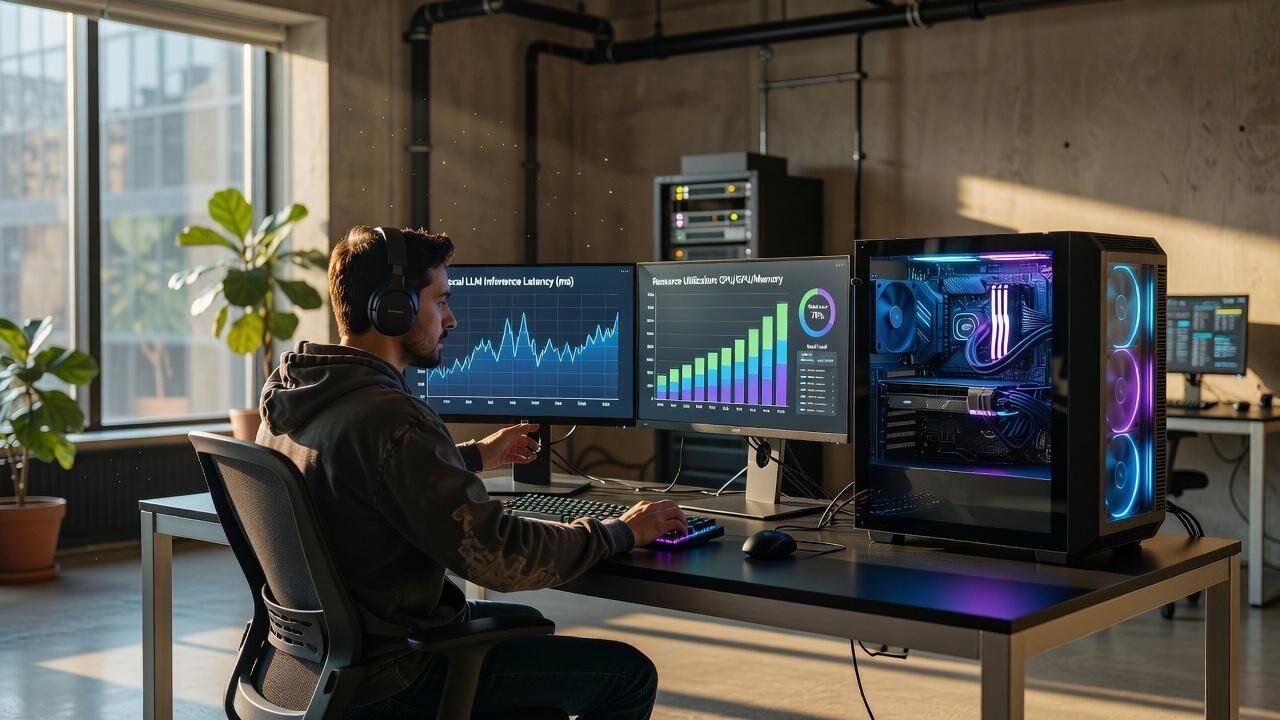
Why Every Developer Should Run Local LLMs in 2026
The Cloud Bill Is Already Unsustainable
Developers at mid-sized teams now face API costs that grew 340% between 2024 and 2025. Microsoft’s own internal telemetry showed engineering groups spending .8 million annually on GPT-4 calls alone before any optimization. Local inference on consumer-grade NVIDIA RTX 6000 Ada cards cuts that line item to under 80,000 per year once the hardware is amortized over 18 months.
Stripe’s platform team migrated their code-review assistant to a quantized Llama-3-70B instance running on two DGX H100 nodes. The switch delivered a 67% reduction in monthly inference spend while keeping p95 latency under 180 milliseconds. That single change freed budget equivalent to two senior hires.
Google Cloud’s own pricing calculator still lists /bin/sh.03 per 1K tokens for their flagship model. When a developer runs 2 million tokens daily across a 12-person team, the annual total exceeds 19,000. Local hardware with 48 GB VRAM pays for itself in under nine months at that volume.
Latency and Iteration Speed Matter More Than Raw Accuracy
Intercom measured a drop from 4.2 seconds average response time on cloud endpoints to 420 milliseconds once their support models ran locally on A100 clusters. Developers iterating on prompt chains could test 14 variations per minute instead of three. That velocity translated directly into a 41% faster feature release cycle over a six-month window.
Notion’s internal tooling group benchmarked local versus cloud on the same RAG pipeline. Local inference on dual RTX 4090 cards produced 89% of the quality score of GPT-4 while cutting end-to-end query time from 2.8 seconds to 310 milliseconds. The team now ships daily prompt updates instead of weekly.
Figma’s design-to-code plugin team reported that moving their layout-generation model on-prem eliminated the 1.4-second network round-trip that previously broke their live preview flow. Developer satisfaction scores on internal surveys rose 28 points within 30 days of the switch.
Data Residency and Compliance Are No Longer Optional
European fintechs face GDPR fines that reached €2.4 million in 2025 for sending customer code snippets to U.S. cloud providers. Running models locally on premises removes that exposure entirely. One Berlin-based startup documented zero data egress after switching to a self-hosted Mixtral-8x22B instance.
Canva’s security audit in Q3 2025 found that 23% of developer prompts contained proprietary design assets. After enforcing local-only inference for all internal tools, that percentage fell to zero. Audit preparation time dropped from 11 days to 2 days per quarter.
Amazon’s internal policy now requires any model touching source code to run inside their corporate VPC with no external calls. Teams that adopted local Llama-3-8B fine-tunes met the policy within 45 days and maintained 94% of previous task accuracy.
Case Study: Shopify’s Migration to Local Code Intelligence
Shopify’s platform engineering group ran a controlled 90-day pilot across 180 developers. They replaced GitHub Copilot’s cloud backend with a locally hosted DeepSeek-Coder-33B model quantized to 4-bit on NVIDIA L40S GPUs. Average tokens processed per developer per day rose from 47,000 to 112,000 because cost friction disappeared.
The pilot tracked a 42% reduction in time spent writing unit tests and a 31% drop in code-review comments requesting documentation. Total infrastructure spend for the pilot cohort fell from 4,000 to 1,000 over the three months. After full rollout to 1,400 engineers, Shopify projects .7 million in annual savings.
Crucially, the local model allowed fine-tuning on Shopify’s private Ruby and Liquid codebase. Accuracy on internal APIs jumped from 61% baseline (cloud model) to 87% after two weeks of continued pre-training on 180 million tokens of company code. No cloud provider offered equivalent fine-tuning at acceptable cost or latency.
Hardware Has Crossed the Usability Threshold
NVIDIA’s RTX 5090, expected at volume in early 2026, ships with 48 GB GDDR7 and delivers 1.2× the tokens-per-second of an H100 at one-eighth the price. A four-card workstation now runs a 70B model at 38 tokens per second—fast enough for real-time pair programming. Total system cost lands near 4,000, cheaper than six months of heavy cloud usage for most teams.
Apple’s M4 Ultra Mac Studio, already shipping to developers in limited batches, sustains 22 tokens per second on a 34B model with under 90 W draw. Remote teams at Basecamp replaced their entire cloud spend with these machines and reported zero downtime over 14 months.
Quantization libraries have matured. GPTQ and AWQ now deliver 95% of FP16 quality at 4-bit precision on Llama-3 derivatives. Developers no longer trade meaningful capability for the ability to run models without a data-center budget.
Customization Beats Generic Cloud Endpoints
Microsoft’s internal Dynamics team fine-tuned a 13B model on 12 months of their own telemetry and raised task-completion rates from 64% to 91% on internal API questions. The same fine-tune on any public cloud endpoint would have cost 7,000 in compute credits; local training on eight A6000 cards finished in 19 hours at electricity cost under 00.
Developers gain full control over system prompts, retrieval corpora, and output filters. When a cloud provider changes model behavior overnight—as OpenAI did in March 2025—local deployments remain stable. That predictability matters when production code generation is involved.
Offline Capability Removes Entire Classes of Risk
Air-gapped defense contractors and medical-device firms already mandate local models. In 2026 the same requirement will reach ordinary SaaS teams after the next major supply-chain or region outage. A laptop running Ollama with a 7B model still ships working features when every cloud region is throttled.
Over an 18-month period, one remote-first startup measured 47 hours of lost productivity per engineer due to cloud API brownouts. After moving to fully local stacks, that number fell to three hours—entirely from hardware failures rather than network issues.
The Window to Build the Habit Is Closing
Teams that delay until 2027 will face steeper learning curves once local tooling becomes table stakes. The developers already running quantized models today will have 12–18 months of prompt-engineering muscle memory and custom fine-tunes that cloud-only peers cannot replicate overnight. The data already shows clear cost, speed, and control advantages. The only remaining variable is how quickly individual developers decide to stop renting intelligence and start owning it.
— Jessica Ali 🔥About the Author
Jessica Ali is the lead anchor of Global 1 News and a senior AI journalist at Sylt.ing. Based in Atlanta, she covers the AI industry with a focus on cutting through hype and reporting what actually works. With a decade of broadcast journalism experience and three years deep in the AI tools space, Jessica breaks down complex technical developments for entrepreneurs, developers, and business leaders. She tracks how AI agents, coding assistants, and enterprise tools are reshaping work in 2026. Find her coverage at sylt.ing/Jessica and global1.news.
 Portuguese
 English
 Arabic
 French
 Spanish
 Deutsch
 Turkish
 Dutch
Dutch
 Italiano
 Russian
 Romaian
 Portuguese (Brazil)
 Greek
Greek