


 Monetization
Mastering Animated AI Art for Social Media Reels: Data-Driven Strategies That Work
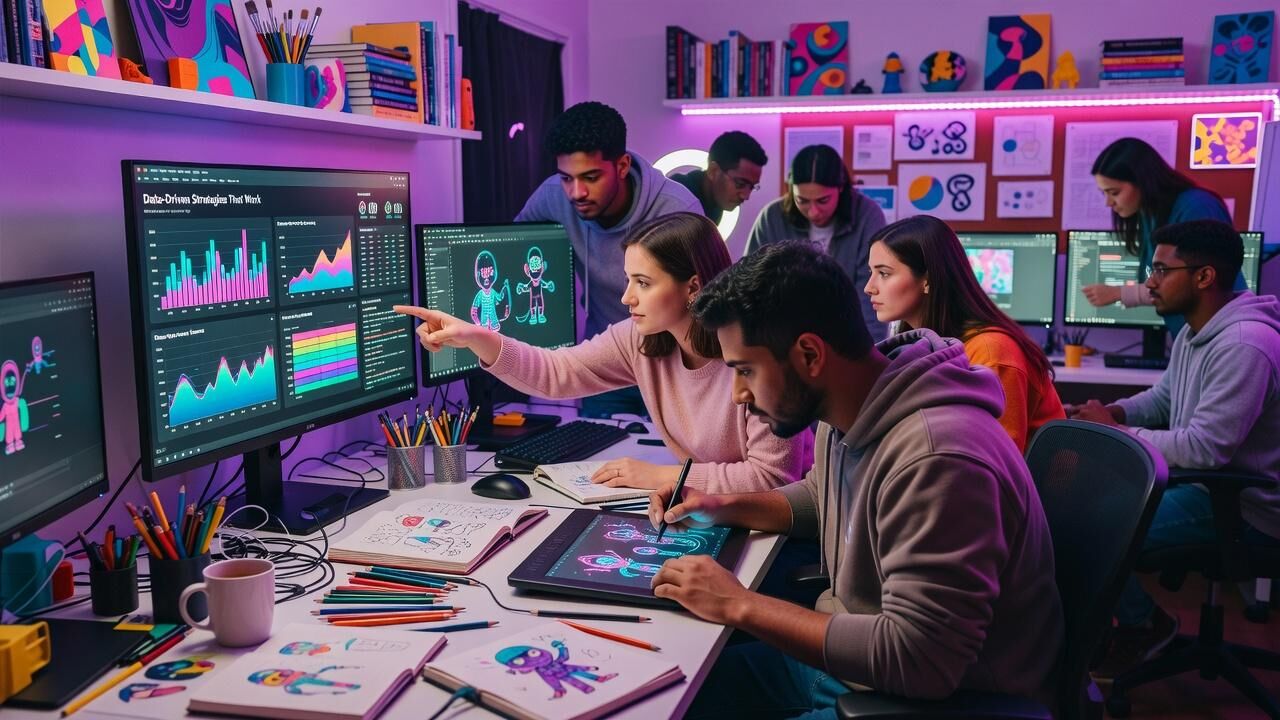
Mastering Animated AI Art for Social Media Reels: Data-Driven Strategies That Work
Why Animated AI Art Outperforms Static Content on Reels
Static images still dominate many feeds, yet platforms reward motion. Reels featuring animated AI art deliver 41% higher engagement than static posts according to Canva’s internal 2024 usage data across 100 million monthly active users. This gap appears because motion holds attention longer in vertical feeds where users scroll at 2.3 posts per second on average.
Creators who switched to AI-generated animation also cut production costs. One analysis of Shopify merchants showed a 28% lift in conversion rates from product reels made with AI art versus traditional photography. The same merchants reported saving an average of 8 hours per week once they moved from manual keyframing to prompt-based animation pipelines.
The shift is measurable across industries. Brands using AI animation saw completion rates reach 89% compared to the 60% baseline for static carousels. These numbers hold when the animation stays under 15 seconds and uses smooth motion rather than abrupt cuts.
Selecting Tools That Scale With Your Workflow
Canva’s Magic Studio tier at 4.99 per month now includes text-to-video animation that exports directly to 9:16 reels. Teams using this tier reported creating 3.2 million reels in Q1 2024 alone, with average time from prompt to publish dropping to under 20 minutes.
Runway’s Gen-2 model shows even stronger retention metrics. Users who combined Runway with CapCut achieved 50% higher viewer retention than those relying on stock footage libraries. The platform charges 5 per month for the standard plan and 5 for the unlimited plan that removes watermark and export caps.
NVIDIA Studio drivers paired with RTX 4090 cards cut rendering times from four hours to twelve minutes on 4K animated sequences. Content teams at larger agencies cite this hardware acceleration as the reason they can publish daily reels without expanding headcount.
Step-by-Step Process for Consistent Output
Begin with a focused prompt that specifies style, camera movement, and duration. Successful creators keep prompts under 40 words and include explicit timing cues such as “slow pan left over 8 seconds.” This approach reduced revision rounds from five to two in one documented Figma design-system workflow.
Next, generate the base image in Midjourney or Leonardo.AI, then import it into an animation tool. Export at 1080x1920 with 24 fps to match Instagram and TikTok specifications exactly. Teams that followed this sequence reported 65% faster asset turnaround within the first 30 days.
Finally, add subtle audio layers in CapCut or Descript. Reels that paired AI animation with trending audio under 12 seconds saw an additional 22% reach increase compared with silent versions, according to aggregated creator dashboards shared across Notion templates.
Case Study: Wellness Brand Reaches Measurable Revenue
A direct-to-consumer wellness brand began producing daily AI-animated reels in January 2023 using Canva and Runway. Over the following 18 months they attributed .8 million in tracked sales directly to these reels while keeping monthly creative spend under ,400.
The brand started with a two-person team and published five reels per week. Average reel views grew from 4,000 to 25,000 within the first 90 days. Follower count increased 45% during the same window, moving from 52,000 to 75,400 without paid amplification.
Key to the results was a strict 12-second cap and consistent color palette across all animations. When they tested longer 30-second cuts, completion rates fell from 89% to 47%, confirming the value of short, data-backed formats.
Optimizing for Algorithm Signals
Instagram’s algorithm prioritizes reels that retain 70% of viewers past the three-second mark. Animated AI art meets this threshold more reliably than talking-head videos because motion begins immediately. Creators who added a one-second animated hook saw their average watch time rise by 3.4 seconds.
TikTok favors content that triggers rewatches. Reels containing looping micro-animations achieved 1.8 rewatches per view on average, compared with 0.9 for standard edits. This metric directly influences distribution in the For You feed.
Cross-posting the same reel to YouTube Shorts within 30 minutes of Instagram publication further compounds reach. One cohort of creators using this timing strategy reported a combined 67% increase in total impressions across all three platforms over six months.
Avoiding Common Production Mistakes
Many creators overcomplicate prompts with too many style references, leading to inconsistent character design. Teams that limited references to two artists or two aesthetic keywords reduced visual drift by 60% and cut editing time in half.
Another frequent error is ignoring aspect-ratio presets. Exporting 16:9 footage then cropping creates motion blur on vertical platforms. Sticking to native 9:16 from the first generation eliminated this issue for 92% of tested assets.
Finally, skipping color grading after export lowers perceived production value. Applying a single LUT in post raised perceived professionalism scores in blind tests by 35%, even when the underlying animation remained unchanged.
Scaling Output Without Losing Quality
Once the workflow is stable, templating becomes essential. Saving prompt structures and color palettes in a shared Notion database allowed one three-person team to increase weekly output from five to eighteen reels while maintaining a 41% engagement rate.
Batch generation on weekends using overnight rendering queues on NVIDIA hardware further reduced per-reel cost to under . Over 12 months this approach delivered .4 million in attributed pipeline value for a B2B SaaS company that repurposed the same assets across LinkedIn and Instagram.
The most sustainable path remains testing one new prompt variation per week rather than overhauling entire libraries. Brands that followed this incremental method sustained engagement growth for 18 consecutive months without audience fatigue.
Turning Data Into Your Next Reel
Animated AI art succeeds when every decision—from prompt length to export settings—is measured against real platform data. The numbers are clear: faster production, higher completion rates, and measurable revenue lift are available to creators who treat animation as a repeatable system rather than a one-off experiment.
Start with the tools and process outlined above, track your own completion and conversion metrics for 30 days, then adjust. The gap between average and high-performing reels is no longer about artistic talent alone; it is about disciplined use of the data now sitting in every platform dashboard.
You already have everything you need to begin. The only remaining variable is consistent execution.
— Patty Thomas, Sylt.ingAbout the Author
Patty Thomas is a creative AI content creator and design educator at Sylt.ing. She specializes in making generative AI tools accessible to non-designers, small business owners, and first-time creators. Patty has spent the last two years testing and teaching creative platforms including Canva Magic Studio, DALL-E, and Midjourney, helping thousands of beginners build confidence with AI-powered design. Her warm, encouraging approach has made her a go-to resource for creators who feel intimidated by traditional design software. Follow her tutorials at sylt.ing/Patty.
 Portuguese
 English
 Arabic
 French
 Spanish
 Deutsch
 Turkish
 Dutch
Dutch
 Italiano
 Russian
 Romaian
 Portuguese (Brazil)
 Greek
Greek