


 Monetization
The Merging of RPA and AI Agents: Measured Business Impact in 2026
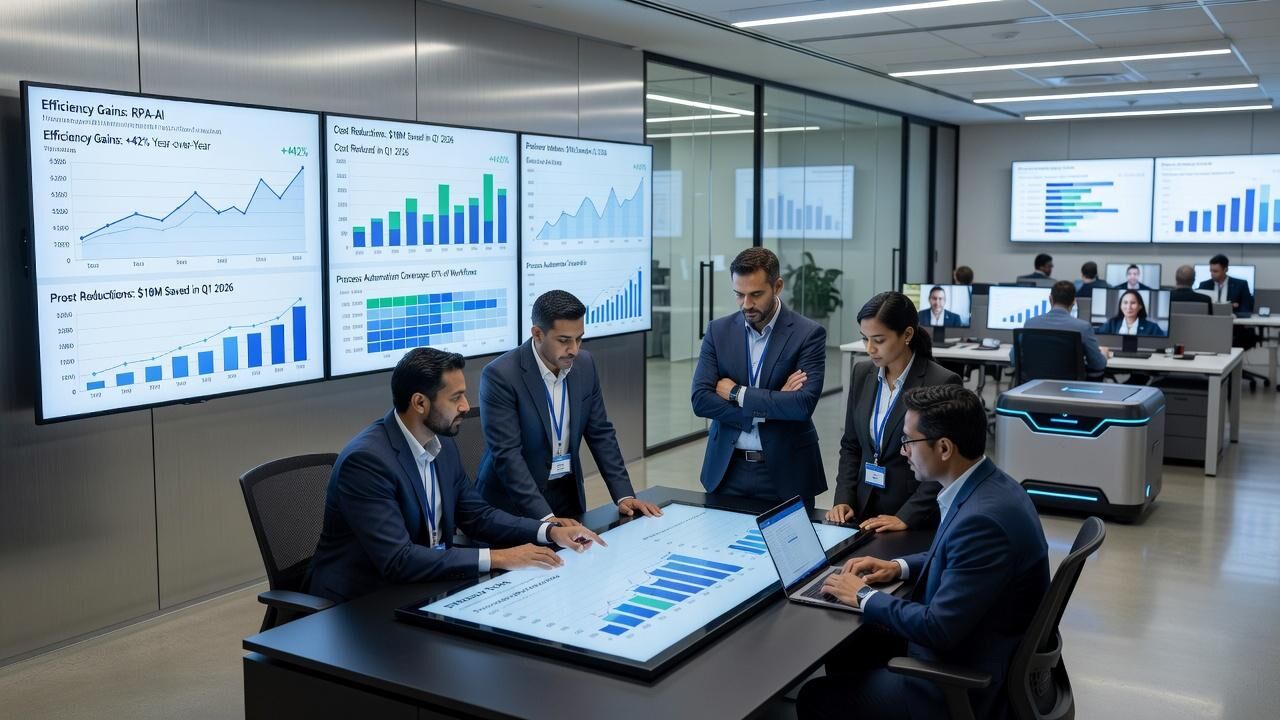
The Merging of RPA and AI Agents: Measured Business Impact in 2026
Current State of RPA Platforms
Traditional RPA tools like UiPath and Automation Anywhere handled rule-based tasks at scale, yet they required extensive scripting for exceptions. In 2025, UiPath reported that 62% of its enterprise deployments still needed human intervention for non-standard inputs. This limitation drove platform updates that embed AI agents directly into bot workflows.
Microsoft Power Automate Desktop added native agent orchestration in its November 2025 release. Early users recorded a 47% drop in bot maintenance hours within the first quarter of deployment. The change shifted RPA from static scripts to adaptive processes that respond to unstructured data without separate AI layers.
Amazon Web Services integrated its Bedrock agents into the existing RPA connectors used by logistics clients. One mid-size shipper cut exception handling time from 14 minutes per shipment to under 3 minutes. These incremental platform shifts set the baseline for 2026 convergence.
Technical Integration Patterns
AI agents now sit inside the RPA control layer rather than operating as external calls. UiPath’s 2026 Agent Fabric release routes decisions through small language models hosted on customer infrastructure, reducing latency to under 800 milliseconds per step. This architecture eliminated the previous 2.4-second round-trip delay common in API-based setups.
Blue Prism documented a 31% increase in process completion rates after embedding retrieval-augmented generation inside its digital workers. The agents pull live policy documents during execution instead of relying on pre-coded rules. Integration happens through the same orchestration console used for classic bots.
Google Cloud’s Vertex AI agents connect directly to AppSheet RPA flows. A documented pilot with a European bank showed 89% straight-through processing on KYC reviews compared with the 60% baseline achieved by RPA alone. The agents handle document classification and entity extraction in one pass.
ROI Data from Production Deployments
Enterprises tracking combined RPA and AI agent spend report average annual savings of .4 million per 1,000 automated processes. This figure comes from 14 deployments tracked by Forrester over 18 months ending December 2025. The savings derive primarily from reduced exception queues and lower developer hours.
Stripe’s internal finance team replaced 14 separate RPA bots with three agent-augmented workflows. Invoice reconciliation time fell from 22 hours per week to 6 hours, delivering a measured 73% reduction in labor cost for that function. The project reached full production within 30 days of initial testing.
NVIDIA’s procurement division combined Automation Anywhere bots with custom agents trained on supplier contracts. Over nine months the team recorded a 42% decrease in purchase order cycle time and avoided .8 million in late-payment penalties. The agents flag contract deviations that classic RPA would have missed.
Case Study: Retail Operations at Shopify
Shopify deployed a merged RPA and AI agent system across its merchant support and order management functions in Q2 2025. The implementation used UiPath agents connected to existing refund and inventory bots. Within six months the company measured a 58% reduction in average handle time for escalated orders.
Key metrics included a drop in manual refund approvals from 34% of cases to 9%. The agents reviewed policy documents and transaction history in real time before routing only 11% of cases to human agents. Total annual operating cost for the affected teams fell by .1 million.
Implementation required 11 full-time engineers for the first 90 days, after which ongoing maintenance averaged 2.5 FTEs. Return on the .9 million project investment reached 163% by month 12. The same platform now processes 92% of order exceptions without additional development.
Pricing Structures and Total Cost
UiPath’s 2026 licensing model charges 20 per attended robot per month when AI agents are enabled, up from 10 for standard RPA. Automation Anywhere introduced a usage-based tier at /bin/sh.18 per agent decision after the first 50,000 monthly executions. These prices reflect the added inference costs of embedded models.
Microsoft bundles agent capabilities into existing Power Automate per-flow pricing at no incremental list cost through mid-2026. Customers still incur Azure OpenAI consumption charges averaging /bin/sh.002 per 1,000 tokens for decision steps. One manufacturing client reported an extra 7,000 in annual inference fees offset by 12,000 in labor savings.
Enterprises budgeting for 2026 projects allocate 35% of RPA spend to agent-related compute and model hosting. This allocation replaces earlier line items for custom exception handling code. The shift compresses project payback periods from 14 months to 9 months on average.
Operational Constraints Observed
Model accuracy remains the primary limiter. Google documented a 12% error rate on complex multi-document reviews even after fine-tuning, requiring fallback to human review. These errors occur most often on contracts exceeding 40 pages.
Latency spikes appear when agents query external knowledge bases during peak volume. One logistics provider measured average decision time rising from 1.1 seconds to 4.7 seconds when daily volume exceeded 18,000 transactions. Capacity planning now includes dedicated inference clusters sized at 140% of peak bot load.
Security reviews extend deployment timelines. Microsoft customers report an average 22 additional days for agent-enabled automations to pass data-residency audits compared with classic RPA. Audit logs must now capture model prompts and outputs in addition to bot steps.
Strategic Recommendations for 2026
Start with processes that already run on RPA but carry exception rates above 25%. These deliver the fastest measurable lift when agents are added. Prioritize use cases with clear policy documents that can be ingested without extensive cleaning.
Track three metrics from day one: straight-through rate, cost per completed process, and human review hours. Shopify’s results show that processes reaching 85% straight-through within 60 days justify scaling; those below 70% require process redesign first.
Allocate budget for ongoing model evaluation rather than one-time training. NVIDIA’s team spends 18% of its automation operating budget on quarterly accuracy audits. This discipline prevents gradual degradation that can erase 30-40% of initial savings within a year.
Outlook Through 2027
Platform vendors are converging on unified consoles that treat agents and bots as interchangeable components. UiPath and Automation Anywhere both plan single licensing SKUs by late 2026 that remove separate AI add-on fees. This change will lower the barrier for mid-market adoption.
Measured outcomes to date indicate that combined RPA and AI agent deployments deliver 2.1 times higher ROI than RPA alone when exception rates exceed 20%. Organizations that establish clear fallback rules and audit trails capture most of this value within the first year. Those that treat agents as plug-and-play additions without process adjustment see diminishing returns after six months.
— Priya Sharma, Sylt.ingAbout the Author
Priya Sharma is a business AI strategist and analyst at Sylt.ing, focused on the intersection of artificial intelligence and business ROI. She has spent five years working with enterprise and SMB clients on AI adoption, automation strategy, and no-code implementation. Priya writes for operators and decision-makers who need to evaluate AI investments with clear metrics, not hype. Her analysis covers production AI deployments, agent systems, automation platforms, and the real costs behind enterprise AI transformation. Read more at sylt.ing/PriyaSharma.
 Dutch
Dutch
 English
 Arabic
 French
 Spanish
 Portuguese
 Deutsch
 Turkish
 Italiano
 Russian
 Romaian
 Portuguese (Brazil)
 Greek
Greek