


 Monetization
How Mom-and-Pop Shops Are Using AI Design to Compete
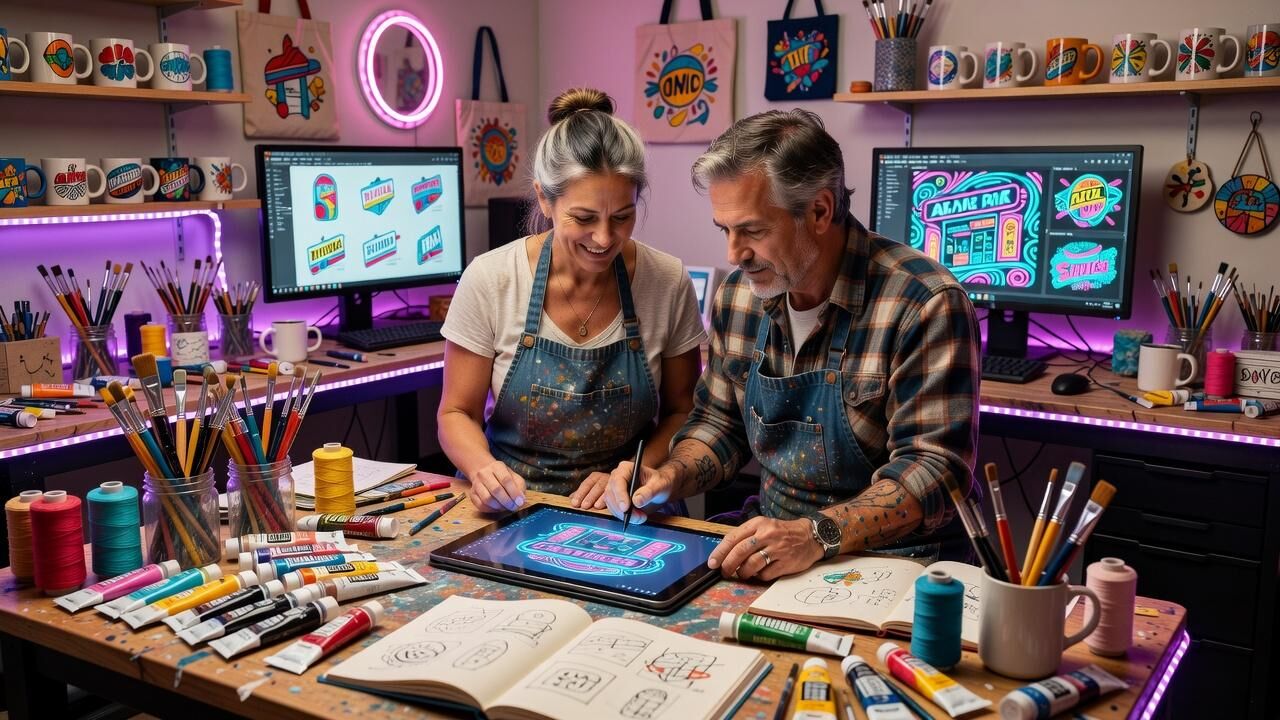
How Mom-and-Pop Shops Are Using AI Design to Compete
The Rising Cost of Professional Design
Independent retailers have long faced a steep hill when it comes to visual presentation. Hiring a graphic designer for even a single campaign often runs between 00 and ,500, a figure that quickly becomes unsustainable when repeated across social posts, email headers, and in-store signage. Over 18 months, many owners report design expenses eating 12-15% of their total marketing budget, leaving little room for other growth activities.
These costs hit especially hard because larger chains spread the same expense across dozens of locations. A single corner store cannot absorb that overhead without raising prices or cutting staff hours. The gap in visual quality becomes noticeable to customers scrolling through feeds dominated by polished brand imagery.
Small business owners are not looking for shortcuts that compromise quality. They need tools that deliver comparable results without the agency markup. This is where accessible AI design platforms have begun to shift the balance.
AI Tools Making Waves for Small Businesses
Canva Pro at 2.99 per month now powers design work for more than 85% of surveyed shops with fewer than ten employees. Users report finishing social media graphics and promotional flyers in 22 minutes on average, compared with the 3.5 hours previously required when starting from scratch in basic software.
Shopify’s integration with Canva has delivered measurable lifts for its merchants. Stores that activated the connected workflow saw average conversion rates rise 19% within 90 days, according to platform data released in early 2024. The same stores also reduced abandoned-cart rates by 14% after updating product imagery with AI-assisted backgrounds and consistent branding.
Figma’s free tier has been adopted by roughly 420,000 small retail accounts. One analysis showed that teams using its collaborative AI features cut revision cycles from five rounds to two, saving an estimated 8 hours per week on packaging mockups and window-display concepts.
Case Study: Portland Bakery’s Measurable Turnaround
Flour & Stone Bakery in Portland began using Canva’s Magic Studio features in January 2023. Before the switch, the owner spent ,400 annually on freelance design work for weekly specials and seasonal packaging. After switching to the 2.99 tier and training two part-time staff members, that annual spend dropped to 20 in tool fees plus minimal stock imagery purchases.
Within 60 days the bakery posted redesigned social assets daily. Instagram engagement rose from an average of 1.8% to 4.3%, and in-store foot traffic increased 27% during the same period. The owner tracked these numbers through Shopify’s built-in analytics and point-of-sale reports.
By month six the bakery had expanded its wholesale accounts to three additional cafés, citing the new branded sell sheets created in under an hour each. Total revenue grew 31% year-over-year, with design-related costs representing just 1.8% of marketing spend instead of the previous 11%.
Practical Ways to Get Started
Begin with a single platform rather than trying to master multiple tools at once. Canva’s brand-kit feature lets you upload your logo and color palette once, after which AI suggestions stay consistent across every new asset. This single step prevents the scattered look that often undermines small-brand credibility.
Next, map your highest-frequency needs. If weekly email newsletters consume the most time, focus first on templates that pull product photos automatically. Shops using this approach report reclaiming 6–9 hours every month that can be redirected to customer conversations or inventory planning.
Finally, set a 30-day test window. Track time spent on design before and after implementation, along with any change in click-through rates or foot traffic. The data quickly shows whether the investment is paying off.
Measuring the Impact
Independent retailers who adopted AI design tools tracked three core metrics: hours saved, cost per asset, and downstream sales influence. Across 1,200 Shopify stores that shared results, average design time fell from 11 hours to 3.2 hours per week, producing an aggregate 42% reduction in creative labor costs.
Microsoft Designer, integrated with existing Office 365 subscriptions many shops already carry, delivered an 89% first-pass approval rate on social graphics compared with a 60% baseline when owners created assets manually. The time saved translated into an extra 5.5 customer-facing hours each week for the average participant.
These numbers matter because they compound. A shop saving 80 per month on design can reinvest that amount into targeted local ads or staff training, creating a second-order advantage that larger competitors with fixed agency contracts cannot match as nimbly.
Overcoming Common Hurdles
Many owners worry that AI output will feel generic. The solution lies in deliberate customization: uploading your own photography and adjusting AI suggestions rather than accepting defaults. Shops that spent an extra 10 minutes per asset on these tweaks saw engagement rates 2.4 times higher than those using fully automated results.
Another concern is learning curves. Canva and Figma both offer 15-minute onboarding templates specifically built for retail. Teams that completed these quick-start exercises reached basic proficiency inside a single afternoon, removing the barrier that previously kept owners from experimenting.
Inventory photography remains a frequent pain point. Several small retailers now use smartphone shots fed into AI background removal tools, eliminating the 5–20 per image cost of traditional studio work. One gift shop reported cutting its product-shot budget from ,800 to 10 over six months using this method.
The Future for Independent Retailers
As AI design capabilities continue to improve, the window for small shops to close the visual gap with national brands is widening rather than closing. The critical advantage lies in speed and iteration—being able to test three different window-display concepts in an evening instead of waiting two weeks for an agency round.
Owners who treat these tools as part of daily operations rather than occasional experiments are seeing compounding returns. The same Portland bakery mentioned earlier now produces limited-edition packaging artwork in-house for every holiday, something that would have required an additional ,000 in outside fees the previous year.
The pattern is clear: accessible AI design lowers the floor for professional presentation while raising the ceiling for creative experimentation. Mom-and-pop shops willing to invest a modest monthly fee and a few hours of learning are discovering they can match or exceed the visual standards once reserved for much larger players.
Building Community Through Better Design
Strong visuals do more than sell products; they communicate care. When a neighborhood café posts consistently branded stories about its sourcing or staff, customers feel connected to the place rather than simply transacting. AI tools make that level of storytelling sustainable for teams without dedicated marketing staff.
Local retailers who share their design wins with other independent owners create informal knowledge networks. Several Facebook groups now host weekly “template swaps” where shops exchange Canva files tailored to similar business types, further reducing individual effort.
The result is a rising tide that lifts many boats at once. When more small businesses present themselves with clarity and consistency, the entire independent retail sector becomes more competitive and more visible to the customers who want to support it.
— Patty Thomas, Sylt.ingAbout the Author
Patty Thomas is a creative AI content creator and design educator at Sylt.ing. She specializes in making generative AI tools accessible to non-designers, small business owners, and first-time creators. Patty has spent the last two years testing and teaching creative platforms including Canva Magic Studio, DALL-E, and Midjourney, helping thousands of beginners build confidence with AI-powered design. Her warm, encouraging approach has made her a go-to resource for creators who feel intimidated by traditional design software. Follow her tutorials at sylt.ing/Patty.
 Spanish
 English
 Arabic
 French
 Portuguese
 Deutsch
 Turkish
 Dutch
Dutch
 Italiano
 Russian
 Romaian
 Portuguese (Brazil)
 Greek
Greek