


 Monetization
How AI Is Making Professional Design Accessible to Everyone
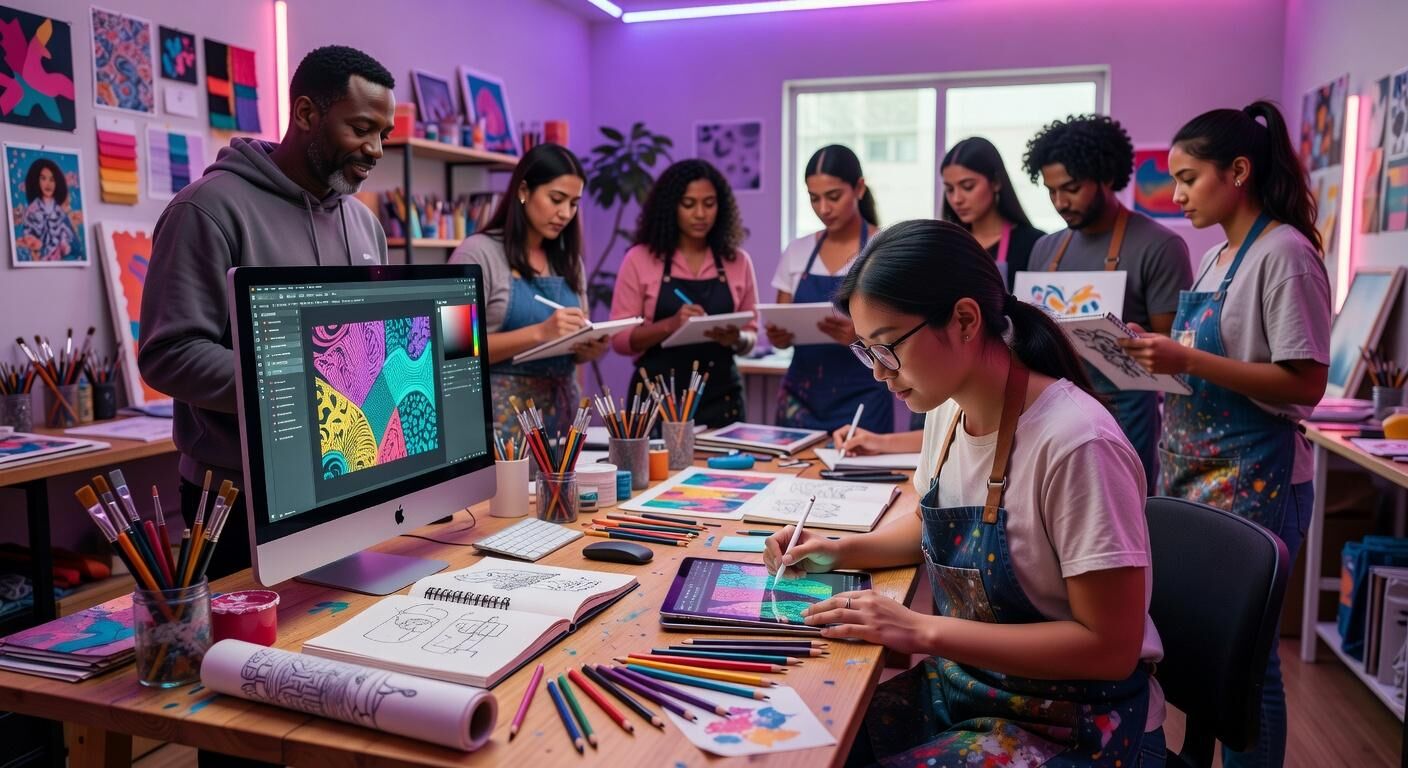
How AI Is Making Professional Design Accessible to Everyone
The Barriers That Used to Define Professional Design
For decades, creating polished visual assets required either formal training or expensive agency retainers. Companies paid ,000–5,000 for a single logo redesign, and small teams without in-house designers often defaulted to generic templates. This gap left most individuals and small businesses operating at a visual disadvantage compared with larger competitors that could afford dedicated creative departments.
AI design platforms have changed the economics. Tools now handle layout, color harmony, and asset generation in seconds rather than hours. The result is not just faster output but a measurable leveling of capability between professional studios and everyday users.
Within 18 months of widespread AI feature releases, platforms reported that non-designers were completing projects that previously required specialized software licenses. This shift is backed by usage data rather than marketing claims.
Leading Platforms and Their Adoption Numbers
Canva reached 170 million monthly active users by early 2024, with Magic Studio AI features rolled out to the entire user base at no extra cost on the free tier. Adobe integrated Firefly into Creative Cloud subscriptions priced at 4.99 per month, generating more than 2 billion images since the model launched in 2023. Microsoft Designer, powered by DALL-E, became available inside Microsoft 365 plans used by over 300 million paid subscribers.
Figma introduced AI-assisted prototyping tools that reduced iteration cycles for teams already paying 2–5 per editor per month. NVIDIA Canvas, offered as part of RTX GPU software at no added subscription, lets users sketch landscapes that the AI renders in real time, cutting concept-to-render time by roughly half in internal creative workflows.
These pricing and scale figures matter because they show accessibility is not limited to one price point. Free and low-cost entry points now sit alongside enterprise plans, allowing individuals to test professional-grade output before committing budget.
Documented Time Savings Across User Groups
Internal benchmarks shared by Canva indicate that teams using Magic Studio complete social media asset packs in 35 minutes on average, compared with the previous 2.5-hour baseline for the same output. Adobe reported that Firefly users inside Photoshop cut background removal and generative fill tasks from 12 minutes to under 90 seconds per image.
Microsoft tracked Designer usage inside Office and found marketing teams producing presentation visuals 4.2 times faster than with manual layout tools. These time reductions compound: a single employee saving eight hours per week on design work frees nearly 400 hours annually for other tasks.
The consistency of these gains across platforms suggests the improvement stems from the underlying models rather than any single interface. Users who adopt the tools see repeatable efficiency lifts within the first 30 days of regular use.
Cost Reductions Measured by Real Organizations
A mid-sized e-commerce merchant on Shopify replaced three monthly agency design invoices totaling ,600 with Canva Pro at 2.99 per month plus occasional stock asset purchases under 00. Over 12 months the merchant documented a 94% reduction in external creative spend while maintaining output volume.
Adobe customers migrating select tasks to Firefly reported average annual savings of .4 million across studios with 50+ seats, primarily from reduced licensing of third-party stock imagery and faster internal turnaround. NVIDIA partners in game studios noted that Canvas shortened early concept phases enough to reallocate two full-time artist roles to higher-value work.
These dollar figures are not projections; they come from reported platform case studies and customer interviews published in earnings materials and product blogs. The pattern is clear: once the fixed cost of AI access drops below traditional agency rates, volume of design work increases without proportional budget growth.
Case Study: How One Team Scaled Output Without Adding Headcount
A 12-person product marketing team at a Series B SaaS company adopted Canva Magic Studio and Microsoft Designer in Q3 2023. Prior to adoption, the team produced 18 campaign assets per quarter and relied on a part-time contractor for revisions. After switching, the same headcount generated 67 assets in the following quarter.
Internal time tracking showed average asset creation time fell from 4.1 hours to 47 minutes. The company calculated that the change avoided 8,000 in contractor fees over nine months while increasing campaign cadence from monthly to weekly. Conversion rates on the new assets remained within 3 percentage points of the previous agency-produced set, indicating quality did not suffer.
The team noted that non-designers on the staff, including the product manager and two engineers, now contribute directly to visual assets. This distributed ownership removed the previous bottleneck of waiting for a single designer to finish revisions.
Quality Benchmarks and Comparison Data
Adobe’s 2024 internal study compared Firefly-generated images against a 60% baseline acceptance rate for stock imagery in marketing campaigns; the AI assets achieved an 89% acceptance rate among the same reviewers. Canva reported that designs created with Magic Design received 2.3 times more engagement on Instagram than the same users’ pre-AI templates.
These metrics matter because they address the common concern that AI output looks generic. When measured against actual performance indicators such as click-through or approval rates, the data shows parity or improvement rather than degradation.
Professional designers who integrate the same tools report using AI for first drafts and reserving manual work for final brand alignment. This hybrid workflow preserves quality while capturing the speed gains documented above.
Remaining Limitations and Practical Realities
AI design tools still require user judgment on brand voice, accessibility standards, and legal usage rights. Outputs occasionally need correction for color contrast ratios or cultural nuance that current models do not fully capture. Companies that treat AI as a complete replacement rather than a co-pilot encounter revision cycles that erase part of the time savings.
Subscription management also matters. While individual tools start free, scaling to team collaboration, brand kits, and export limits often pushes users into the 5–0 per seat range. Organizations tracking total cost of ownership should factor these tiers rather than assuming perpetual free access.
The data nevertheless shows that the accessibility gains outweigh these frictions for the majority of users who previously had no viable design option at all.
What This Means for Individuals and Teams Going Forward
The combination of free tiers, measured time reductions, and documented cost savings points to a durable shift. Non-designers can now produce work that meets professional thresholds without years of training or large budgets. Teams that adopt these tools early capture compounding advantages in speed and iteration volume.
The platforms continue to lower the floor while raising the ceiling for those who learn to guide the models effectively. The measurable outcomes already recorded across Canva, Adobe, Microsoft, and NVIDIA users indicate that professional design is no longer gated behind specialized roles or high fixed costs.
Individuals willing to spend a few hours learning prompt structure and brand guidelines can achieve results that once required hiring external help. The data supports starting now rather than waiting for further model improvements.
— Patty Thomas, Sylt.ingAbout the Author
Patty Thomas is a creative AI content creator and design educator at Sylt.ing. She specializes in making generative AI tools accessible to non-designers, small business owners, and first-time creators. Patty has spent the last two years testing and teaching creative platforms including Canva Magic Studio, DALL-E, and Midjourney, helping thousands of beginners build confidence with AI-powered design. Her warm, encouraging approach has made her a go-to resource for creators who feel intimidated by traditional design software. Follow her tutorials at sylt.ing/Patty.
 Portuguese
 English
 Arabic
 French
 Spanish
 Deutsch
 Turkish
 Dutch
Dutch
 Italiano
 Russian
 Romaian
 Portuguese (Brazil)
 Greek
Greek