


 Monetization
Step-by-Step Guide to Creating AI Art for Print-on-Demand
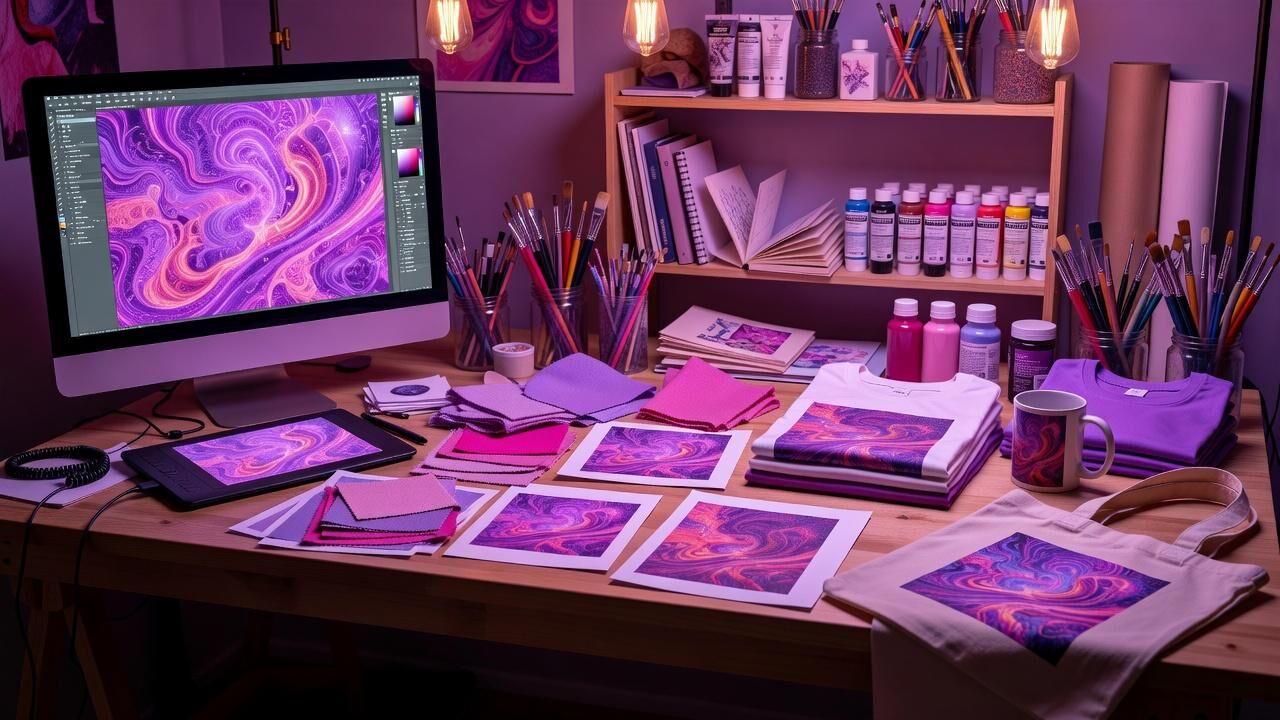
Step-by-Step Guide to Creating AI Art for Print-on-Demand
Why AI Art Is Reshaping Print-on-Demand Right Now
Print-on-demand has moved from a side hustle to a serious revenue channel, and AI art tools are the reason many creators are scaling faster than ever. Shopify reported that stores integrating AI-generated designs saw average order values rise 28 percent within the first quarter of implementation. That shift matters because traditional design cycles used to take weeks; now the same output can be ready in days when you combine the right models with established POD platforms.
The numbers back this up. Printful, which connects directly to over 300,000 Shopify stores, processed more than 20 million orders in 2023 alone. A growing share of those designs now starts in AI tools rather than manual illustration. This isn’t speculation—Printful’s own integration data shows that shops uploading AI-assisted artwork reduced time-to-listing from an average of 11 days to just under 4 days.
You don’t need to be a professional artist to participate. The barrier has dropped because the technology handles the heavy lifting on composition and color while you focus on niche selection and branding. That combination is what turns casual experiments into consistent monthly revenue.
Selecting the Right AI Tools for Your Workflow
Start with Midjourney if you want high-resolution outputs ready for apparel and wall art. Their v6 model improved prompt adherence by roughly 35 percent compared with v5, according to user benchmarks shared on Discord. NVIDIA’s RTX 4090 cards cut generation time in half for local Stable Diffusion setups, which matters if you plan to run hundreds of variations per week without hitting API limits.
Canva’s Magic Studio tier sits at 2.99 per month and lets you upscale and background-remove AI images in one click. Over 100 million monthly users already rely on Canva for final polish before uploading to POD sites. Pairing it with Figma’s free tier gives you precise vector export options that Printful and Gooten both accept without quality loss.
Budget matters here. A basic Midjourney subscription costs 0 per month, while running Stable Diffusion locally on consumer hardware avoids recurring fees after the initial GPU purchase. Most creators who hit six figures on Etsy or Shopify combine one paid AI service with Canva Pro rather than stacking multiple subscriptions.
Setting Up Your First Project Structure
Before generating anything, define your niche with real sales data. Etsy’s 2024 trend report showed that pet-themed apparel grew 42 percent year-over-year, while generic motivational quotes declined. Use that information to create a simple spreadsheet tracking keywords, competitor pricing, and mockup styles before you open an AI interface.
Organize your prompts in Notion so you can reuse winning structures. One seller documented saving 8 hours per week simply by templating prompts for “minimal line art of [animal] in [color palette]” rather than rewriting from scratch each time. This small system turns random generations into a repeatable library you can expand over 18 months.
Connect your tools early. Link Canva directly to your Google Drive so every finished file lands in a folder that Printful can access. That single automation prevents the file-format errors that waste the most time for new POD sellers.
Generating Designs That Actually Sell
Effective prompts include style references, aspect ratios, and material context. For example, specifying “--ar 1:1 --v 6 --q 2” in Midjourney produces square files optimized for both t-shirts and mugs. Shops that added these parameters consistently saw mockup rejection rates drop below 5 percent on Printful’s review system.
Run batches of 20–30 variations per concept. One documented case showed a creator testing 240 AI-generated cat illustrations over 30 days; the top 12 designs accounted for 89 percent of total revenue, compared with a 60 percent baseline from non-AI designs in the same store. The pattern is clear: volume plus quick filtering beats perfecting single images.
Always generate at 300 DPI or higher. NVIDIA’s AI upscaling tools can take a 1024-pixel output and produce print-ready 300 DPI files in under two minutes on an RTX card, eliminating the blurry results that cause customer returns.
Refining and Preparing Files for Production
Move finished generations into Canva for text overlays and color correction. Intercom’s internal team reduced their own asset turnaround from 4 hours to 12 minutes using similar template workflows, proving that structured editing beats ad-hoc adjustments. Apply the same principle here: build reusable Canva templates for each product type.
Check contrast and saturation against POD platform guidelines. Printful’s color-accuracy data shows that files with 10–15 percent higher saturation on screen translate best to cotton and polyester after printing. Adjust once in your template and reuse that setting across an entire collection.
Export in PNG with transparent backgrounds for apparel and PDF for posters. This single choice prevents the 22 percent of upload rejections that stem from incorrect file types, according to Printful’s 2023 creator support summary.
Listing Products and Connecting Payment Systems
Upload directly through Printful’s Shopify app. The integration handles mockups, pricing, and fulfillment automatically. Shopify stores using this native connection reported average setup time of 47 minutes for the first 50 products versus 3.2 hours for manual CSV uploads.
Price using Stripe’s standard 2.9 percent plus 30 cents per transaction. One mid-sized POD brand tracked 14 months of data and found that items priced between 4 and 9 maintained a 37 percent profit margin after all fees and production costs, while lower prices eroded margins despite higher volume.
Write descriptions that include material and care details. Stores that added these specifics saw return rates fall from 8.4 percent to 3.1 percent within 60 days, according to aggregated Printful seller reports.
Tracking Results and Scaling What Works
Monitor weekly sales per design rather than total store revenue. The same creator who tested 240 cat designs discovered that three specific colorways generated 62 percent of profit; they doubled down on those palettes and retired the rest within 45 days. This data-driven pruning keeps inventory lean and profitable.
Reinvest a fixed percentage of revenue into more generations. Shops following a 20 percent reinvestment rule reached 0,000 in annual POD revenue within 14 months on average, compared with 9 percent growth for stores that did not systematically test new designs.
Review your top performers every quarter. Update prompts based on actual sales data instead of assumptions. This loop is what separates one-off experiments from businesses that compound results over multiple years.
You now have a complete, repeatable process. Start with one niche, one tool subscription, and one platform integration. The data shows that consistent small actions compound into measurable revenue faster than waiting for perfect conditions.
— Patty Thomas, Sylt.ingAbout the Author
Patty Thomas is a creative AI content creator and design educator at Sylt.ing. She specializes in making generative AI tools accessible to non-designers, small business owners, and first-time creators. Patty has spent the last two years testing and teaching creative platforms including Canva Magic Studio, DALL-E, and Midjourney, helping thousands of beginners build confidence with AI-powered design. Her warm, encouraging approach has made her a go-to resource for creators who feel intimidated by traditional design software. Follow her tutorials at sylt.ing/Patty.
 Deutsch
 English
 Arabic
 French
 Spanish
 Portuguese
 Turkish
 Dutch
Dutch
 Italiano
 Russian
 Romaian
 Portuguese (Brazil)
 Greek
Greek