


OpenAI Bought Tens of Thousands of Mac Minis. Here Is Why AI's Compute Playbook Just Changed
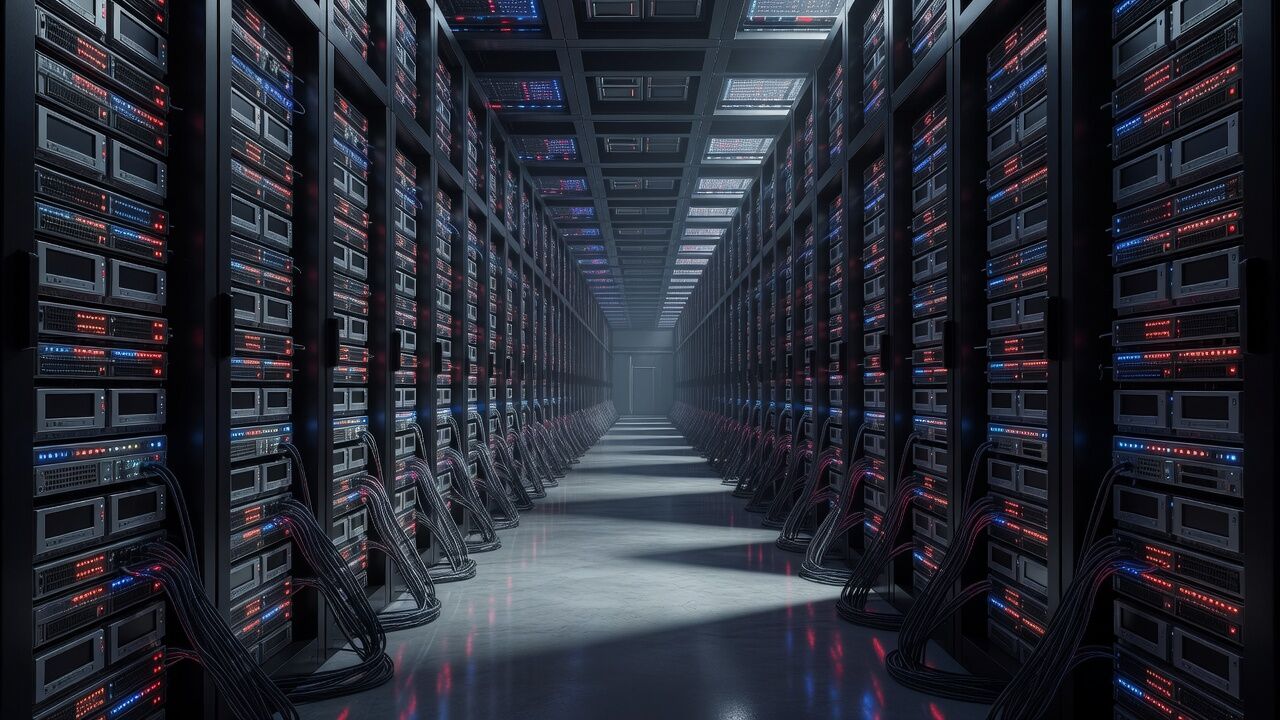
I've spent twenty years in server rooms, and I've never seen anything quite like this. The Information dropped the report on a Sunday night, and by Monday morning every hardware broker I know was on the phone. OpenAI has quietly bought tens of thousands of Apple Mac mini and Mac Studio desktops over the past few months. Not rented. Not borrowed. Bought. If you think that's just a procurement quirk, you're missing the point: the AI compute playbook — the one that says everything runs on Nvidia — is cracking open.
What OpenAI Is Actually Doing With Tens of Thousands of Macs
Let's be precise about the workload, because that's where the story lives. The Information reports that OpenAI is using these Macs for reinforcement learning pipelines and the training of 'computer-use agents' — AI systems that autonomously handle multi-step tasks on a computer. Click. Type. Navigate. Operate software. The kind of agent that books a flight or troubleshoots a server without a human in the loop.
That's not a massive language model training run. That's a different beast entirely. Computer-use agents need to interact with a real operating system, in real time, with low latency — you can't simulate that on a GPU cluster and expect the agent to generalize to an actual desktop. OpenAI needs thousands of endpoints to run parallel reinforcement learning episodes, each one a full computer session that has to be fast, stable, and cheap enough to scale. Buying tens of thousands — not hundreds, not a pilot program — tells me they've validated this at scale and they're doubling down.
Why Apple Silicon — Not Nvidia — for This Job
Here's where the Nvidia crowd gets uncomfortable. For this specific workload, Apple silicon is not a compromise. It's the better tool. The unified memory architecture is the key: the CPU and GPU share one memory pool, so you can load a model and run inference without copying data back and forth over a PCIe bus. For agentic workloads — where the model is constantly making decisions, observing results, and acting again — that eliminates a massive bottleneck.
Then there's Thunderbolt 5, the detail infrastructure people notice: low-latency, high-bandwidth PC-to-PC connections that bypass the standard TCP/IP networking stack, so you can cluster Macs with direct links that skip network protocol overhead — a winning formula for on-device agentic orchestration. And the cooling is genuinely good: I've run Mac Studios in a warm room and they don't throttle, which matters when you're running RL loops for days. Nvidia GPUs are powerful, but they run hot and need serious infrastructure around them. For thousands of discrete, self-contained agent endpoints, Apple silicon is simply more practical — the right tool for the right job.
Anthropic's Answer: Rent the Macs, Don't Buy Them
OpenAI's rival is doing the same class of work with a different financial strategy. According to The Information, Anthropic is renting Apple Mac hardware through AWS rather than buying it outright. OpenAI is betting on ownership — control over supply, experiments without a meter running. Anthropic is betting on flexibility — no capital expenditure, no risk of obsolete hardware in eighteen months. I've seen this movie before: in the early days of cloud, everyone rented; then the big players realized that for core workloads, owning was cheaper and faster. Time will tell which bet is right — but the fact that both are going all-in on Apple silicon for this task is the real story.
The Memory Shortage That Turned Macs Into Gold Bars
You can't buy what doesn't exist. Right now, the most powerful Mac models have been sold out for months. Taiwan's Economic Daily has been reporting on this for weeks, and analysts have a name for it: 'chipflation.' Memory prices are pricing ordinary consumers out of the market while AI labs and enterprises grab any capable machine they can find. The unified memory that makes Apple silicon so good for AI is also the bottleneck — high-capacity modules are in short supply, and the labs are buying them in bulk.
Apple refreshed the Mac line just last week — late August 2026 — with a new Mac mini featuring the M6 chip, which validates TSMC's 2nm process, and a Mac Studio with the M5 Ultra chip. These are exactly the machines AI labs want, and they're going to sell out immediately. I've priced out a fully loaded Mac Studio with maximum unified memory — it's not cheap, but for an AI lab the cost per agent-training-hour is lower than anything else on the market. If you're a consumer eyeing a high-end Mac for local AI work, you're competing with OpenAI and Anthropic for the same boxes. Good luck.
The RTX Spark Sellout: Everyone Is Fighting for the Same Boxes
It's not just Apple. Nvidia's first RTX Spark systems — the N1x — are already sold out ahead of their fall debut. These are compact AI computers with a 20-core Grace CPU, a Blackwell RTX 5070 GPU with 6,144 CUDA cores delivering up to 1 PFLOP of FP4 performance, up to 128GB of LPDDR5X unified memory, a 600 GB/s NVLink-C2C interconnect, and TSMC's 3nm process, co-designed with MediaTek. Street price around 3,400 dollars, running Windows on Arm. Asus, MSI, Dell, HP, Lenovo, and Microsoft all took first-batch allocations — and they're all gone.
Same dynamic as the Mac shortage: labs and enterprises are grabbing every capable machine they can find, and the supply chain can't keep up. The RTX Spark takes a different approach from Apple — dedicated GPU power with CUDA and Tensor cores instead of unified memory — but it's aimed at the same market: local AI inference and agentic workloads. The market is bifurcating: for massive training runs you still need a data center full of H100s or B200s, but for the edge — agents, local inference, the long tail — the future is these small, powerful boxes.
The Questions Nobody Has Answered
Let's be honest about what we don't know. The Information's report is solid, but it raises more questions than it answers. Here are the ones I'm asking every source I talk to:
1. What is OpenAI's actual failure rate on these Macs? They're reliable, but they're not data-center hardware. Running tens of thousands in a rack means a non-trivial failure rate. Are they swapping units out or running them until they die? That changes total cost of ownership significantly.
2. How are they networking these machines at scale? Thunderbolt 5 is great for small clusters, but in the thousands you need a real fabric — standard Ethernet with RDMA, or custom Thunderbolt meshes? The answer determines whether this scales beyond a few thousand units.
3. What happens when the M6 and M5 Ultra machines arrive? Are the tens of thousands OpenAI already bought obsolete in six months, or are they buying another batch? The memory shortage suggests they'll buy whatever they can get.
4. And the big one: what does this mean for Nvidia's data-center business? If a significant chunk of inference and agentic workloads can run on Apple silicon or RTX Spark boxes, does the hyperscaler buildout slow down? I don't have the answer, but I'm watching the capex numbers closely.
What This Means: The Compute Playbook Just Changed
For years, the assumption was that AI compute meant Nvidia GPUs in a data center. Period. That's no longer true. OpenAI's Mac purchase is a signal that the industry is diversifying: there are workloads — specifically agentic, interactive, low-latency ones — better served by distributed, unified-memory machines at the edge. Open-source software like Exo already lets users link multiple Macs into a cluster to run large models locally. That's a preview of what OpenAI is doing at scale.
Peter Voell, formerly on OpenAI's computing infrastructure team, is building an Apple-based cloud service called Mount Thor. That's not a coincidence. Apple's Mac revenue jumped nearly 29 percent to 10.4 billion dollars in the June quarter. That's not a blip. That's a structural shift — you no longer need a billion-dollar data center to run useful AI; a rack of Mac Studios, a good network, and the software to tie them together will do. That's a democratizing force, and a disruptive one.
What Comes Next
The next twelve months are going to be chaotic. Apple's new M6 Mac mini and M5 Ultra Mac Studio are going to sell out immediately, and the memory shortage is going to keep prices high. Nvidia's RTX Spark is going to be backordered for the foreseeable future. AI labs are going to keep buying every capable machine they can find, and ordinary consumers are going to be priced out.
I'm watching three things: whether OpenAI's Mac fleet actually delivers on computer-use agents — if it works, every other lab will follow; whether AWS can scale Mac rentals to meet demand; and whether Nvidia pushes harder into the compact AI market or cedes this segment to Apple. One thing is certain: the era of the single, monolithic AI compute platform is over. The future is heterogeneous, distributed, and a lot more interesting than a rack of GPUs — and right now the workload is telling us Apple silicon is a serious player in AI infrastructure. That's not a headline. That's a fact.
— Allan Ali, Sylt.ing
 Romaian
 English
 Arabic
 French
 Spanish
 Portuguese
 Deutsch
 Turkish
 Dutch
Dutch
 Italiano
 Russian
 Portuguese (Brazil)
 Greek
Greek