
 Monetization
Anthropic's 1.5 Billion Dollar Settlement Just Got Appealed — Twice
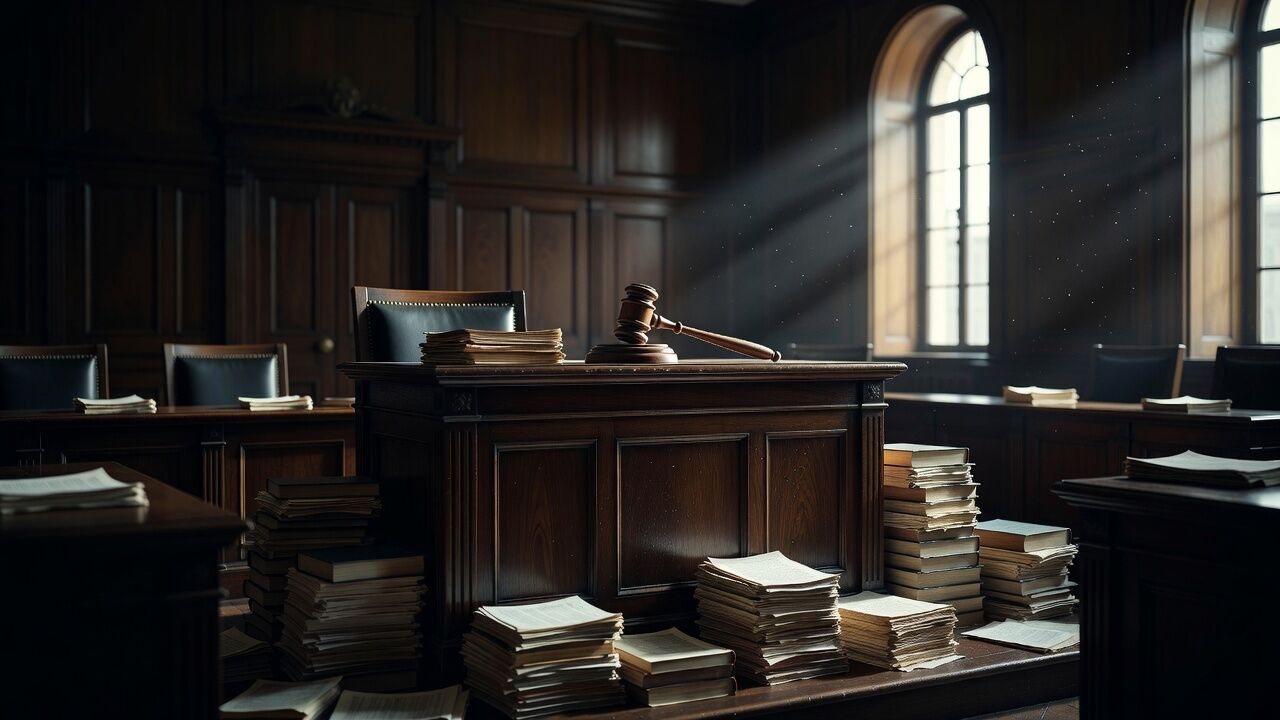
Two weeks ago, the largest copyright settlement in American history was one appeal away from paying out. Then, on the final day of the appeal window, the lawyers who got nothing filed a notice of appeal. The next day, another law firm filed a second one. The 1.5 billion dollar Anthropic settlement is still alive — and the fight that could delay author payouts has nothing to do with the authors.
The Settlement That Was Supposed to End the Story
The case is Bartz v. Anthropic, and the core allegation was never complicated. Anthropic downloaded, stored, and copied pirated datasets consisting of millions of illegally uploaded books to train its Claude models. The authors sued, and in July 2026 the case produced a 1.5 billion dollar class settlement — the largest recovery ever in a copyright infringement suit — approved on July 20 by Judge Araceli Martínez-Olguín of the Northern District of California.
That should have been the end of it: authors get paid, Anthropic gets a price for its training data, and the industry gets a reference number for what a book corpus is worth. The settlement covers 482,460 works, with payouts estimated at roughly 3,109 dollars per work. The case, as far as the class was concerned, was closed.
Except it wasn't. The 30-day appeal window didn't expire until August 19.
The Math Nobody Likes: 3,109 Dollars Per Book, Half to the Publisher
Participation was unusually robust — 91.3 percent, with claims filed for 440,490 of the 482,460 eligible works. Remarkable for a class action; participation typically runs below 10 percent. It also means the money spreads thin.
Axis Intelligence Research calculates the settlement's efficiency ratio at 2.07 percent — 1.5 billion dollars against a 72.369 billion dollar theoretical ceiling under the statutory damages provision of the Copyright Act. That is the gap between what was recovered and what the law theoretically allowed.
Then comes the split that has authors grinding their teeth. The settlement divides every per-work payout 50/50 between author and publisher, based on the common contract clause that says authors and publishers share copyright litigation recoveries. Bloomsbury Publishing announced its take publicly: 14,087 titles at 1,500 dollars per title — half of the estimated 3,000-dollar payout — for a total of 21.1 million dollars. The response from authors on social media was, to put it politely, sour. The people whose work was actually pirated feel they should not be handing half of a capped payout to a publisher that didn't write a word.
The Fee Fight Nobody Voted For
Which brings us to the lawyers. Class counsel asked the court for 12.5 percent of the settlement fund — 187.5 million dollars — plus 2.5 million in expenses and an 18 million dollar cost reserve. The judge declined to use a percentage-of-settlement approach and instead computed fees under a different method, cutting the award to 101.5 million dollars, or about 6.8 percent of the fund. Service awards for the three named plaintiffs were also cut, from 50,000 dollars each to 15,000.
The reduced fee award is still the single largest pot of money in the entire settlement. And it is exactly what the fight is about.
Here's the background that matters. The original judge, Judge Alsup, was openly worried about "add-on" law firms attaching themselves to the settlement and made clear only class counsel could be paid. That left the Publishers' Coordination Counsel — two firms, Edelson and Oppenheim + Zebrak, brought in by publishers to coordinate their interests — entirely out of the fee pool. They did the work. There was no money for them.
Two Appeals in Two Days
On August 19, the last possible day to appeal, Edelson and Oppenheim + Zebrak filed a notice of appeal to the Ninth Circuit. They said they intend to focus on "issues related to the Order Granting in Part Motion for Attorneys' Fees, Reimbursement of Expenses." But the notice is drafted broadly, as an appeal of "the Judgment entered on July 20, 2026, including all prior orders encompassed in that decision." Exactly how wide that net is, nobody has said.
On August 20, a second appeal landed — this one from a different law firm, also not class counsel and not part of the class. That filing explicitly does not seek to alter the total amount of attorneys' fees awarded; it is limited to the order as it pertains to a specific fee-sharing arrangement. Author and copyright commentator Courtney Milan's read is that the firm will ask for a piece of the roughly 100 million dollars that class counsel were awarded. In other words: more lawyers, positioning for a slice of the same fee pool, after the money was already allocated.
What the Appeals Mean for Your Payout
The settlement agreement defines its "effective date" as the later of two events: the date the appeal window expires, or the date an appeal is resolved or dismissed. The window expired August 19. The appeals are now in front of the Ninth Circuit. That means the effective date is, for the moment, an open question.
Before the appeals, the payout plan was clear enough. Payments were scheduled in two stages — roughly 70 percent in the first stage and 30 percent in the second — because Anthropic is depositing the settlement money in installments through September 2027. If no appeal had been filed, a portal with consolidated claim forms was supposed to launch by the end of August, letting claimants see every work, its copyright number, and who else is claiming a share. A Special Master has been appointed to adjudicate disputes between rightsholders who disagree on percentages.
Now the timing is anyone's guess. Some commentary argues this particular appeal should not hold up disbursement, since it targets the fee award rather than class payments. Others are less optimistic. Estimates from people watching the docket range from September to, in one lawyer's words, "not in 2026."
The 350 Who Walked Away
Roughly 350 claimants opted out of the settlement, covering about 1,802 works. They are now litigating separately, aiming for the 150,000-dollar statutory ceiling per work rather than the 3,109-dollar class payout. Axis Intelligence puts the gap between the statutory ceiling on those works and their in-class value at 264.7 million dollars.
Two late opt-out requests were granted despite the deadline: Laura Esquivel and Jordi Castells. Both are plaintiffs in a group of joined lawsuits recently filed by 100 authors and publishers who opted out of the settlement. That is the other track of this story — the people who believe 3,109 dollars a book is not a price, it's a rounding error.
What This Means: The Only Certain Winners Are the Lawyers
Step back and look at the shape of this thing. A historic settlement got approved. The authors who were pirated get a payout that works out to a fraction of one percent of the statutory maximum. Their publishers take half of it. The lawyers argued over a 101.5 million dollar fee pool before a single check was cut, and two of the firms left out filed appeals that could push the whole disbursement calendar into next year. The only people guaranteed to be made whole are the ones who never wrote a book.
And the underlying legal question — is training an AI on copyrighted works fair use at all? — remains unanswered at the appellate level. No US court of appeals has ruled on it, twenty months into the litigation wave. The Third Circuit heard argument in one case on June 11 and still hasn't decided. In Germany, the Munich District Court applied US copyright law to training conducted in the United States and rejected the fair use defense in GEMA v. Suno on July 31. And in Concord I, the Anthropic lyrics case, publishers and Anthropic are at cross-motions for summary judgment — with the publishers leaning on Anthropic's own admission that it copied works whole and didn't need them at all.
For anyone running a business on top of AI, that is the number to watch. A settlement is a one-time price. A court ruling that training is not fair use is a permanent cost structure.
What Comes Next
Watch the Ninth Circuit docket, and watch the settlement portal. If the fee appeals get dismissed quickly or don't block the effective date, the first wave of payments could still move this year, with the balance dragging into 2027 as Anthropic's installments land. If the appeals bite, the authors wait.
The deeper takeaway is simpler and uglier. The biggest copyright case in history just demonstrated that even when creators win, the payout structure is built to reward everyone except the creators. The 1.5 billion dollar question — and it was never really about Anthropic — is whether the next settlement, or the first appellate ruling, changes that arithmetic. Don't hold your breath. But keep watching the docket.
— Allan Ali, Sylt.ing
 Italiano
 English
 Arabic
 French
 Spanish
 Portuguese
 Deutsch
 Turkish
 Dutch
Dutch
 Russian
 Romaian
 Portuguese (Brazil)
 Greek
Greek