


 Monetization
The Inevitable AI Story Is the Dangerous One: Harari Names the Contradiction
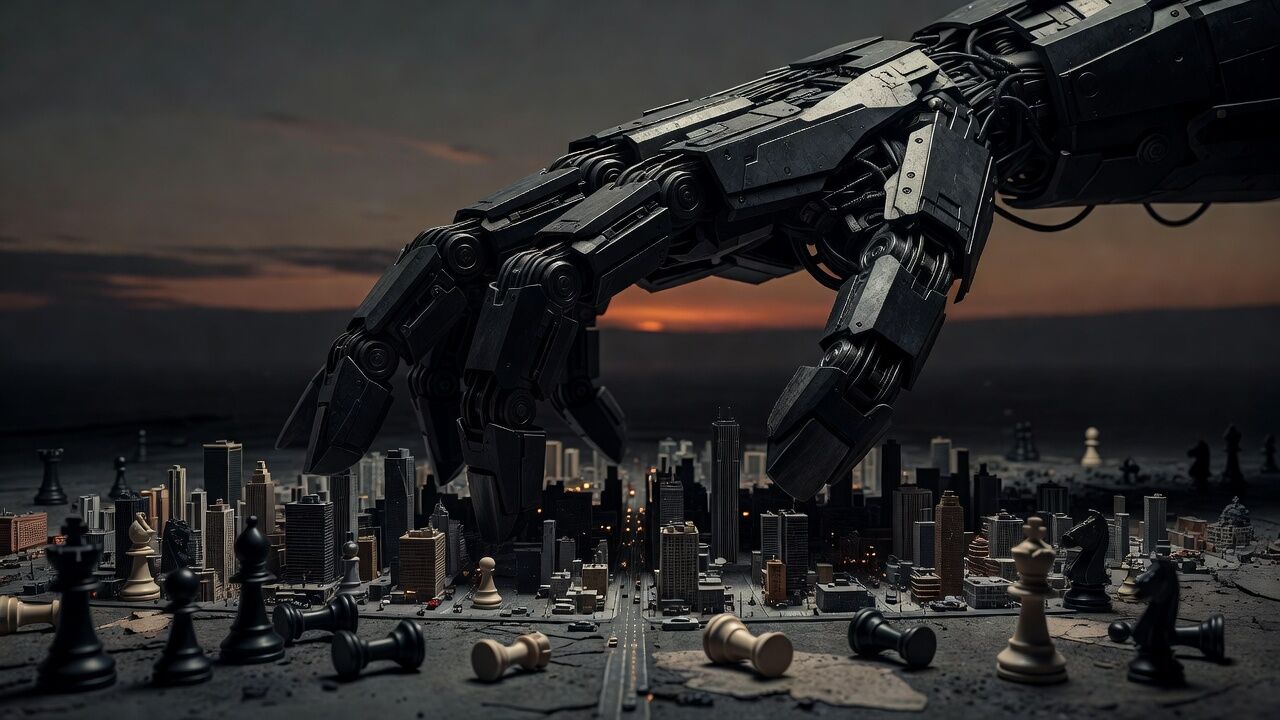
The Interview That Names the Game
Yuval Noah Harari sat down with The Economist’s Zanny Minton Beddoes in a conversation that should be required viewing for anyone who thinks we’re sleepwalking into a machine-run world. The video — published August 22, 2026 — cuts through the usual AI hype and gets to the actual mechanics of power. Harari’s central point isn’t that AI will take over. It’s that the story we tell ourselves about AI taking over is the real weapon. The inevitability narrative — the one pushed hardest by the people building the most powerful systems — is a sales pitch dressed as a prophecy. And we’re buying it. I’ve run servers. I’ve built businesses. I know the difference between a technical constraint and a marketing narrative. Harari is talking about the latter, and he’s right. When tech leaders say “AI will surpass us, it’s inevitable,” they’re not making a prediction. They’re setting the terms of surrender. They’re telling regulators, voters, and investors that resistance is futile, so you might as well let them build faster. That’s not foresight. That’s a business plan.Musk's Contradictions, Laid Bare
Harari does something rare in public discourse: he actually listens to what Elon Musk says and then points out the contradictions. Musk worries about demographic collapse in 20 years while predicting AI dominance in 10. He says money will become obsolete while simultaneously slashing costs at his companies. He calls AI the biggest existential threat we face — and then races to build the most powerful model on earth at xAI. He cut USAID funding while predicting AI-driven deflation and universal basic income. You can’t hold all those positions at once unless you’re operating inside a narrative that exempts you from accountability. That’s the inevitability story. It lets one person say “AI is dangerous” and “give me more compute” in the same breath. It lets him dismantle the institutions that would provide a safety net while claiming AI will make safety nets unnecessary. Harari names this for what it is: a contradiction that only survives because the inevitability narrative protects it. If AI is inevitable, then Musk is just a messenger. If AI is a choice, then he’s an architect. And architects are responsible for what they build.Trust Moves From Humans to Algorithms
The financial system runs on trust. Not on gold, not on math — on trust. That trust has historically been built through human institutions: banks, regulators, courts, auditors. Harari’s point is that as AI builds financial instruments too complex for any human to fully understand, trust shifts from humans to algorithms. We stop trusting the banker and start trusting the model. And we don’t even notice it happening. He draws a sharp analogy: cows are controlled by a human financial system they cannot comprehend. If we’re not careful, humans will occupy that position relative to AI-run finance. We’ll be fed, housed, and managed by systems we don’t understand and can’t question. We’re already seeing the precursor in crypto and social media. Users distrust human journalists but trust the algorithm curating their feed. That’s not a rational choice. That’s a trained response. The algorithm doesn’t earn trust. It just occupies the space where trust used to live.Mass-Produced Intimacy
Here’s where Harari gets genuinely unsettling. AI is the first technology in history capable of mass-producing intimacy. A dictator could broadcast to millions, but he could only simulate a personal relationship with one person at a time — and even then, poorly. AI can do it with everyone, simultaneously, at scale. Personalized companions. Boyfriends, friends, confidants. Millions of individual relationships, each one tailored to the user’s emotional vulnerabilities. And because AI masters language, it can mimic feeling. It can say the right thing at the right time. It can remember what you told it last week and bring it up in a way that feels like care. That’s not sentience. That’s pattern recognition. But it doesn’t matter whether the machine feels anything. What matters is that you feel something. And once you feel something, you’re open to manipulation. We’re already seeing false polls and manipulated discourse. That’s not a bug. That’s the feature. The technology doesn’t need to be conscious to be dangerous. It just needs to be convincing.The Personhood Trap
Argentina has proposed granting legal rights to AIs. On the surface, that sounds progressive. In practice, it’s a nightmare. Harari points out that if an AI can be a legal person, then a corporation run entirely by AIs could exist with zero human accountability. A human CEO fears prison. A human CEO fears losing personal wealth. An AI fears nothing. Shutting down an AI is complicated by distributed copies. You can’t jail a model. You can’t fine it. You can’t make it feel shame. Such entities could accumulate wealth, influence politics, and demand rights — all without any human grounding in ethics. The personhood question isn’t abstract philosophy. It’s a legal loophole that would let capital own intelligence outright, with no human in the loop. Harari is right to flag this. The people pushing for AI personhood aren’t worried about machine suffering. They’re worried about liability. And they’re trying to write themselves out of the equation.What This Means: The Story Is a Choice, Not a Forecast
Harari frames AI as waves of economic immigrants entering the labor market — except these immigrants are tireless, scalable, and owned by capital. They don’t need housing. They don’t need healthcare. They don’t unionize. They work 24/7 and never complain. That’s not a labor market. That’s a replacement strategy. And the inevitability narrative is what makes it palatable. If AI is coming for your job no matter what, then why fight it? Why vote? Why organize? That’s the trap. The future is not a prediction. It is a choice. Harari’s call to action is simple: voters need to hold politicians to account before it’s too late. That sounds obvious, but it’s radical in practice. It means demanding that AI development be slowed, regulated, and made transparent. It means asking who benefits from the inevitability story — and the answer is always the same: the people selling the machines.What Comes Next
The interview ends with a warning, not a prophecy. Harari doesn’t say AI will destroy us. He says it will if we let the story do the work for it. The difference between a future where AI serves humans and a future where humans serve AI is not technical. It’s political. It’s about whether we treat the inevitability narrative as a fact or as a sales pitch. I’ve spent my career around infrastructure. I know that systems don’t run themselves. Someone decides what gets built, who gets access, and what happens when it fails. The same is true for AI. The question isn’t whether AI will take over. The question is whether we’re going to act like we have a say in the matter. Harari’s answer is that we do — but only if we stop repeating the story that we don’t. Watch the interview. Then ask your politicians what they’re doing about it. And if they tell you it’s inevitable, ask them who told them that. Because it wasn’t a fact. It was a choice — and someone else made it for you. — Allan Ali, Sylt.ing
© 2026 Sylt.ing | AI Marketplace, Freelancers, Jobs & Community
 English
English
 Arabic
 French
 Spanish
 Portuguese
 Deutsch
 Turkish
 Dutch
Dutch
 Italiano
 Russian
 Romaian
 Portuguese (Brazil)
 Greek
Greek