


 Monetization
Micron CEO: Memory Is No Longer a Component - It's AI's Strategic Infrastructure
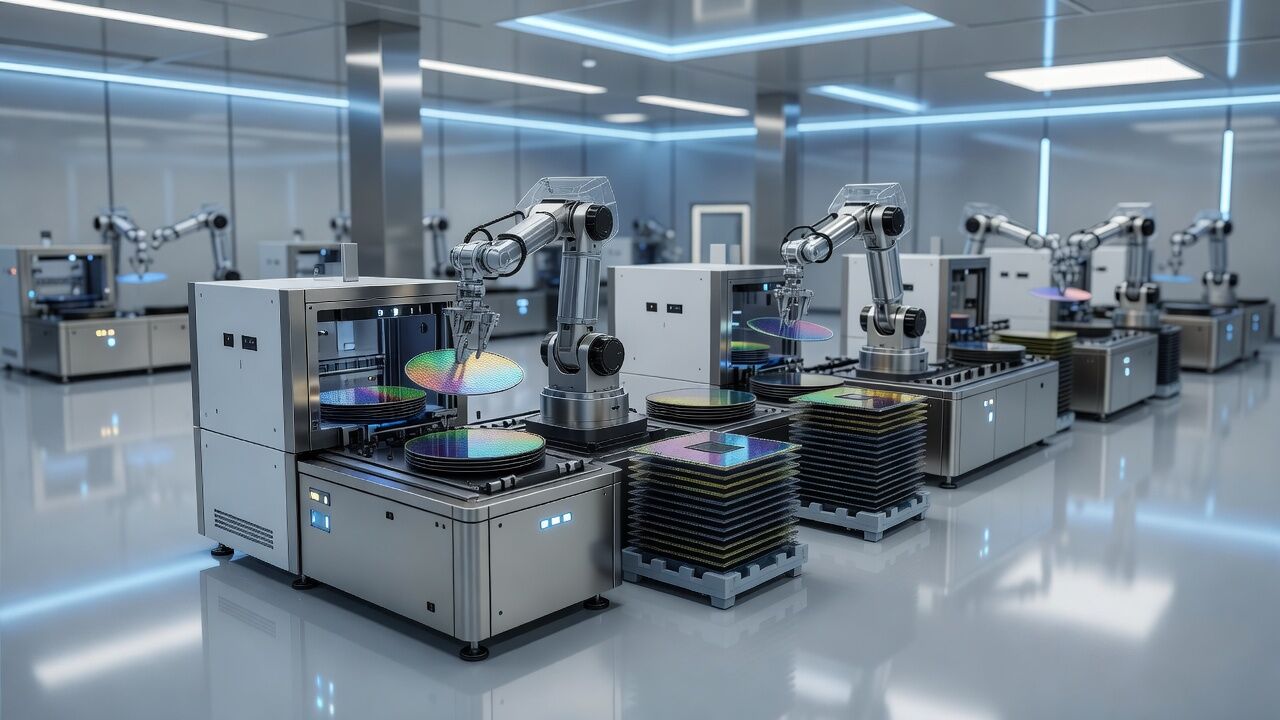
The Memory Era Begins — Whether Wall Street Believes It or Not
Jim Cramer stood inside Micron’s Boise fab on August 20, 2026, and let Sanjay Mehrotra do something most CEOs avoid: he made a claim that rewrites the semiconductor playbook. “There is no AI without memory,” Mehrotra said. “AI systems need more memory.” That’s not marketing. That’s physics. And for anyone who actually runs infrastructure, it’s the most important sentence spoken in this earnings cycle. Memory is no longer a component you slot into a server. It is the strategic layer that decides whether your AI workload ships or stalls. The framing shift matters because it changes how you budget, how you plan, and how you explain to your CFO why DRAM costs are now a line item that can sink a quarter.
The Numbers That Kill the “Component” Argument
Let’s skip the fluff and go straight to the ledger. Micron’s entire 2026 HBM output is sold out. Not “mostly allocated.” Sold out. The company has signed 16 long-term contracts that lock in roughly $100 billion in minimum revenue through 2030. That’s not spot-market speculation. That’s committed demand from customers who have already designed their systems around Micron’s memory. And here’s the structural kicker: HBM requires roughly 300% more wafer capacity per bit than DDR5. You don’t fix that with a pricing blip. You fix that with fabs. Micron is spending $50 billion in Idaho alone — ID1 is on track for first wafer output mid-calendar 2027, ID2 follows late-calendar 2028. That’s a four-year runway from announcement to production. Meanwhile, Mehrotra told CNBC that 2027 will be even tighter than 2026. Supply is constrained, demand is accelerating, and the long-term deals are already signed. This is not a cycle. This is a structural shift in how memory is consumed.
Why This Time Is Different — And Why the Skeptics Still Have a Point
I’ve been through three memory cycles. I’ve seen DRAM prices crater when everyone thought the shortage was permanent. So when I hear “this time is different,” I reach for the historical data. Memory prices surged in 2025 — some reports put the rise near 246%. That’s the kind of move that attracts capacity. Baillie Gifford’s analysis points out that the old cyclical pattern is not dead: three previous cycles suggest pricing power eventually normalizes. They’re not wrong. But here’s what’s genuinely different: AI memory demand is not tied to PC refresh cycles or smartphone upgrades. It’s tied to model training and inference, which are doubling every few months. The 300% wafer penalty for HBM means that even if every fab on earth converted to HBM tomorrow, you’d still be short. The skeptics are right that pricing will eventually normalize. They’re wrong about the timeline. This is a multi-year structural deficit, not a quarterly spike.
What This Means for Anyone Running Infrastructure
If you’re running AI workloads, memory is now the budget line that decides whether your project ships. Compute is no longer the bottleneck — it’s the memory bandwidth and capacity that feed the compute. I’ve seen customers spec out a cluster, get the GPUs, and then discover that the HBM allocation they assumed would be available is already contracted to someone else. That’s the new reality. You don’t buy memory off the shelf anymore. You negotiate multi-year supply agreements before you even order the accelerators. And the pricing power is real: Micron trades at a forward P/E near 6, which is cheap relative to semiconductor peers. The market still prices memory like a cyclical commodity, not strategic infrastructure. That gap between the market’s perception and the operational reality is where the opportunity — and the risk — lives.
The Questions Nobody Has Answered
Here’s what keeps me up at night, and what every infrastructure leader should be asking before they commit to a 2027 roadmap:
1. Can the industry add capacity fast enough? Micron’s Idaho buildout is $50 billion and won’t produce wafers until mid-2027. Samsung and SK Hynix are expanding, but the 300% wafer penalty for HBM means even their additions may not close the gap. What’s the realistic global supply curve for 2027-2028?
2. What happens when the 2030 contracts expire? Micron has $100 billion locked in through 2030. But those contracts were signed at prices that reflect today’s shortage. If AI demand plateaus or if new memory architectures emerge, will those contracts become anchors or albatrosses?
3. Does China’s memory buildout change the calculus? Chinese fabs are ramping DDR4 and DDR5, but HBM is a different beast. Can they close the technology gap, or will they remain stuck in commodity memory while the strategic layer stays with U.S. and Korean suppliers?
4. Is a P/E of 6 a trap or an opportunity? If memory is truly strategic infrastructure, Micron is undervalued by half. If the cyclicality thesis wins, you’re buying at the top of a pricing spike. Which bet are you making with your capital?
5. What happens to AI workloads if memory prices stay elevated? Every AI project has a cost ceiling. If HBM pricing stays at current levels, some workloads become economically unviable. Which ones get cut, and what does that do to demand forecasts?
What Comes Next
The next 18 months will separate the operators from the spectators. Micron’s ID1 fab comes online in mid-2027, and that’s when we’ll see if the supply curve finally bends. But don’t wait for that. Start negotiating your memory supply agreements now. Lock in what you can, because spot pricing is going to stay brutal. And watch the forward P/E — if Micron re-rates toward 12 or 15, the market has accepted the strategic infrastructure thesis. If it stays at 6, the cyclicality crowd is winning the narrative. Either way, the days of treating memory as an afterthought are over. The companies that understand that will ship AI products. The ones that don’t will be explaining to their boards why their roadmap slipped a year.
— Allan Ali, Sylt.ing
 Dutch
Dutch
 English
 Arabic
 French
 Spanish
 Portuguese
 Deutsch
 Turkish
 Italiano
 Russian
 Romaian
 Portuguese (Brazil)
 Greek
Greek