


 Monetization
Nvidia's 105 Billion Dollar Ohio Bet: The Deal Behind an 8-Gigawatt AI Campus
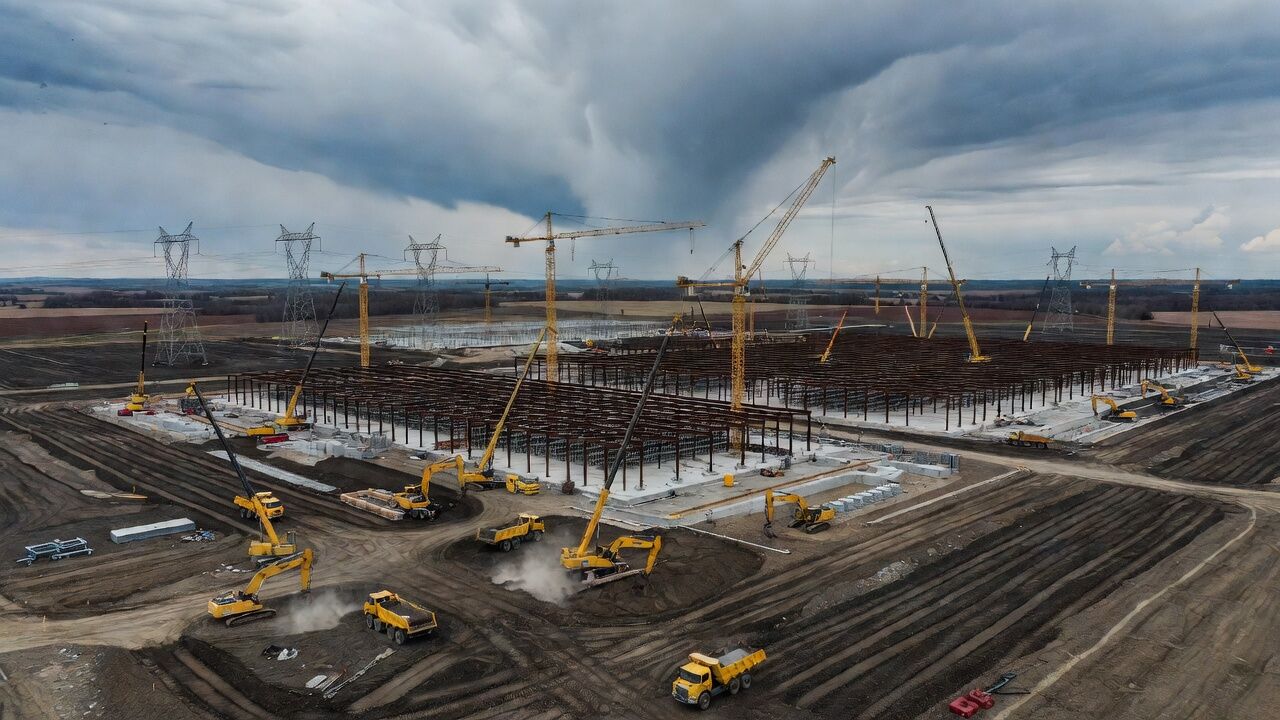
Nvidia's 105 Billion Dollar Ohio Bet: The Deal Behind an 8-Gigawatt AI Campus
Nvidia reports second-quarter earnings tonight, and for the first time in a long time, the number people will be watching is not on the income statement. It is a 105 billion dollar guarantee sitting on the balance sheet, tied to a former uranium enrichment plant in southern Ohio that is being turned into the largest AI computing campus on the planet. This is the story of how that deal got built, who is on the hook for it, and why it has already become a midterm election issue.
What the PORTS-Pike Deal Actually Is
On August 17, NVIDIA, SoftBank-owned SB Energy, OpenAI, and the U.S. Department of Energy announced a partnership at the PORTS-Pike Technology Campus in Pike County, Ohio. The site is the decommissioned Portsmouth Gaseous Diffusion Plant, a Cold War-era complex that once enriched uranium for the American nuclear program. After decades of cleanup, it is being reindustrialized into an AI factory campus spanning private and federal land.
The structure matters. SB Energy builds, owns, and operates the data center. OpenAI is the customer, signing a 20-year lease for roughly 8 gigawatts of IT capacity. NVIDIA is the exclusive AI compute provider, securing land, power, and shell capacity to host its DSX AI factory platform — GPUs, CPUs, and networking as one full-stack design. Initial deployment covers 4.25 gigawatts of IT capacity, with an option to take the remaining 3.75.
This is not a press-release puff piece; the numbers are genuinely staggering. The campus is expected to cost as much as 500 billion dollars, according to the New York Times and CNBC. Construction is projected to create 35,000 jobs on site, with 2,500 permanent operating positions once the first phases come online in 2028.
The 105 Billion Dollar Structure: Nvidia Becomes the Backstop
Here is where the deal gets interesting. A securities filing on August 17 revealed that NVIDIA will provide up to 105 billion dollars in financing guarantees to back OpenAI's lease — credit support on land, power, and shell buildout. That is not an investment in the traditional sense. It is a balance-sheet commitment, a contingent liability, and one of the largest guarantees ever attached to a single infrastructure project.
NVIDIA is also writing an immediate 1.5 billion dollar equity check into SB Energy, joining SoftBank Group and OpenAI as investors. The message is unambiguous: the chip company is no longer content to sell the shovels. It is now co-signing the mine, the smelter, and the town's power grid.
The arrangement is defensive as much as offensive. If OpenAI ever walks away or cannot pay, the guarantee structure means NVIDIA's own demand for its chips is the collateral. This is vertical integration by financial engineering — and it changes the risk profile of the entire AI buildout.
Power First: 10 Gigawatts of Generation for 8 Gigawatts of Compute
Compute is only half the story. The power is the real bottleneck, and this deal treats it that way. SB Energy and SoftBank will build at least 10 gigawatts of new energy generation to feed 8 gigawatts of IT capacity. They are investing at least 4.2 billion dollars in new regional grid infrastructure through a partnership with AEP Ohio explicitly designed to protect ratepayers from bearing the cost.
Put those numbers in context. Ten gigawatts is roughly the annual power consumption of 8 million American households, per a CNBC analysis of Energy Information Administration data. A single campus will consume electricity at the scale of a major metropolitan area — and it will generate its own power to do it, because the grid alone cannot deliver that much energy fast enough.
This is the template for every future AI build: generation, transmission, and compute bundled into one package, financed as one project. If you are a hosting provider or a VPS operator, this is what you are competing against. The era of renting rack space on someone else's utility connection is ending.
The Competitive Picture: Nvidia's New Infrastructure Hand
The deal also answers a question the market has been asking for two years: what happens to NVIDIA when the hyperscalers design their own silicon? The answer, increasingly, is that NVIDIA wraps itself around the whole stack — land, power, financing, and a guaranteed customer — so that its chips remain the default even when customers could theoretically build around them.
OpenAI, for its part, secures 8 gigawatts of committed capacity at a time when every frontier lab is fighting for the same power. That removes a major execution risk from its roadmap. SoftBank and SB Energy get a marquee anchor tenant and a 1.5 billion dollar injection from the most valuable hardware company in the world. The U.S. Department of Energy gets a reindustrialized site and a showcase for the AI economy. Every party walks away with something — and ratepayers and local communities are supposed to be protected by an 80 million dollar community benefits fund and the AEP Ohio agreement.
The Backlash: Data Centers Just Became a Midterm Issue
Here is the part the press releases leave out. The politics are already turning. CNBC reported on August 20 that opposition to AI data centers is becoming a bipartisan rallying cry ahead of the November midterms. The NRSC has called data centers a 'sleeper issue' for the entire cycle. In Ohio's own Senate race, Democrat Sherrod Brown has made data center opposition a centerpiece of his campaign against Republican incumbent Jon Husted.
The cultural signals are just as loud. Liquid Death and Garage Beer — the latter owned by Jason and Travis Kelce — released a satirical ad this week pledging to 'send your pee to the AI data center of your choice,' mocking the water demands of these facilities. Florida's Republican gubernatorial primary was won by Byron Donalds, who has proposed data center restrictions while also receiving support from AI-aligned PACs. Pennsylvania Governor Josh Shapiro signed an executive order this week imposing strict standards on new data center development. Pew Research reported Tuesday that more than half of Americans are now more concerned than excited about AI — up from 37 percent in 2021.
President Trump tried to walk the line this week, saying data centers 'can use a little public relations help' but that he wants them anyway because of the jobs. That is the tension in one sentence.
The Questions Nobody Has Answered
First: what happens to the 105 billion dollar guarantee if the AI capex cycle turns? NVIDIA's own guidance calls for roughly 91 billion dollars in revenue this quarter — the company is enormous — but a contingent liability of that size is new ground for any hardware maker.
Second: who pays if the 10 gigawatts of new generation comes up short? The AEP Ohio partnership is designed to protect ratepayers, but 'designed to protect' is not the same as 'guaranteed to protect.'
Third: can 35,000 construction workers and 2,500 permanent staff actually materialize in rural Pike County? Appalachian Ohio has the land and the legacy workforce, but specialized data center talent does not grow on trees.
Fourth: what does this do to the water table and the community? The site is a former nuclear enrichment facility — environmental monitoring is not optional, and the community fund, generous as it looks, is a rounding error against a 500 billion dollar project.
And fifth: if data centers become the defining midterm issue and the backlash spreads, does the political timeline outrun the construction timeline? The first phases come online in 2028 — a full election cycle away. A lot of politicians will have changed their minds by then.
What This Means: AI Infrastructure Is Now a Balance-Sheet Sport
The takeaway for anyone running infrastructure — and for anyone watching the industry — is that AI has outgrown the cloud reseller model. The winners are no longer the companies with the best software. They are the companies that can assemble land, power, financing, and guaranteed demand into a single deliverable. NVIDIA just showed the entire industry how to do it with one signature.
That is good for OpenAI's roadmap and good for NVIDIA's moat. It is less clear that it is good for everyone else — smaller AI companies without a 105 billion dollar backstop, hosting providers without access to new generation, and communities that suddenly find a 10-gigawatt campus in their backyard.
What Comes Next
Nvidia reports earnings after the close today, and analysts will be asking exactly these questions. The 91 billion dollar revenue guide matters, but the 105 billion dollar guarantee is the line item that will define the next decade of AI infrastructure finance. Watch the earnings call. Watch the Ohio Senate race. And if you are building anything in this industry, start asking what your equivalent of 'land, power, and shell' is — because that is now the table stakes.
— Allan Ali, Sylt.ing
 Russian
 English
 Arabic
 French
 Spanish
 Portuguese
 Deutsch
 Turkish
 Dutch
Dutch
 Italiano
 Romaian
 Portuguese (Brazil)
 Greek
Greek