


 Monetization
Perplexity's Portable Computer: Local AI With Zero Token Costs and a 4,700 Dollar Catch
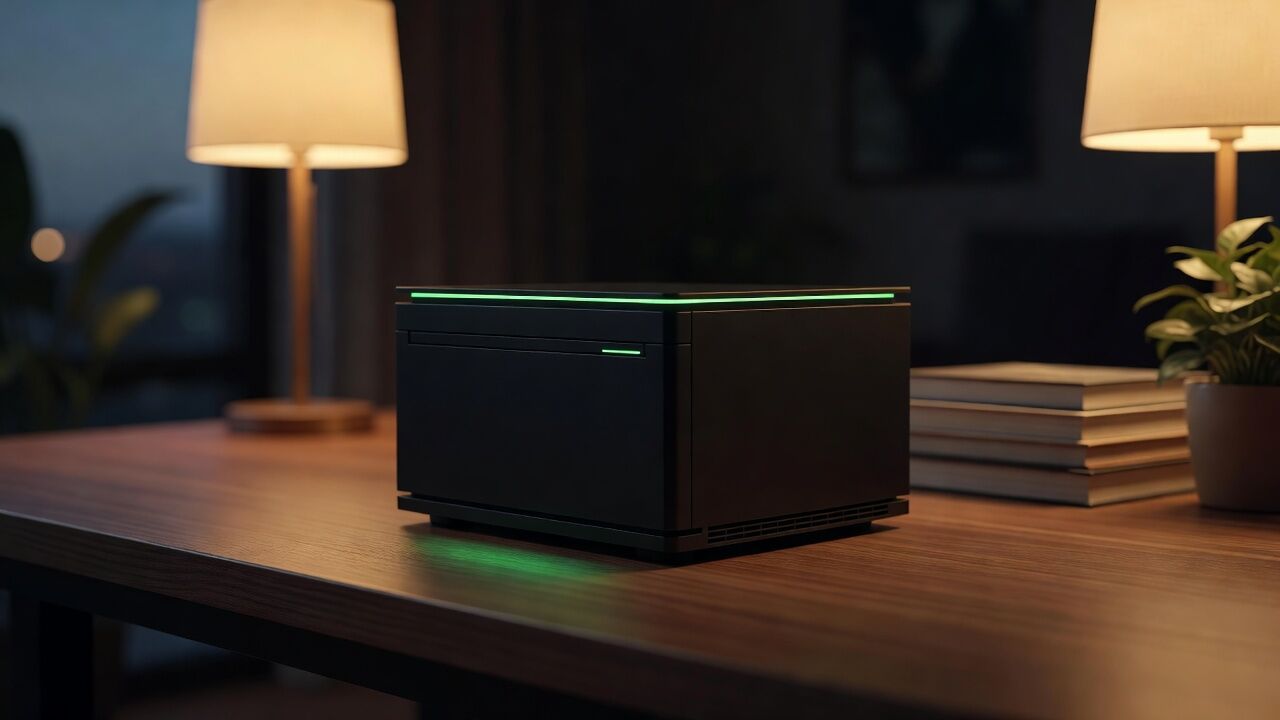
Perplexity and Nvidia just made the cloud optional. On August 25, Perplexity announced Portable Computer, a fully local version of its agentic Computer platform, built in partnership with Nvidia. Every component — the orchestrator model, the subagents, the agent harness, the search index — runs on hardware you own. No cloud round-trip. No per-token meter. That is the headline, and it is a genuinely big deal for anyone who has watched the AI stack consolidate around a handful of cloud APIs.
The fine print is where this gets interesting. Portable Computer is not a free gift. It is a productized local AI stack that requires a roughly 4,700 dollar Nvidia DGX Spark, or an RTX-class PC with at least 24 gigabytes of VRAM, on top of a Perplexity Pro or Max subscription. And even then, when the local models hit their ceiling, the machine politely asks before borrowing a frontier model from the cloud. Here is what is actually going on.
What Portable Computer Actually Is
This is not a locally installed chatbot. It is the full Computer agent stack, moved on-prem: the orchestrator LLM that plans multi-step tasks, the subagent LLM that executes scoped work units, the planner, tool router, scheduler, search index, an isolated sandbox for code execution, and connectors for Gmail, Google Drive, Slack, GitHub and Outlook. Perplexity's VP of Engineering put it simply: the same interface you know from the cloud version, now in a fully local app.
Inference runs through vLLM, and Perplexity says it jointly optimized the models and the orchestration rather than bolting an open-weight model onto a generic agent framework. That distinction matters — it is the difference between Ollama with extra steps and an actual agent product. The local models are Perplexity's own PPLX 27B (Qwen-based) and Qwen 3.8 27B at 3-bit quantization, with Nvidia's Nemotron 3.5 Lightning (30B) on the way.
The Hardware Reality: One Box, 128 Gigabytes, No Macs
The reference device is the Nvidia DGX Spark, the Grace Blackwell GB10 desktop with a 20-core Arm CPU and 128 gigabytes of unified memory. If you already own a serious Linux box, you can run Portable Computer on RTX-class hardware with 24 gigabytes of VRAM or more — think RTX 3090 and up. Ubuntu is supported today; Windows lands in September. Apple Silicon is not on the roadmap, so Mac owners wait.
One Spark, one operator. This is not a multi-user server. Teams either buy separate boxes or stick with cloud Computer and Projects. And the memory shortage that has hammered the whole industry has pushed the Spark's street price from its original 3,999 dollars to roughly 4,700 dollars.
The Economics: Zero Token Costs, One Big Bill
The pitch is simple: no per-token API costs, and your documents never leave the machine. That is genuinely attractive for heavy users and for anyone with sensitive data. But the math only works at scale. The hardware bill is real, and it sits on top of a Pro or Max subscription — the feature is included with existing plans, no separate surcharge, but the subscription is still required. Cloud Computer Max runs 200 dollars a month; light and intermittent users will still come out ahead in the cloud.
Add electricity. A 128-gigabyte Grace Blackwell box running continuously consumes real power, and that quietly eats into the token savings. The benchmarks Perplexity published so far are its own; independent tests are still pending. I have been around enough launches to want to see third-party numbers before calling this a slam dunk.
The Cloud Escape Hatch and the Privacy Math
The design detail that matters most: every task starts local, and when the local model hits a step beyond its ability, Portable Computer asks for permission before routing that individual step to a frontier model in the cloud. PII-flagged content is blocked from upload, and only text guidance goes up — not full documents. The answer returns to the local workflow, and files stay on the device.
That user-gated approval is the whole product thesis: the Computer agent experience with a local trust boundary. For companies with sensitive codebases or confidential documents, this is the sell. But local is not automatically secure. A misconfigured agent can still delete local files or call bad tools — the trust boundary is about confidentiality, not safety. And some cloud-only features, like overnight Brain graphs and hosted Search as Code, may not have local parity on day one.
Why Nvidia Is All In
Nvidia's motivation is not mysterious. The DGX Spark was a niche developer product; this partnership makes it the gateway for on-premise AI agents. Every Portable Computer sold is another Nvidia box on someone's desk, or an RTX upgrade in someone's tower. Nvidia's developer technology team frames it as on-prem AI growing up — moving from hobbyist territory to something enterprises can take seriously.
This is the same playbook Nvidia has been running all year. Whether inference happens in a hyperscaler data center or on your desk, Nvidia just wants to own the silicon either way. The company has already bet billions on the AI power bottleneck; now it is quietly making sure the local branch of the market runs on its hardware too.
What This Means
This is the first time a major consumer AI company has productized the full agent stack as a local appliance. The demo thread pulled roughly 473,000 views on X, and the reaction split exactly as you would expect: local-AI builders felt validated, while cloud Computer subscribers asked whether their 200-dollar monthly plan now includes a 4,700-dollar hardware bill. It does not.
What this signals is bigger than one product. The token-meter model is no longer the only way to sell AI. Perplexity spent the summer squeezing cloud economics — cheaper orchestrators, pass-through pricing — and this is the sovereignty branch of the same tree: same harness, different inference location. The open-source agent ecosystem (OpenCode, Hermes Agent and the rest) has been doing versions of this for a while; Perplexity is wrapping it in a polished product for people who do not want to wire the stack themselves.
What Comes Next
Windows support lands in September. Nemotron models are coming, along with local speech recognition. If this works — and the independent benchmarks matter — expect other vendors to follow with local appliances, and expect the price of capable local hardware to become the next battleground.
For everyone running sensitive workloads and burning tokens every month, the calculus is worth watching. The local-first agent is no longer a hobby project; it is a product category. The question is whether the hardware catches up to the software, and whether the rest of the industry treats local inference as a threat or an opportunity.
— Allan Ali, Sylt.ing
 Portuguese (Brazil)
 English
 Arabic
 French
 Spanish
 Portuguese
 Deutsch
 Turkish
 Dutch
Dutch
 Italiano
 Russian
 Romaian
 Greek
Greek