


 Monetization
What Could End the RAM Crisis: HBM, China, and the Memory Supply War
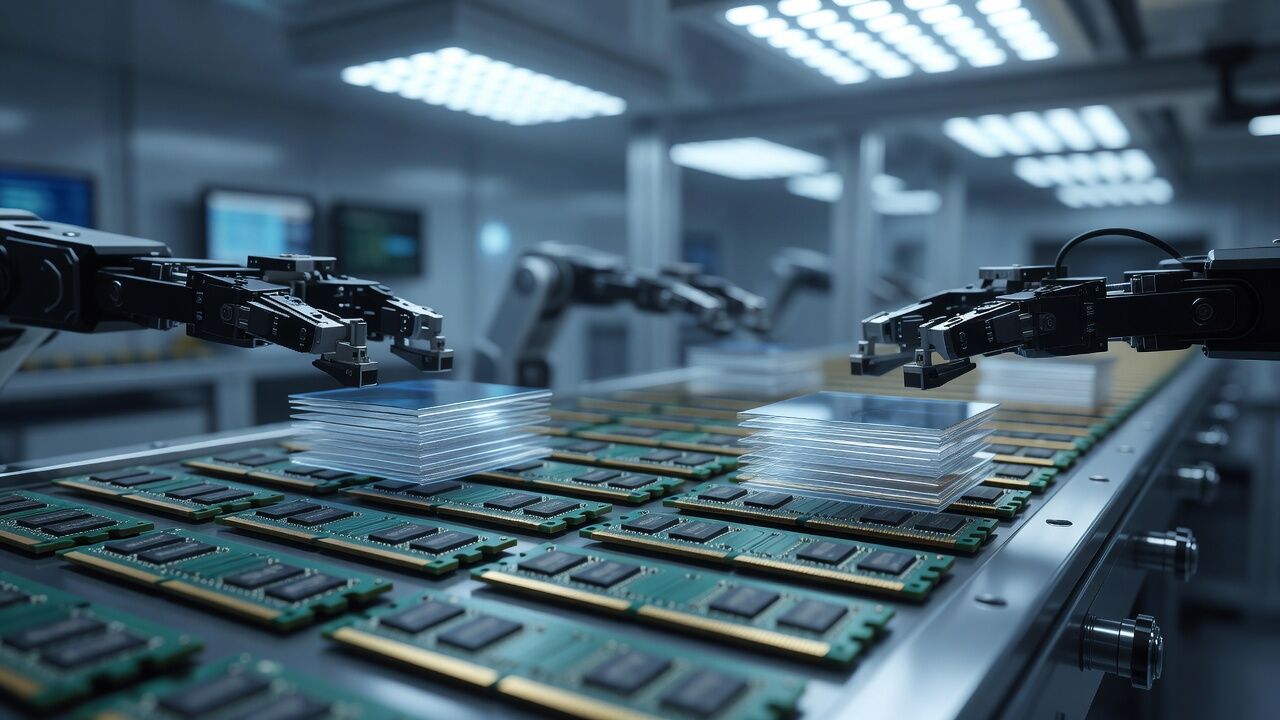
If you’ve priced a memory upgrade lately, you already know the score. A 32GB DDR5 kit now tops $375, with August 14 snapshots showing $380 to $589. That’s $11.88 to $18.41 per gigabyte for something given away eighteen months ago. This is RAMmageddon, and it’s nearly a year old. Anastasi In Tech’s new video, “This Could End The RAM Crisis,” argues the boom-bust loop is broken, reshaped by AI demand, contract behavior, and a tectonic shift in global memory supply. I’ve paid these bills for two decades. She’s right, but not for the reasons the hype merchants are pushing. Let’s cut through it.
The Commodity Trap: Why Memory Always Booms and Busts
DRAM is the purest commodity in tech. A gigabyte from Samsung, SK hynix, or Micron is interchangeable with a gigabyte from anyone else. No brand loyalty, no feature differentiation that matters at the system level. Price per bit and cost per wafer are the only metrics that count. The cycle is brutal and predictable: demand rises, fabs get built, capacity floods, prices crash, the weak go bankrupt, consolidation follows, and survivors raise prices again. We’ve seen this dance since the 1980s; the 2022-2023 downturn saw DRAM fall over 50% in a year and Micron bleed for four quarters. That’s the natural order.
The problem is that natural order is now upside down. TrendForce data shows DRAM contract prices rose 58-63% in Q2 2026, after nearly doubling in Q1. Memory chipmakers pulled in $97 billion in Q1 2026 revenue, up 81% year-on-year. That’s not a blip. That’s a structural repricing. The traditional response — build more fabs, flood the market, crash prices — isn’t happening, because the demand side isn’t consumer PCs. It’s AI infrastructure, and it’s insatiable.
What Changed: AI Ate the Memory Market
AI hardware eats memory at a scale that makes consumer devices look like pocket calculators. Each GPU generation — Ampere, Hopper, Blackwell, Rubin — has seen HBM capacity grow substantially. A single AI cluster can require hundreds of thousands to millions of memory chips. This isn’t a demand curve; it’s a demand cliff. Apple CEO Tim Cook called it a “100-year flood” and hiked Mac and iPad prices up to 20%. When Apple is raising prices, you know the market is broken.
The key shift is HBM. High Bandwidth Memory is not just faster DRAM; it’s a fundamentally different manufacturing challenge. HBM3E and HBM4 are sold out through 2026, and most 2027 capacity is already committed under long-term contracts. The three big makers — Samsung, SK hynix, Micron — have shifted up to 40% of their advanced wafer capacity to HBM production. That means less capacity for standard DDR5, which is why your desktop RAM costs four times what it did last year. The AI boom didn’t just create new demand; it cannibalized the supply of the old stuff.
HBM Is a Manufacturing Game, Not a Design Game
Here’s where the video gets the engineering right. HBM manufacturing is brutally hard. You’re stacking 12 to 16 ultra-thin dies into a single package. The failure modes are brutal: cracked dies, heat, falling yields — one bad layer dooms the entire stack. The moat isn’t design complexity — anyone can draw a schematic. It’s manufacturing precision: the process recipe, yield learning, the incremental tweaks that turn a 30% yield into 80%.
The tools tell the story. TC bonders — the machines that stack and bond those dies — cost up to $200 million each. A single factory needs roughly 100 of them. That’s $20 billion in bonding equipment alone, before you buy a single lithography tool. SK hynix is building M15X — an HBM complex with about 100,000 square meters of clean room — plus more plants in Yongin, packaging expansion in Cheongju, and a $4 billion advanced packaging site in Indiana. This is not a design race. It’s a capital expenditure arms race with a multi-year lead time.
The Two Bets That Could Break the Cycle
The video’s central question isn’t just who wins HBM leadership. It’s how domestic supply growth reshapes the entire memory market. There are two bets on the table. The first is SK hynix’s bet on HBM leadership — fastest, most advanced, spending accordingly. The second is China’s CXMT, and this is the one that keeps me up at night.
CXMT, based in Hefei, is playing a different game. They have no EUV access, and export controls limit their tooling. So they’re doing what Chinese manufacturers always do: flooding the mature market with volume. CXMT started with FAB 1 producing DDR4 at about 100,000 wafers per month, expanded to roughly 250,000, and plans to approach 500,000 wafers per month by 2028. They licensed about 7,000 Qimonda patents, including Buried Wordline technology — moving the wordline underground to keep scaling without EUV. And they raised about $8 billion in what was described as the largest semiconductor IPO in Asian history.
This is the classic disruptor playbook. CXMT doesn’t need to win the HBM race. They need to flood commodity DDR4 and DDR5 with cheap, good-enough memory. If they hit 500,000 wafers per month, the price crash will be biblical. The question is whether they can do it before AI demand absorbs every bit of supply.
What This Means: The Old Rules Do Not Apply
Here’s my take, and it’s not consensus. Operators are sitting on their hands waiting for the traditional crash. They’re wrong — this cycle’s demand side is not cyclical. AI infrastructure spending is a multi-year, multi-trillion-dollar buildout. The hyperscalers are signing long-term contracts for HBM capacity through 2027. They are not canceling those orders because DDR5 is pricey; they’re paying the premium and passing it on to their customers.
The structural reset will come from supply, not demand. And that supply is coming from two directions: SK hynix’s massive HBM expansion and CXMT’s commodity flood. But both are years away from full production. In the meantime, the market stays tight. If you’re running a data center or buying servers, stop waiting for the crash. Budget for $15 per gigabyte for the next 18 months. Sign long-term agreements if you can get them. The old boom-bust cycle is dead, replaced by a two-tier market: premium HBM for AI, and commodity DRAM that will eventually be crushed by Chinese volume. The transition will be violent.
What Comes Next
Here’s your watchlist. First, watch CXMT’s capacity ramp. If they hit 500,000 wafers per month by 2028, commodity DDR5 prices will collapse. That’s the exit ramp. Second, watch HBM4 and Rubin. Poor yields keep AI sucking up capacity and prices high; good yields free some capacity for standard DRAM. Third, watch export control decisions. If the US tightens restrictions on CXMT’s tooling, the Chinese ramp slows and the high-price environment extends. If they ease up, the flood comes sooner.
Finally, watch hyperscaler contracts. They’re locking in 2027 capacity now; cancellations or renegotiations are the first sign AI demand is cooling. Until then, the RAM crisis is not ending. It’s restructuring. The winners will be the manufacturers with the best yields and the most advanced packaging. The losers will be the buyers who waited for a crash that isn’t coming. Plan accordingly.
— Allan Ali, Sylt.ing
 French
 English
 Arabic
 Spanish
 Portuguese
 Deutsch
 Turkish
 Dutch
Dutch
 Italiano
 Russian
 Romaian
 Portuguese (Brazil)
 Greek
Greek