


 Monetization
Starcloud Raises 250 Million for Orbital AI Data Centers: Launch Capacity, Not Chips, Will Decide If It Works
What the Starcloud Deal Actually Is
Let's cut through the press release. Starcloud, a Redmond, Washington startup with about 25 employees, just announced a 250 million dollar Series A extension at a 2.3 billion dollar post-money valuation, bringing total capital raised to 450 million dollars. The round was led by Manhattan West Ventures, with participation from NVIDIA, Cisco Investments, Benchmark, EQT, and a half-dozen other funds.
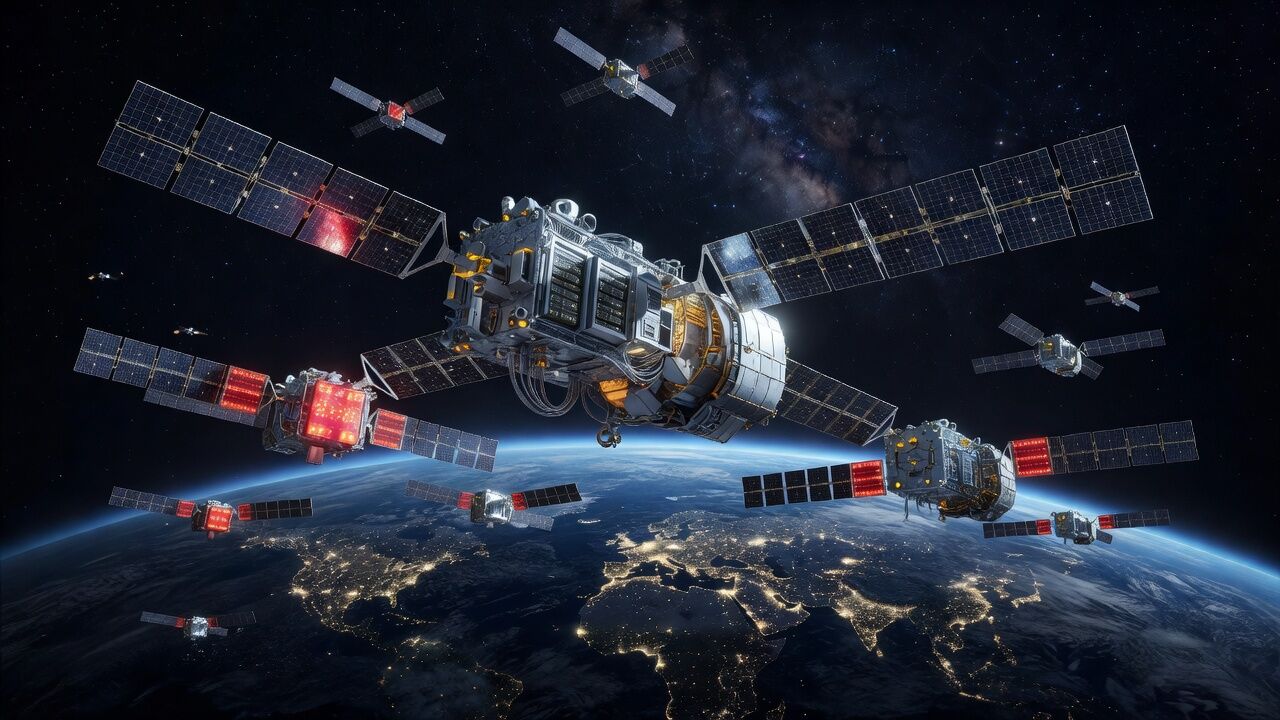
The pitch is simple: put data-center-class GPUs in orbit, train and run AI models in space, and beam results back down via optical links. They already flew one H100 on Starcloud-1 in November 2025 — training the first AI model in space, running Google's Gemini in orbit, and demonstrating high-power inference and fine-tuning on flight hardware.
I've been running infrastructure for two decades. The difference here: Starcloud is not just selling a PowerPoint. They have hardware in orbit, a real engineering team, and a CEO, Philip Johnston, who is honest about the biggest risk — not whether the GPU works in space, but whether they can get enough of them off the ground.
The 450 Million Structure: Nvidia and Cisco Buy Into Orbit
NVIDIA put in about 25 million dollars. That's a rounding error for them, but it's a signal. NVIDIA has been working with Starcloud since March 2026 on the Space-1 Vera Rubin Module, a purpose-built space GPU that doesn't exist yet and is expected to fly late 2028. NVIDIA backing a satellite GPU program tells you it sees compute moving off-planet.
Cisco Investments is a new investor. Its Aleem Rizvon said the company has 'long been a leader in secure data center infrastructure and looks forward to bringing that expertise to the emerging world of orbital data centers.' Corporate speak for 'we want a seat at the table' — and Cisco knows the network fabric of orbital data centers will be optical.
The rest of the round is a mix of traditional VCs that have circled space tech for years, betting on the team and early proof, not near-term revenue. Johnston said it plainly: 'Last November we put the first NVIDIA H100 in orbit. Today this fresh capital empowers us to build the infrastructure to launch many more of NVIDIA's most advanced GPUs into space.'
The Hard Part Is Not the GPU — It Is Getting It off the Ground
Here's the part most coverage gets wrong: the GPU in space is not the hard problem. Starcloud proved that with Starcloud-1 — the H100 survived launch and ran inference. That's an engineering milestone, not a business model. The hard problem is launch capacity, and it's not even close.
Let's run the numbers. Starcloud has requested FCC permission to operate 88,000 spacecraft, with a long-term vision of 20 gigawatts of orbital compute. A large terrestrial data center campus might draw 100 to 200 megawatts — Starcloud is talking about the equivalent of 100 to 200 of the largest data center campuses on Earth, in orbit. And these are not Starlink-class 250-kilogram birds: Starcloud-2 are 8-kilowatt compute satellites, and Starcloud-3 is described as the largest orbital data center spacecraft ever built — multiple tons each, with radiators, solar arrays, and radiation shielding.
Now look at the launch market. SpaceX's Falcon 9 program is scheduled to end in 2028 — the workhorse of the entire commercial space industry for a decade. Starship is much larger but unproven for high-cadence commercial launches. Blue Origin's New Glenn and ULA's Vulcan are not flying regularly. Rocket Lab's Neutron is not on the pad. And this week Elon Musk delayed an attempt to catch a returning Starship, targeting the first re-flight at the end of 2026 or early 2027.
Johnston said it without flinching: 'Obviously if we can't book any SpaceX launch capacity in 2029, that will be challenging for us.' If Falcon 9 retires and Starship isn't ready, there is no launch capacity for anyone — not Starcloud, not Amazon's Kuiper. 'One of the biggest costs is now on securing your launch capacity.' The constraint is not silicon or software. It's getting the damn thing off the ground.
The Physics: Radiators, Radiation, and Solar Arrays Instead of Cooling Towers
On Earth you cool a data center with air handlers, chilled water, or direct-to-chip liquid cooling. In space, none of that exists — Starcloud rejects heat through large radiators into the cold vacuum. Radiators are heavy, large, and sized to the thermal load: an H100 at full tilt generates about 700 watts of heat, and in space that heat has nowhere to go except through radiator surface area.
Starcloud's engineers are tracking radiator size versus chip temperature: too small and the chip throttles, too large and the satellite is too heavy to launch cost-effectively. Then there's radiation — the H100 is a commercial server chip, not a radiation-hardened space part, and shielding placement is a mass tradeoff on top of ruggedizing it to survive the violence of launch.
Power comes from solar arrays. An 8-kilowatt compute satellite needs a lot of panel area, which adds mass and drag. In low Earth orbit you're in and out of Earth's shadow, meaning thermal cycling and battery management.
The network fabric is optical. Per a May 2026 report, Starcloud is using Starlink laser links for inter-satellite networking. Smart — but it means depending on SpaceX for both launch and networking, a concentration of risk any investor should worry about. Scaling from one H100 to 88,000 satellites is not a linear problem. It's an exponential one, and every step up introduces new failure modes.
The Questions Nobody Has Answered
I've been through the press release, the TechCrunch piece, and the Converge Digest analysis. Here are the questions that matter:
- What is the actual cost per GPU-hour in orbit versus a terrestrial data center — including launch, manufacturing, and operations? Starcloud has published no numbers that would let anyone do that math. Until it does, this is a science project with a valuation.
- What happens when a satellite fails? On Earth, you swap a server. In orbit, you lose the entire asset. What is the expected failure rate for a constellation of 88,000 spacecraft, and what replacement launch cadence keeps capacity up?
- Who is the paying customer, and what is the latency tolerance? Starcloud mentions US government agencies for Starcloud-2. But orbital inference has inherent latency — light speed is fast, but not zero. What workloads can tolerate it, and what is the actual market size?
- What is the decommissioning plan? 88,000 satellites is a huge amount of mass in low Earth orbit. Who pays for end-of-life disposal? That cost will dwarf launch costs over a decade.
Not gotcha questions — these are what any serious infrastructure operator would ask before writing a check. That they go unanswered in public material tells me Starcloud is still in the 'prove the tech' phase, not the 'prove the business' phase.
What This Means: The Launch Market Is the New Data Center Constraint
For a decade, the constraint on data center growth has been power and cooling. No grid connection, no data center — that's why hyperscalers are buying nuclear plants and building next to hydroelectric dams.
Starcloud is trying to bypass that constraint entirely. No grid. No cooling towers. No land. Just solar arrays, radiators, and launch vehicles. But they're running into a new constraint: launch capacity. Falcon 9 retires in 2028. Starship is the only vehicle on the horizon big enough to make orbital data centers viable, and it's still unproven. One orbital data center startup has already decided to build its own rockets — a vote of no confidence in the existing launch market.
If you can't launch, you can't compute. And right now, the launch market is a bottleneck no amount of venture capital can fix overnight.
What Comes Next
Two Starcloud-2 satellites are scheduled for rideshare launches in 2027, doing orbital inference for US government agencies — the next proof point.
Then comes Starcloud-3, the largest orbital data center spacecraft, intended to fly on SpaceX Starship — the make-or-break mission. If Starship flies regularly by late 2028 and the Space-1 Vera Rubin Module is ready, Starcloud has a shot. If Starship slips, that 2.3 billion dollar valuation looks very expensive.
Starcloud is building production lines at a new 100,000-square-foot facility in Woodinville, Washington, near where SpaceX and Amazon build satellites — smart, but a production line without launch capacity is just an expensive warehouse.
I respect what Starcloud has done: put an H100 in orbit, trained a model in space, got NVIDIA and Cisco to write checks. They're honest about the launch constraint, which is more than most space-tech CEOs can say. But the math is brutal: 88,000 satellites, 20 gigawatts, a launch market about to lose its workhorse vehicle, and a CEO who says 'if we can't book any SpaceX launch capacity in 2029, that will be challenging for us.' That's not hype. That's reality — and in this industry, reality is the rarest commodity of all.
— Allan Ali, Sylt.ing
 Italiano
 English
 Arabic
 French
 Spanish
 Portuguese
 Deutsch
 Turkish
 Dutch
Dutch
 Russian
 Romaian
 Portuguese (Brazil)
 Greek
Greek