


 Monetization
One Roof for the Agent Economy: Google Hands A2A to the Agentic AI Foundation
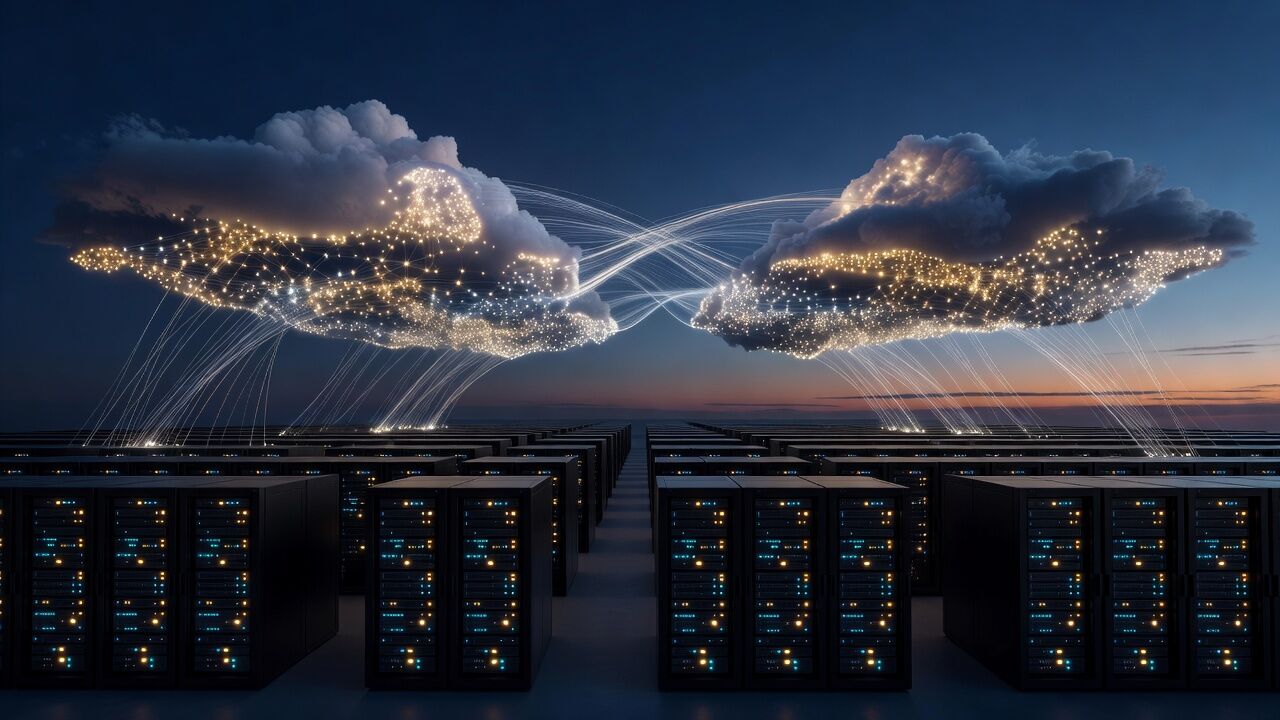
One Roof for the Agent Economy: Google Hands A2A to the Agentic AI Foundation
The last two years of AI infrastructure have been a land grab. Every vendor wanted to own the protocol that makes agents talk to each other. That era ended this week. Google has formally transferred its Agent2Agent (A2A) protocol to the Agentic AI Foundation (AAIF), the Linux Foundation-directed body that already hosts Anthropic's Model Context Protocol (MCP). This is not a bureaucratic shuffle. It is the consolidation of the two most significant open standards of the agent economy under one neutral governance roof. The ground just stopped shifting under your feet.
Let's be clear about what just happened. A2A is the horizontal layer of the agent stack: the open standard that lets agents discover each other, publish machine-readable Agent Cards advertising capabilities, endpoints, and auth schemes, and delegate tasks across framework and vendor boundaries without bespoke integrations. Google launched A2A in April 2025 with 50-plus launch partners, then donated it to the Linux Foundation in June 2025. Founding orgs included AWS, Cisco, Microsoft, Salesforce, SAP, and ServiceNow. This week's transfer to AAIF is the final signal: the protocol is no longer Google's to steer.
What A2A Actually Is
If you have not read the spec, stop guessing. A2A is not a chat protocol. It is a work coordination protocol. It defines how an agent advertises what it can do via Agent Cards, how a client agent discovers those cards, and how tasks are delegated, tracked, and completed. An agent built by one team, on one cloud, in one framework, can hand work to another agent on another cloud without anyone writing a custom adapter.
The 1.0 release shipped in March 2026 with the features that make it production-grade: multitenancy, version negotiation, multi-protocol bindings for JSON-RPC, gRPC, and HTTP+JSON, and cryptographically signed Agent Cards for identity verification. That last one matters more than most people realize. When agents are about to move money and execute contracts, signed Agent Cards are the difference between a system you can audit and a system that is a liability.
And do not forget the August 2025 merger, when IBM's Agent Communication Protocol was folded into A2A. IBM looked at the landscape and decided it was not building a third wheel. That merger was the canary. This transfer is the mine being cleared.
The AAIF Stack: Five Layers of Plumbing
Here is what the agent economy looks like under one roof. The AAIF hosts the full open agentic stack, and it is worth mapping the layers because they solve different problems. You need to know which one is failing when your system breaks.
First, OpenAI's AGENTS.md: the instructions and context layer. Second, Block's goose: the agent runtime. Third, MCP: the vertical integration edge that connects agents to tools, databases, and APIs. Fourth, agentgateway: traffic mediation and control, the policy enforcement point. Fifth, A2A: the horizontal collaborative edge that lets agents talk to each other.
MCP answers the question, 'How does an agent use a tool?' A2A answers the question, 'How does an agent delegate work to another agent?' You need both. The AAIF now hosts both, plus the runtime, the context format, and the gateway. That is a full stack under neutral governance. The numbers back the momentum: the AAIF launched in December 2025 with fewer than 40 members and now has more than 250. The platinum tier reads like a who's who: AWS, Anthropic, Block, Bloomberg, Cloudflare, Google, Microsoft, and OpenAI. When your competitors all pay platinum dues to the same foundation, you are not competing on protocol ownership anymore. You are competing on execution.
The Production Reality: This Is Not a Slide Deck
I have been to enough industry events to know the difference between a press release and a production deployment. A2A is the latter. It is backed by more than 150 organizations and natively supported across the big three clouds: Google Cloud (ADK, Agent Engine, Cloud Run, GKE), Microsoft Azure AI Foundry (A2A endpoints with standard discovery), and AWS Bedrock AgentCore (hosting and operating A2A servers). You can build multi-agent systems without being locked into a single cloud's agent framework.
The most interesting deployments are not in the West. Huawei has standardized A2A between Celia, its OS-level AI assistant, and in-app agents across HarmonyOS. Tencent's WeChat is among the first major apps integrating with Huawei and other Android OEM assistants over A2A. WeChat is not a tech demo; it is the operating system for a billion people's daily life. When WeChat agents talk to Huawei agents over an open standard, that is infrastructure.
And then there is the money layer. Google Cloud and PayPal are extending A2A into agentic commerce via the Agent Payments Protocol (AP2). Shopping and merchant agents communicate over A2A through product discovery, pricing, and order fulfillment, with AP2 as the payment authorization layer. When an agent can negotiate a price, place an order, and authorize a payment, you have built a new financial system. The fact that it runs on an open, neutral protocol is the only reason it has a chance of being auditable.
The Critical Questions: The AI Game of Telephone
Now the part the press release does not mention. Mahesh Shanmugasundaram, lead AI solutions architect at Seekr, warns that A2A creates an 'AI game of telephone.' Each agent treats the prior agent's output as 100 percent trusted input rather than a claim to verify. A small hallucination at the start of a chain can emerge steps later as an authoritative-looking answer. Interoperability expands the trust gap; evidence-based evaluation and explainable output need to be the default unit of exchange between agents, not an afterthought.
He is right, and the timing could not be worse. We have already seen the security reality of agent infrastructure: the MCP auto-execution workspace trap, where a malicious tool definition can trigger arbitrary code execution, and the LiteLLM supply-chain attack, where a compromised dependency exfiltrated data across an entire fleet. These are incidents, not theories. Now we are adding a protocol that lets agents delegate tasks across organizational boundaries, and every hop in that chain is a new attack surface.
The signed Agent Cards in A2A 1.0 verify identity. But identity is not trust. An agent can be exactly who it says it is and still be wrong. The protocol needs to carry provenance, not just identity: the reasoning trail, the sources, the confidence scores. If agent B receives a task from agent A, it needs to know what evidence agent A based its decision on. Without that, you are building a system that is very efficient at amplifying errors.
What This Means: The Moat Has Moved
Here is the analysis that matters for infrastructure decisions. When the protocol layer is neutral and open, the competitive moat shifts from protocol ownership to the quality of agent reasoning and the depth of tool access. Google just gave up the ability to say, 'Use A2A because we own it.' What it gets in return is a market where every cloud, every device maker, and every enterprise can adopt A2A without fear of vendor lock-in. That is a bigger market for everyone.
The cost of multi-agent systems was never the agents themselves. It was the custom integrations between them. Every time you wanted agent A to talk to agent B, you wrote a bespoke adapter, maintained it, debugged it, paid a team to keep it alive. That cost is now collapsing. A2A and MCP under one roof means the integration layer is a solved problem. You do not write glue code anymore. You configure a protocol.
This is the same pattern we saw with Linux, with Kubernetes, with the web itself. The protocol becomes a commodity, and the value moves up the stack. The winners will be the ones who build agents that reason better, hold deeper and more proprietary tools, and can be trusted with real money. The losers will be the ones who thought they could win by owning the standard. That game is over.
What Comes Next
The next twelve months will determine whether the agent economy is a real thing or a very expensive experiment. The pieces are in place: neutral protocols, cloud support, devices running them, a payment layer being built. What is missing is trust, and that is an engineering problem, not a protocol problem.
We need agents that can prove their work, provenance at every step of the chain, and evidence as the default unit of exchange rather than assertions. The AAIF has done the hard work of unifying the standards. Now the rest of us have to do the harder work of making them safe. If we do not, the 'AI game of telephone' will not be a cautionary tale. It will be the headline.
I have run infrastructure long enough to know that standards win because they are practical, save money, and reduce risk. A2A under AAIF is all three. The question is whether we can build the trust layer before the first major incident forces us to. The clock is running.
— Allan Ali, Sylt.ing
 Romaian
 English
 Arabic
 French
 Spanish
 Portuguese
 Deutsch
 Turkish
 Dutch
Dutch
 Italiano
 Russian
 Portuguese (Brazil)
 Greek
Greek