


 Monetization
Seagate's Blowout Quarter Proves Storage Is the AI Infrastructure Play Nobody Saw Coming
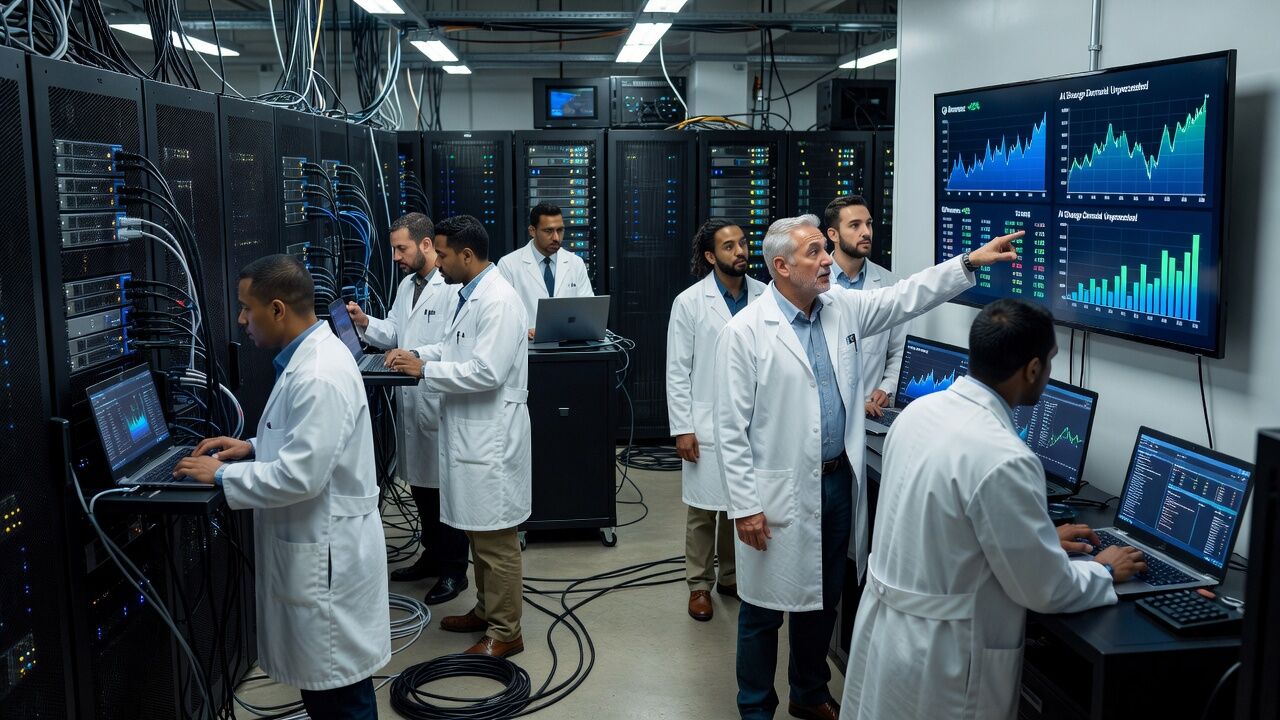
The AI Infrastructure Story Has a Quiet Winner Nobody's Talking About
Let me be direct with you. When we talk about AI infrastructure, the conversation always goes the same way: Nvidia's latest GPU, who's building the biggest cluster, how many megawatts the next data center needs. The storage layer never gets the headline, and I think that's a mistake — one that Seagate's latest numbers just exposed.
Yesterday, Seagate Technology reported fiscal Q4 2026 earnings that beat every number Wall Street was watching. Revenue hit $3.63 billion. Net income more than doubled to $1.29 billion from $488 million a year earlier. Non-GAAP earnings came in at $5.71 per share. Free cash flow reached $1.1 billion. And then the company guided for Q1 revenue of about $4.1 billion and non-GAAP earnings of about $7.30 per share — numbers that suggest this isn't a one-quarter fluke.
Every one of those numbers traces back to the same root cause: AI data centers generate enormous amounts of data, and that data has to live somewhere. GPUs get the glory. Hard drives get the revenue.
The Numbers That Matter: 90 Percent Data Center Mix
The detail that jumped out at me from Seagate's earnings call is that data center demand now represents roughly 90 percent of the company's exabyte shipments. Think about that. Nine out of every ten bytes Seagate shipped in the quarter went to data centers — not consumer PCs, not external backup drives, not enterprise file servers running a law firm's document storage. Data centers.
And it gets more interesting. Management disclosed that most of their nearline exabyte production is already contracted out through calendar 2028. They're selling capacity years in advance. That tells me data center operators — the hyperscalers, the AI labs, the colocation providers — are placing storage orders on the same planning horizons they use for GPU clusters. The storage layer is no longer an afterthought that gets ordered when the servers arrive. It's part of the upfront infrastructure planning.
The scale is staggering. Seagate shipped more than 200 exabytes of storage to the data center market in this quarter alone. That's 200 billion gigabytes. For context, that's roughly enough capacity to store every book ever written — repeatedly.
The Bear Case Nobody's Talking About Either
Let me be fair and give you the other side, because it exists and it matters.
Seagate shares had dropped significantly before this earnings report. Investors were asking whether AI infrastructure spending had become overheated — and that question is still valid. Chinese storage and memory competition is real and growing. SSD prices continue to fall, and at some point the cost-per-terabyte crossover between flash and spinning media narrows enough that hyperscalers start making different architectural decisions.
There's also the concentration risk. When 90 percent of your exabyte shipments go to one market segment, you're betting on that segment's continued expansion. If AI investment cools — and there are already signs of hesitation at the margin — Seagate feels that contraction across nearly its entire business. Diversification into consumer and enterprise markets used to provide a buffer. That buffer is mostly gone now.
And yet. The forward guidance suggests Seagate's leadership isn't worried about those risks in the near term. The Q1 revenue guide of $4.1 billion represents 13 percent sequential growth from an already record quarter. They're seeing demand accelerate, not plateau.
Why HAMR Technology Is the Moat Nobody Understands
This is the part that interests me most as someone who has spent years watching storage technology cycles. Seagate's HAMR — heat-assisted magnetic recording — is the technology that lets them keep increasing areal density without hitting the physical limits that have plagued hard drive development for the last decade.
Seagate has been shipping HAMR-based drives at volume for several years now, and the Mozaic platform represents the latest generation. The technology uses a laser diode to briefly heat a tiny spot on the platter — measured in nanometers — allowing the magnetic media to switch polarity more reliably at higher densities. It's genuinely hard to do at scale, which is why Seagate's two main competitors haven't matched it yet.
The result is that Seagate is effectively operating in a duopoly (with Western Digital) for mass-capacity storage, and within that duopoly, they have a technological edge that gives them both margin protection and a roadmap to 5TB and 6TB platters. Western Digital is essentially sold out of its own high-capacity drives for the remainder of 2026, which tells you demand is exceeding total industry supply.
When a market this concentrated has supply constraints and growing demand, pricing power follows. That's the simple economics behind Seagate's record gross margins.
What This Means: Storage Is the Pick-and-Shovel Play That Actually Works
The AI infrastructure narrative has produced a lot of hype and not as much revenue as investors hoped. Software companies promise AI agents. Consulting firms sell AI readiness assessments. Most of those are still pre-revenue or burning cash on customer acquisition.
Seagate is selling hard drives — literal pieces of metal and glass with magnetic coating — into data centers that are already running workloads today. The revenue is real. The guidance is real. The margins are expanding, not compressing.
There's a lesson here that applies more broadly. When an infrastructure boom happens, the companies that make the physical components — the actual things that get installed in racks — often perform better than the software layer built on top of them. Nvidia proved that with GPUs. Seagate may be proving it with storage right now.
TechBooky's coverage noted that Seagate's earnings serve as 'a reminder that the data-centre boom is not only about GPUs,' and that framing is correct. The AI gold rush produced a rush on picks and shovels. Storage is one of the shovels that actually shipped.
What Comes Next
The Q1 guide of $4.1 billion in revenue and $7.30 in non-GAAP earnings implies Seagate expects the current trajectory to continue into the fall. The $4.1 billion number would represent a run rate approaching $16.4 billion annually — a dramatic step up from the $3.63 billion they just reported.
That kind of growth assumes data center builds continue at current or accelerating pace. If any of the macro risks materialize — a recession, a sharp pullback in AI investment, a trade war that disrupts Chinese supply chains — Seagate would be exposed. But for now, the data shows demand outstripping supply, and the company's long-term supply agreements through 2028 provide a visibility that most hardware companies would envy.
The broader takeaway for anyone watching the AI infrastructure space is simple: don't ignore the boring parts of the stack. The GPUs get the attention. The networking gear gets the analysis. But the storage layer is printing money for a company that most people still think of as 'that hard drive maker from the 90s.' The numbers tell a different story.
— Allan Ali, Sylt.ing
 Italiano
 English
 Arabic
 French
 Spanish
 Portuguese
 Deutsch
 Turkish
 Dutch
Dutch
 Russian
 Romaian
 Portuguese (Brazil)
 Greek
Greek