


 Monetization
AMD's 5 Billion Anthropic Bet: 2 Gigawatts of MI450 GPUs and a Deal Structure Nobody Headlined
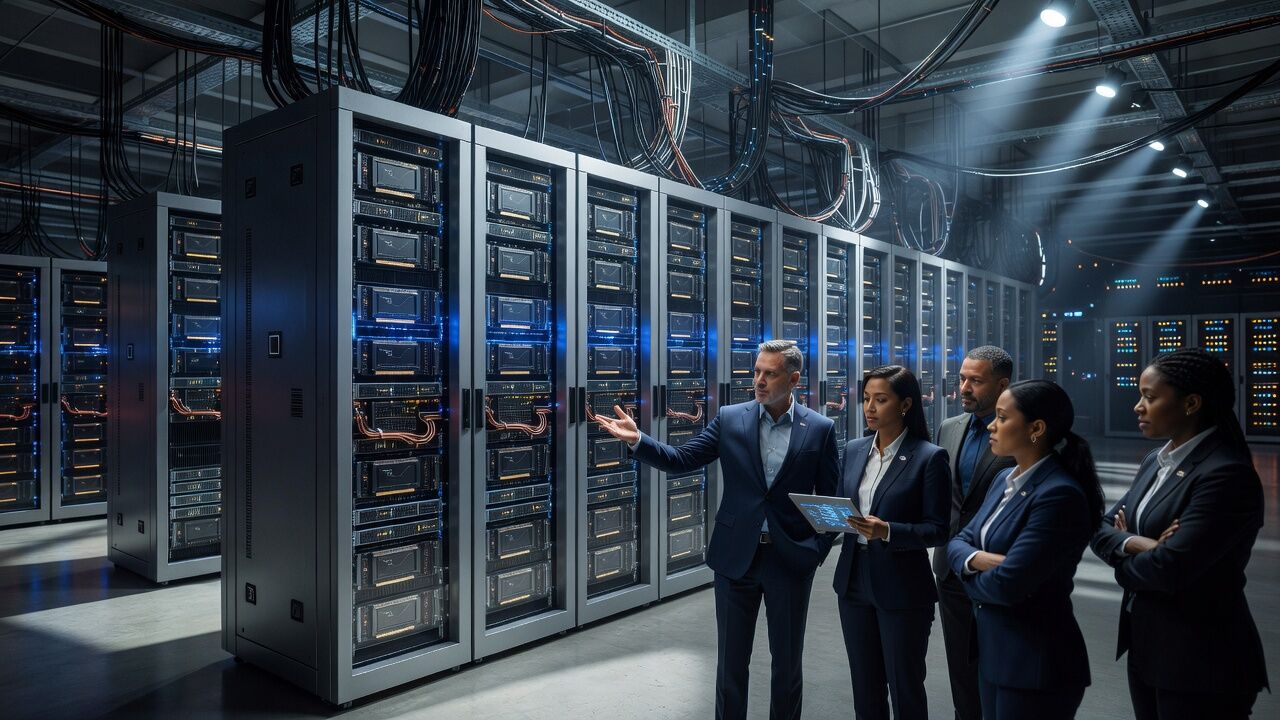
AMD's 5 Billion Anthropic Bet: 2 Gigawatts of MI450 GPUs and a Deal Structure Nobody Headlined
Let me be direct with you. When AMD and Anthropic sat down to announce a strategic partnership on July 22, every major outlet led with the headline numbers: up to 2 gigawatts of AMD Instinct MI450-series GPUs, up to $5 billion in equity from AMD into Anthropic, first gigawatt deploying in the first half of 2027. Those numbers are real, they are enormous, and they deserved the attention they got.
But the news cycle buried the story that actually matters for anyone watching where AI hardware is headed — and it is not the gigawatts. It is the capital direction.
What the Deal Actually Is
The partnership has three disclosed components, and you need all three to understand what AMD is doing here. First, the hardware: AMD will deploy up to 2 gigawatts of Instinct MI450-series GPUs — specifically the MI455X variant — in AMD's Helios rack-scale systems, paired with EPYC 'Venice' CPUs, Pensando networking, and the ROCm software stack. The first gigawatt begins deployment in the first half of 2027. Per AMD's published Helios specs, each rack carries 72 GPUs delivering up to 1.4 exaflops of FP8 performance with 31 terabytes of HBM4 memory — 50 percent more memory capacity than Nvidia's flagship Vera Rubin systems, according to AMD. These are vendor-stated figures, and until third-party benchmarks land, label them accordingly.
Second, the equity: AMD has committed to make a strategic equity investment of up to $5 billion in Anthropic, with payments tied to deployment milestones rather than paid as a lump sum. Reuters reported the server agreement itself is worth 'tens of billions of dollars' in total, though neither company has disclosed a specific figure for the hardware side. Third, the software: a multi-year engineering collaboration where Anthropic will use Claude to optimize workloads for Instinct GPUs and accelerate ROCm development, while AMD adopts Claude broadly across its own engineering and chip-development teams.
The $5 Billion Structure: Supplier Becomes Shareholder
Here is the part that every headline buried. AMD has now signed three gigawatt-scale AI deals in just over nine months — OpenAI in October 2025, Meta in February 2026, and now Anthropic. But the capital structure of the Anthropic deal is the opposite of the first two.
With OpenAI, AMD issued a warrant for up to 160 million AMD shares — roughly 10 percent of the company at grant — vesting in tranches tied to deployment milestones and AMD share-price targets. With Meta, the same structure: a performance-based warrant of the same size, vesting on shipment milestones. In both deals, AMD equity flowed to the customer as an inducement to buy AMD hardware.
With Anthropic, the capital flows the opposite direction. AMD is putting cash into the customer: up to $5 billion of equity in Anthropic, no warrants issued in either direction. AMD is not diluting its own shareholders to win this order — it is buying a stake in a lab valued at $965 billion after its Series H round in May 2026, one that just confidentially filed IPO paperwork in June.
Same circular-deal genre, opposite capital direction. And that tells you something about how AMD's conviction has shifted between October 2025 and July 2026.
Anthropic's Four-Platform Stack
The AMD deal is the fourth distinct chip platform in Anthropic's 2026 buildout, and the context is staggering when you line it up in one place. Claude now runs on Nvidia (via Azure, up to 1 GW committed in November 2025 with Nvidia investing up to $10 billion and Microsoft up to $5 billion), Google TPU (multiple gigawatts announced in April 2026), AWS Trainium (up to 5 GW, $100 billion-plus over 10 years, announced April 2026), and now AMD Instinct. Add in the exclusive lease of SpaceX's Colossus 1 data center in Memphis at $1.25 billion per month through May 2029, and Anthropic has assembled the most diversified compute supply chain of any AI lab on the planet.
Diversifying beyond Nvidia does not mean leaving Nvidia. Nvidia remains a strategic investor in Anthropic. But as CRN Asia's analysis put it: 'That is a polite way of saying no single supplier gets to set the price.'
Anthropic's co-founder and Chief Compute Officer Tom Brown gave the on-record rationale: 'Running across a diversified range of hardware lets us map the right workloads to the right hardware.' That is the official line. The practical translation is that Anthropic is building a compute stack where no single vendor holds a gun to its head during contract negotiations.
The Three Questions Nobody Has Answered
First: Can AMD actually deliver 2 gigawatts? A gigawatt of GPUs requires a lot more than chips. Between now and H1 2027 sit an HBM supply chain that trade reports say is sold out through 2027, advanced packaging capacity allocated years in advance, and 12 gigawatts of prior AMD commitments to OpenAI and Meta on the same platform family. AMD announced more than $10 billion in Taiwan ecosystem investments in May 2026, naming ODM partners Sanmina, Wiwynn, Wistron, and Inventec to build Helios systems. Microsoft confirmed on July 20 it will deploy Helios racks in Azure data centers. The supply-side investments are real. Whether they keep pace with demand is the open question.
Second: What happens to the pricing if the 'up to' never becomes 'delivered'? Every number in this deal is an upper limit — up to 2 gigawatts, up to $5 billion, milestone-gated. Nothing obliges either side to hit the caps. The disclosed floor is the H1 2027 first-gigawatt deployment and the software collaboration; everything larger is conditional. Jefferies analyst Blayne Curtis argued the deal terms — not the headline gigawatt number — are what will matter to AMD's long-term economics.
Third: What does the cash-equity deal say about AMD's own conviction? The fact that AMD is willing to put $5 billion of its own cash into Anthropic — rather than handing out warrants that dilute existing shareholders — signals that AMD sees Anthropic as a long-term winner worth owning a piece of, not just a customer worth winning. That is a materially different bet than the OpenAI and Meta structures.
What This Means: The Infrastructure Supply Chain Has Changed
Every serious AI buyer is becoming a supply-chain manager. Anthropic's four-platform strategy is the clearest signal yet that the frontier labs have internalized a lesson the hardware industry learned decades ago: no single supplier gets to set your price, no single fab delay stalls your roadmap, and every vendor should know a credible alternative exists.
AMD's announced AI compute book now sits at roughly 14 gigawatts across three customers — and the market added roughly $85 billion to AMD's market cap over two trading days on the news. Nvidia shares rose roughly 6 percent in the same window. The market read the deal as evidence of AI-compute demand expanding, not as share shifting from one vendor to another. That is the right read.
What Comes Next
AMD's Q2 2026 earnings on August 4 will be the first financial print carrying any commentary on the Anthropic deal. Watch for guidance on the first-gigawatt deployment timeline, margin commentary on Helios as a platform, and any color on whether the $5 billion equity commitment appears on the balance sheet this quarter or later. For businesses building on frontier AI APIs, the takeaway is not about AMD's spec sheets. It is about capacity headroom. Anthropic securing a fourth chip platform means more compute supply, which historically precedes price movement at the API layer.
The next twelve months will tell us whether AMD can actually ship 14 gigawatts into a supply-constrained market, whether the cash-equity model becomes the template for future deals, and whether multi-vendor compute stacks become the standard for every lab that can negotiate one. I am watching the August 4 earnings call, the H1 2027 deployment milestones, and every 'up to' that turns into a delivered megawatt.
— Allan Ali, Sylt.ing
 Spanish
 English
 Arabic
 French
 Portuguese
 Deutsch
 Turkish
 Dutch
Dutch
 Italiano
 Russian
 Romaian
 Portuguese (Brazil)
 Greek
Greek