


 Monetization
Georgia Power Is Taking Homes for AI Data Centers — and the Numbers Are Devastating
Georgia Power Is Taking Homes for AI Data Centers — and the Numbers Are Devastating
Let me be direct with you: if you think the AI boom is just about chatbots writing poems and generating pictures, you are not paying attention. The real story is happening on the ground — literally — in rural Georgia, where a utility company is seizing family homes to build transmission lines that will feed AI data centers.
This is not a theory. This is happening right now, and the numbers behind it are staggering.
What Georgia Power Is Actually Building
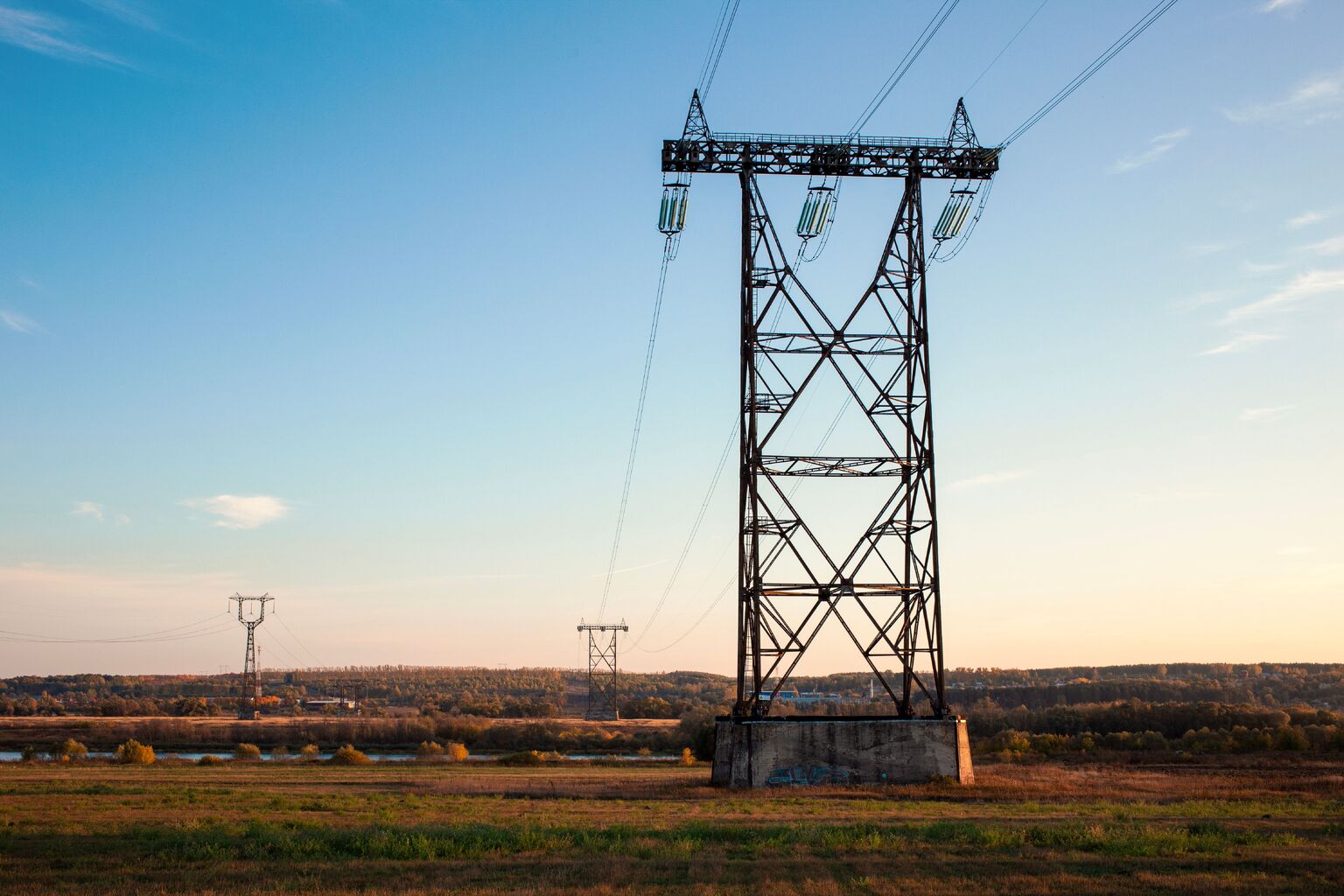
Georgia Power, the state's dominant utility, is rolling out a grid expansion plan that includes more than 1,000 miles of new transmission lines spanning over 330 parcels of land. The company is adding roughly 10 gigawatts of new generating capacity over the next five years. To put that in perspective: 10 GW is enough to power approximately 7.5 million homes. But those homes are not the primary customer here.
The centerpiece is the Ashley Park-Wansley Transmission Project, a 35-mile stretch cutting across Fayette, Heard, Fulton, and Coweta Counties. That route runs directly through residential neighborhoods, and nearly 30 homes will be bulldozed to make room for the towers and lines.
The Georgia Public Service Commission approved Georgia Power's 2025 Integrated Resource Plan last year, which certified construction of this massive energy generation plan. The agreement explicitly states that approximately 80 percent of the output is expected to power data centers. CBS News has independently confirmed that 70 to 80 percent of the power from this specific transmission line will go to AI data centers.
The Human Cost: A Childhood Home Is Not 'Just Compensation'
Ansley Brown's childhood home in Coweta County sits directly in the path of the Ashley Park-Wansley line. Her mother built that house when Ansley was five or six years old. It was intended to be generational wealth — something to pass down. Instead, Georgia Power came with an ultimatum: sell, or the state will take it through eminent domain.
"To us it's theft," Brown told CBS News. "It's literally a billion-dollar company stealing land from smaller people, people who can't fight back. We don't have the money to fight Georgia Power."
Her mother eventually reached an agreement with the utility. Brown's posts on TikTok and Instagram documenting the fight have gone viral, drawing attention from Congressman Brian Jack, who scheduled a meeting with Georgia Power stakeholders. A spokesperson for Jack said he has "received multiple requests for help and support from constituents concerning Georgia Power activity." Georgia Power told Fortune that negotiations with the Brown family have been concluded, though the specific terms were not disclosed.
The utility's Media Relations Manager Meredith Stone says the company "starts at 125 percent of the appraised value" during negotiations. But here is what Stone also acknowledged: eminent domain is used as a last resort but remains on the table. Georgia Power claims it has only used eminent domain five times in the past year, with none being on residential homes. However, that distinction offers little comfort to the families who face losing property that has been in their families for decades.
The 3 Questions Nobody Has Answered
1. Who is paying for this? Georgia Power says the data center investment will save residential customers about $102 per year starting in 2029, because large-load customers will pay more and subsidize residential rates. But a December 2025 audit by the University of Georgia's Carl Vinson Institute of Government found that the state's data center sales and use tax exemption alone will leave Georgia nearly $574 million in the negative. The exemption waives 100 percent of state and local sales taxes on equipment purchases for data centers making minimum investments of $100 million to $250 million. Who is really subsidizing whom?
2. Why is the public bearing the cost of private infrastructure? Georgia Power insists it is "not in the data center business" and refuses to name which companies will use the power from these new lines, citing "safety and security." Yet the PSC agreement confirms 80 percent is destined for data centers. The company is using eminent domain — a power derived from the Fifth Amendment's public use clause — to seize private land for what is effectively private commercial infrastructure. This is the same legal mechanism intended for building roads and schools, not for powering server farms that belong to some of the richest corporations on the planet.
3. What happens when the easement is permanent? David Needham, a Georgia attorney who has spent over a decade representing property owners in eminent domain cases, explains that permanent utility easements function like contracts that stay attached to the property even after it is sold. Some easements can prohibit owners from building permanent structures beneath power lines. Others reserve broad rights for utilities to install additional infrastructure in the future. "It's a contract that's very much tilted in favor of the power company," Needham told Fortune. "But there is compensation offered." The question is whether any amount of compensation is adequate when you are giving up control over land your family has owned for generations.
Georgia Went From Open Arms to Second Thoughts
Georgia has become a hub for AI data center investment. The state offers generous tax incentives dating back to 2018 that waive sales and use taxes on data center equipment. With roughly 200 data centers operational statewide and 170 in the Atlanta metro alone — including facilities for Microsoft, Amazon, and Google — the state has been ground zero for the AI infrastructure boom.
But the political winds are shifting. Lawmakers voted to suspend new data center tax exemptions in 2024. Governor Brian Kemp vetoed that suspension, keeping the incentives alive. Yet the vote itself signals a change in direction. J. Thomas Perdue, a policy analyst at the Georgia Public Policy Foundation, told Fortune: "The policy direction has clearly shifted. State and local governments bear the immediate cost through revenue they do not collect. Whether that cost is ultimately felt through other taxes or reduced public spending depends on subsequent budget decisions."
This is not unique to Georgia. Across the country, 142 AI data center protests have been staged in 42 states. Opponents successfully blocked 75 planned data center projects in the first quarter of 2026 alone. A Gallup poll found that 7 in 10 Americans oppose building data centers in their communities, citing higher utility bills, noise pollution, and loss of green space.
And yet the buildout continues. Meta recently announced plans to expand its Hyperion AI supercluster from 2 GW to 5 GW. There are now more than 3,000 data centers in the United States with another 1,500 in development, according to Pew Research. Data centers consumed more than 4 percent of the nation's total electricity in 2024, and that number is climbing.
What This Means: The System Is Working Exactly as Designed
Here is the uncomfortable truth: none of this is an accident. The eminent domain laws, the tax incentives, the PSC approvals — every piece of this machine was built deliberately. Georgia wants the data center business. The tax incentives attract the investment. The utilities build the infrastructure. And when residents stand in the way, the legal system provides the mechanism to move them.
Georgia Power is not a villain in a cape. It is a regulated monopoly executing the mandate it has been given. The PSC approved the plan. The state legislature wrote the tax code. The company is following the rules as they exist. The question is whether the rules need to change.
Ansley Brown's mother wanted an apology. "For an entire year, they have bullied her and there is no sorry," Brown said. Georgia Power told CBS News that they have "worked hard to be transparent, negotiate in good faith, and make the process as easy as possible." An apology was not offered.
What Comes Next
The Ashley Park-Wansley Transmission Project is slated to begin construction as early as next year. Georgia Power says land acquisition and easement negotiations are "close to completion." The company projects that $102 per year in savings will begin flowing to residential customers in 2029.
Meanwhile, the data center companies benefiting from this infrastructure remain anonymous, their names shielded behind Georgia Power's customer privacy policies. The families whose homes will be bulldozed have names and faces and social media accounts where they are documenting every step of the fight.
If you are watching the AI boom from a distance and wondering what it actually costs — this is it. Not just the compute budget. Not just the electricity bill. It costs people their homes, their land, and their sense that the system exists to protect them. The server racks will hum. The models will train. And in Coweta County, a childhood home will be gone.
The question is whether the public will keep accepting the deal.
— Allan Ali, Sylt.ing
 Portuguese (Brazil)
 English
 Arabic
 French
 Spanish
 Portuguese
 Deutsch
 Turkish
 Dutch
Dutch
 Italiano
 Russian
 Romaian
 Greek
Greek