


 Monetization
3.1 Gigawatts Vanished in 30 Seconds: The Data Center Grid Crisis Nobody Is Talking About
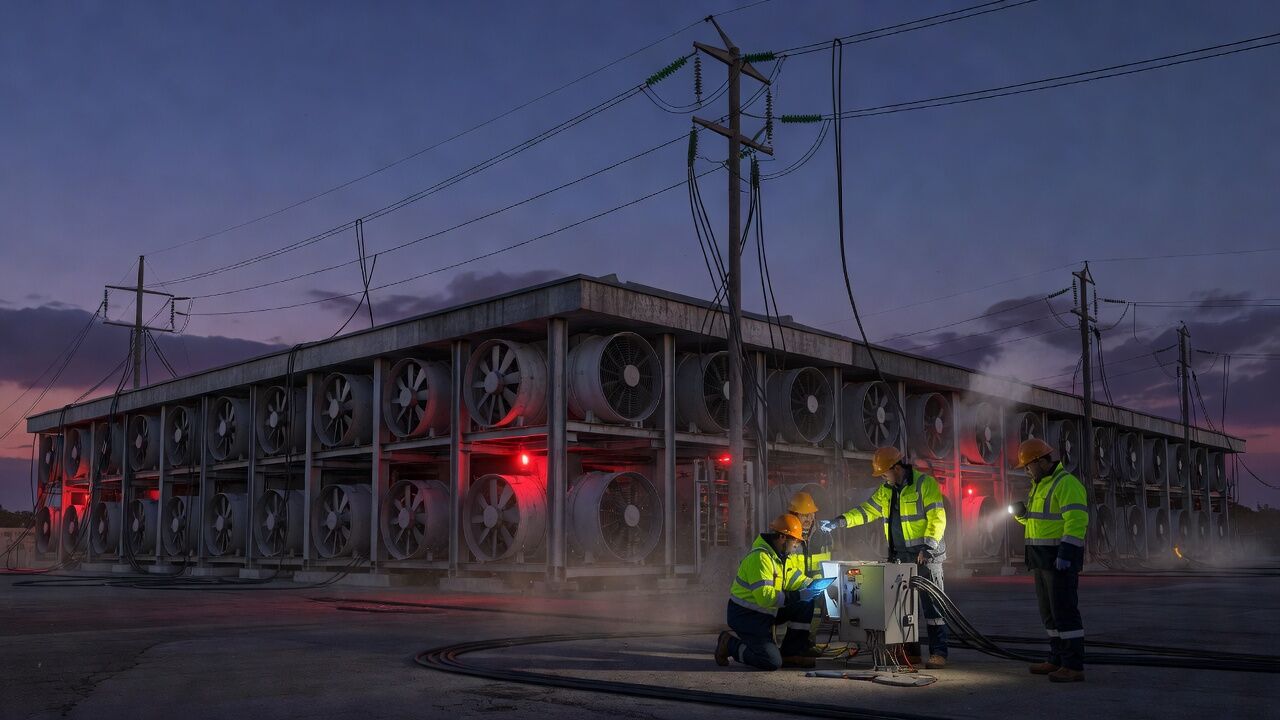
3.1 Gigawatts Vanished in 30 Seconds: The Data Center Grid Crisis Nobody Is Talking About
A power line went down outside Washington, D.C., this week. Normally, the electrical grid absorbs that kind of fault in seconds. Circuit breakers trip, reroute, life goes on. This time was different. This time, more than 3 gigawatts of data center load disappeared from the PJM grid in under 30 seconds — and it took over 10 minutes for the system to stabilize.
The voltage spike rippled from Northern Virginia all the way to Chicago. Lights flickered across half the United States. And if you think this was a one-off equipment failure, you have not been paying attention to what AI data centers are doing to the power grid.
Let me break down what happened, why it happened, and why this is going to keep happening until we fix the underlying architecture.
What Actually Happened on the PJM Grid
PJM Interconnection is the largest grid operator in the United States, managing electricity flow across 67 million customers from New Jersey to Illinois. On July 25, 2026, a power transmission line failed in its territory — the region stretching from Washington, D.C., through Northern Virginia, which happens to be the highest concentration of data centers on the planet.
When the voltage dip from the failed line reached the data centers in Ashburn and Loudoun County — Data Center Alley — every facility's internal protection systems triggered simultaneously. They all switched to backup power within seconds of each other, collectively pulling 3.1 gigawatts of load off the grid. That is roughly the output of three nuclear reactors, gone in half a minute.
The data centers that disconnected represented about 3% of total PJM demand at the time. But the grid operates on a knife's edge of supply-demand balance. Lose 3% of load that fast and voltage surges. The grid survived this time. The question is whether it survives the next one, because AI is making these events more frequent and more severe.
This Is the Second Time — and It Is Getting Worse
A similar event hit PJM in 2024, when 60 data centers simultaneously disconnected, pulling 1.5 gigawatts from the grid. That was the warning shot. Two years later, the same phenomenon happened at more than double the magnitude. In 2024, data centers accounted for about 6% of PJM's load. By 2040, they are expected to make up 24%.
The math is not complicated. If 3% of demand disconnecting causes a 10-minute voltage event across half the country, what happens when 10% of demand drops off simultaneously? The answer is blackouts. Not flickering lights. Actual, prolonged power failures affecting tens of millions of people.
The Root Cause: Data Centers That Cannot Ride Through
The problem is not that data centers need backup power. The problem is that every data center makes the decision to switch to backup independently, in milliseconds, using the same logic. When they all sense the same voltage sag at the same time, they all throw the same switch at the same time — and the grid sees a giant, instantaneous load drop.
Ali Zain Banatwala, a senior market models specialist at the Independent Electricity System Operator, put it bluntly to TechCrunch: "We need to figure a way for these loads that are located next to each other to sequentially either disconnect or reconnect." A more orderly process would allow grid operators to develop robust procedures in advance.
The alternative is to build data centers that absorb disruptions instead of reflexively disconnecting. One company, ON.Energy, has developed a campus-scale uninterruptible power supply that hides the entire data center behind a bank of batteries. The grid sees one consistent, well-behaved load instead of a hyperscaler that panics and unplugs. ON.Energy is currently installing 3 gigawatts of its systems at four data center campuses.
ERCOT Is Already Moving. PJM Needs to Catch Up.
ERCOT, the Texas grid operator, is moving toward requiring large loads like data centers to "ride through" disruptions rather than trip off. That is the right regulatory direction. But PJM, which serves more than double ERCOT's population, has not matched that urgency yet.
The irony is that the market incentives are aligned. Data centers earn revenue by staying online. The hyperscalers — Amazon, Google, Microsoft, Meta — have every financial reason to build facilities that don't destabilize the grid they depend on. But retrofitting existing facilities is expensive, and the current generation of data centers was designed for a world where grid disruptions were rare and small.
That world no longer exists. AI training clusters draw 10 to 100 times the power of traditional server racks. A single GPU cluster can pull 100 kilowatts. A full AI training buildout runs into the hundreds of megawatts. When those loads all sit in the same geographic corridor — and they do, because Northern Virginia offers fiber, tax incentives, and existing infrastructure — the concentration risk becomes a systemic vulnerability.
What This Means: The Grid Was Not Designed for Hyperscale AI
The electrical grid was designed for incremental, predictable load growth. A few megawatts here, a few there, spread across geography and time. AI data centers broke that model. They come online in gigawatt chunks, concentrated in specific regions, and they behave differently from any load the grid has ever managed.
The TechCrunch article that broke this story used data from Ting Labs, a startup that runs an IoT sensor network out of people's electrical sockets. That is how we know about this event at all — not from PJM's own monitoring, but from a third-party sensor network. The grid operators are flying blind on their own most critical load category.
PJM's overall cost of operating the grid has increased nearly 70% this year, or more than $16 billion, according to the latest report from PJM's independent market monitor. Some of that is fuel costs, but a growing portion is the cost of maintaining reserve capacity to handle exactly these kinds of events. The data center boom is raising electricity costs for everyone on the grid.
What Comes Next
ON.Energy's campus-scale batteries are a promising solution, but four campuses and 3 gigawatts is a fraction of what is needed. PJM's territory is projected to host over 50 gigawatts of data center load by 2030. Every one of those facilities needs ride-through capability, sequential disconnection protocols, or both.
The 2024 event was a warning. The 2026 event is a confirmation. The next one might be a catastrophe. Grid operators, hyperscalers, and regulators need to treat data center grid interaction as a first-order infrastructure problem — not an afterthought for the facilities management team.
If the lights flicker in your home across the next year, do not blame the power company. Blame the data center that decided to unplug itself from the grid instead of riding through a momentary dip. The technology to fix this exists. The regulatory will is building. The question is whether deployment happens fast enough to prevent something worse.
— Allan Ali, Sylt.ing
 Russian
 English
 Arabic
 French
 Spanish
 Portuguese
 Deutsch
 Turkish
 Dutch
Dutch
 Italiano
 Romaian
 Portuguese (Brazil)
 Greek
Greek