


 Monetization
Meta Compute: Inside the 183 Billion Pivot That Turns AI Data Centers Into Cash Machines
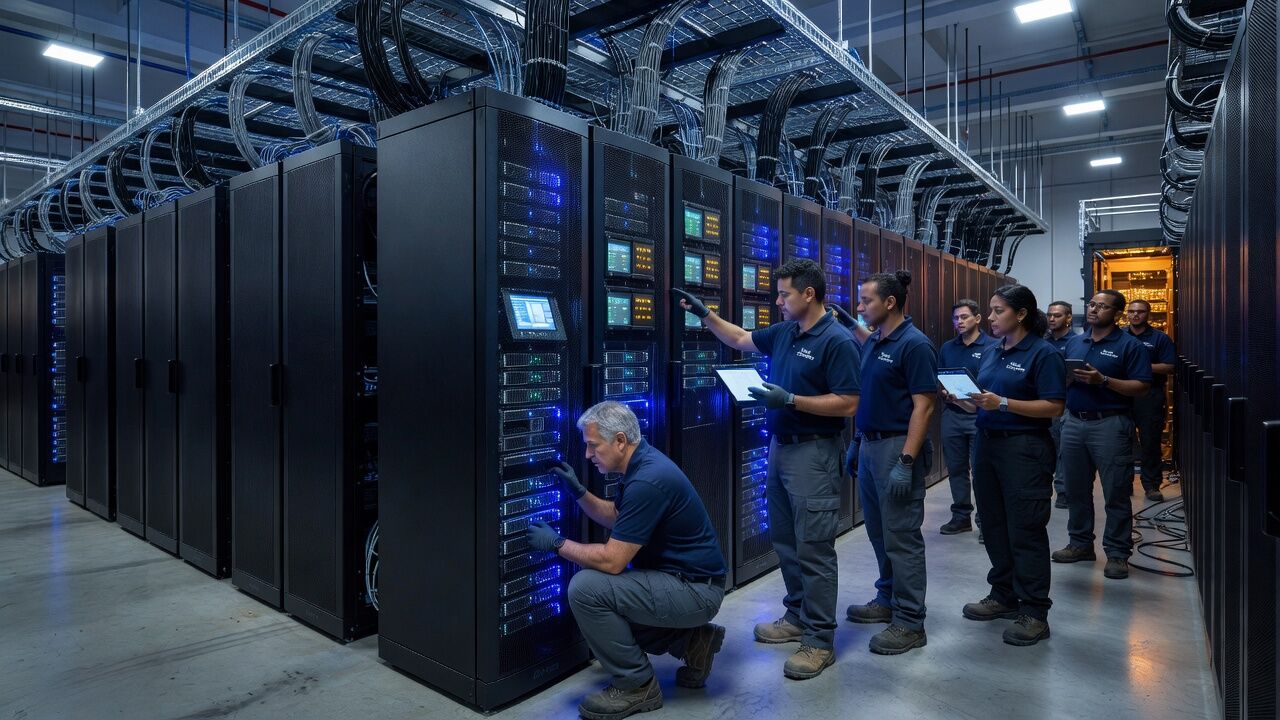
Meta Compute: Inside the 183 Billion Pivot That Turns AI Data Centers Into Cash Machines
On July 1, Bloomberg reported that Meta is building a cloud infrastructure business called Meta Compute — selling access to both raw GPU capacity and hosted AI models. The stock popped 9% that day. The next morning, Korean semiconductor stocks crashed 7.9% because investors suddenly understood the other side of the same news.
That's the kind of signal you can't ignore. Let me break down what Meta Compute actually is, why the Anthropic deal talks change everything, and what it means for everyone running infrastructure — from the hyperscalers to the solo DevOps operator running a cluster in a colo cage.
What Meta Compute Actually Is
Meta is not becoming "the next AWS." That's the wrong frame. Meta Compute is selling two specific products, and neither looks like what you buy on the AWS console.
Product One: Raw compute. This is the CoreWeave model — bare GPU capacity, no frills, no managed services. You get access to racks of H100s or B200s, you ssh in, you run your training jobs. No auto-scaling, no RDS, no Lambda. Just compute. Meta is sitting on 1,829 billion dollars' worth of committed AI infrastructure. Even at 80% utilization — which is generous for AI workloads — there's hundreds of billions in idle capacity that could be monetized.
Product Two: Model access. Bloomberg reports Meta is considering selling API access to Muse Spark, its recently launched closed-weight model. This is the AWS side of the strategy: not just renting the hardware but selling the software stack on top. Developers hit an API endpoint, get inference results, and Meta collects the check. If Anthropic signs the reported $10 billion compute lease deal, that's effectively Product One at massive scale — Anthropic runs its training jobs inside Meta's data centers.
The initiative is led by infrastructure chief Santosh Janardhan, Meta Superintelligence Labs head Daniel Gross, and company president Dina Powell McCormick. When three C-suite executives from infra, research, and business leadership all attach to one project, this is not a lab experiment. This is a strategic business line.
The $182.9 Billion Architecture: Meta Becomes a Supplier
Meta's committed AI infrastructure spend stands at $182.9 billion as of Q1 2026. That's the number that makes this story real. Let me put it in perspective: that's larger than the GDP of over 100 countries. It's more than the entire market cap of most Fortune 500 companies.
Up until now, that spend has been a cost center — an enormous bet on internal AI capabilities with no clear revenue path. Zuckerberg has been getting the question "when do you monetize this?" from investors for two years straight. Meta Compute is the first credible answer.
The economics are straightforward. A data center costs roughly the same whether it's running at 60% or 90% utilization. The marginal cost of selling that spare 30% capacity is near zero — you've already built the facility, bought the GPUs, paid for the power connection. Every dollar of Meta Compute revenue falls almost entirely to the bottom line.
The Ohio data center — which Zuckerberg described as "the size of Manhattan" — is coming online this year. Louisiana's massive project is under construction. These facilities don't just serve Meta's internal Llama training runs. They're designed to be multi-tenant infrastructure from day one.
And then there's the Anthropic angle. On July 17, the New York Times reported that Meta is in talks to lease up to $10 billion in compute to Anthropic over two years. Ten billion dollars. That's a revenue line item so large it would register on any Big Tech earnings report. And it validates the entire thesis — one of the world's leading AI labs is willing to bet $10 billion that Meta's infrastructure is reliable enough to run their training workloads.
The Competitive Picture: Meta's Four-Card Hand
Meta enters the cloud compute market with a hand that looks both strong and untested.
Card one: Capital. Meta's $182.9 billion infra commitment puts it in a league with the hyperscalers. CoreWeave, the current king of bare-metal GPU rental, has a market cap in the tens of billions. Meta can spend more on a single data center than CoreWeave might be worth.
Card two: Existing demand signal. The Anthropic talks prove there's genuine customer interest. Anthropic is not going to waste time negotiating a $10 billion lease if they don't think Meta's infra can deliver. This is an anchor tenant that validates the whole project.
Card three: SpaceX precedent. Elon Musk's xAI/SpaceX operation announced similar plans weeks before Meta. SpaceX signed compute deals with Anthropic, Google, and Reflection AI. When two of the best-capitalized companies on earth independently arrive at "sell your excess compute," that's a market signal, not a coincidence.
Card four: The open-source advantage. Meta's Llama model family is the most widely adopted open-weight AI ecosystem. Developers already build on Llama. If Meta Compute offers cheap inference for Llama-derived models, there's zero switching cost for a huge chunk of the AI developer community.
But the hand has weaknesses. Meta has never run a cloud business. AWS built its operational muscle over 18 years of enterprise sales, support contracts, SLA management, and compliance certifications. Meta has none of that institutional memory. And the market already has three hyperscalers that have spent a decade building developer trust. That moat doesn't disappear because Meta has deep pockets.
The Three Questions Nobody Has Answered
1. Can Meta actually run multi-tenant infrastructure? Running AI training for one internal customer (Meta's own teams) is completely different from running it for hundreds of external customers with different security requirements, compliance needs, and workload profiles. The operational complexity scales exponentially. Meta has never demonstrated this capability.
2. What happens to CoreWeave and the neocloud ecosystem? On the day of the Meta Compute leak, CoreWeave dropped 13% and Nebius fell 15%. If Meta enters the bare-metal GPU market with near-zero marginal cost on excess capacity, the neocloud players face an existential pricing challenge. They can't match Meta's scale. Their only defense is operational excellence and customer relationships — but those are thin moats against a 1.8 trillion dollar spending commitment.
3. Is this a sign of AI infrastructure oversupply? The market's split reaction tells you everything. Day one: Meta stock up 9% — Meta Found A Revenue Stream. Day two: Samsung, SK Hynix, and AMD down 5-10% — Wait, If Meta Has Excess Capacity, Maybe Everyone Has Excess Capacity. The Korean KOSPI dropped 7.9% on that second-day realization. If the AI infrastructure buildout is creating a bubble of oversupply, Meta Compute might be the canary in the coal mine, not the beginning of a beautiful new business.
What This Means: The Infrastructure Pivot
This story matters because it signals a structural shift in how big AI infrastructure is financed and operated. The old model was: build infra for your own AI, hope it pays off through improved products. The new model is: build infra, sell what you don't use, and let the cash flow from leasing finance the next round of buildout.
It's the AWS playbook applied to the AI era. Amazon built warehouses and servers for itself, then sold the excess. Meta is building data centers and GPUs for itself, then selling the excess. The difference is scale and speed — Meta is trying to compress a 15-year Amazon journey into 18 months.
For infrastructure operators and DevOps teams, the takeaway is concrete: GPU compute pricing is going to face serious downward pressure in the next 12-24 months. When the third-largest advertiser on earth starts dumping spare compute capacity at marginal cost times 183 billion dollars, the price of AI compute doesn't stay flat. If you're running AI workloads, you want to avoid long-term locked-in compute contracts right now. The market is about to get cheaper.
What Comes Next
Meta hasn't confirmed the Anthropic deal and the Meta Compute initiative is still in development. But the direction is clear. July 2026 will be remembered as the month the AI infrastructure market fundamentally restructured — when the builders became the sellers.
Watch for three milestones. First: Meta's Q2 earnings on July 29. If Zuckerberg addresses Meta Compute directly, that's a confirmation signal. Second: the Ohio data center going live. That's when capacity hits the market. Third: whether any other hyperscaler responds with their own excess compute program. If Google or Microsoft announce similar initiatives, you'll know the model has shifted permanently.
The winners of the AI race may not be the ones building the best models. They might be the ones who own the buildings, the power, and the GPUs — and know how to rent out what they're not using.
— Allan Ali, Sylt.ing
 Romaian
 English
 Arabic
 French
 Spanish
 Portuguese
 Deutsch
 Turkish
 Dutch
Dutch
 Italiano
 Russian
 Portuguese (Brazil)
 Greek
Greek