


 Monetization
3 GW of AI Data Centers Just Dropped Off the PJM Grid at Once — This Is the Problem Nobody Is Solving
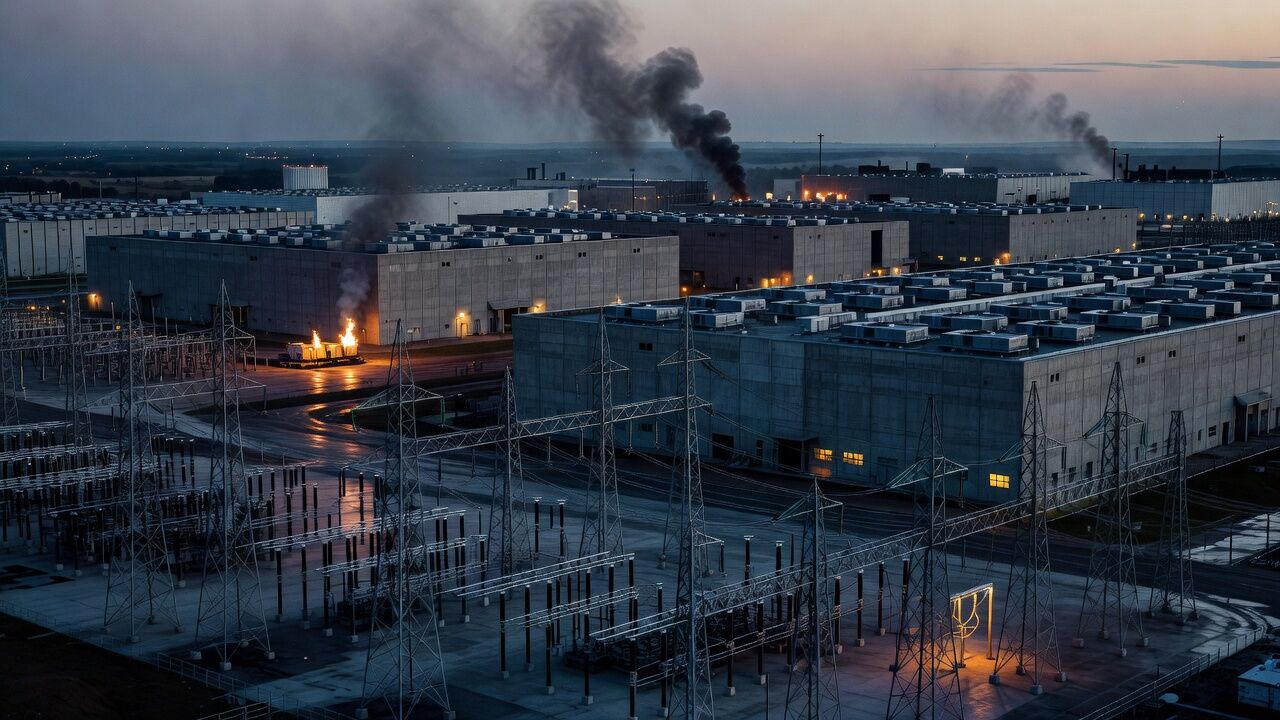
3 GW of AI Data Centers Just Dropped Off the PJM Grid at Once — This Is the Problem Nobody Is Solving
What Happened at 7:56 AM on July 22
At 7:56 AM Eastern time on Wednesday, July 22, 2026, a transmission line fault occurred in Northern Virginia — the region that hosts the largest concentration of data centers on the planet. What happened next should terrify anyone building AI infrastructure at scale.
More than 3 gigawatts of data center load disconnected from the PJM grid almost simultaneously. The frequency on the largest US power grid — serving 67 million people across 13 states and the District of Columbia — spiked to 60.1 Hz. Grid disturbances normally correct in milliseconds. This one took roughly 800 seconds — nearly 13 minutes — to stabilize, according to analysis from WattClarity and confirmed by PJM interconnection data published by RTO Insider.
Ting Labs, a sensor network company, reported that its 1.4 million sensors registered voltage disturbances stretching from Washington, D.C. all the way to Chicago. Bob Marshall, CEO of Ting Labs, told Reuters that "the power quality took a pretty big hit." Dominion Energy confirmed that data centers' internal control systems detected the transmission fault and automatically switched to backup power — as they were designed to do. The problem is that all of them did it at the same time.
The Physics Problem Nobody Budgeted For
Everyone in the AI industry worries about not having enough power. The new threat runs in the opposite direction. When 3 GW of load vanishes in an instant, the grid oversupplies, voltage spikes, and frequency wobbles dangerously. This is not a shortage problem — it is a surplus problem, and it is harder to solve.
The scale is what matters here. In July 2024, roughly 60 Virginia data centers disconnected simultaneously, dumping about 1,500 MW — half of what just happened — onto the grid and forcing emergency action to avoid cascading outages. NERC formed a task force after that event. Two years and one task force later, the same thing happened again at double the scale. NERC's John Moura warned after the 2024 incident: "The grid is not designed to withstand the loss of 1,500 MW data centers. At some level it becomes too large to withstand unless more grid resources are added." Today, the number is 3,000 MW.
The grid is still not ready.
The 6,625 MW Gap That Keeps Growing
This voltage disturbance is not an isolated event. It is a symptom of a structural failure in how we plan grid capacity. PJM Interconnection's December 2025 capacity auction — the mechanism that ensures enough power will be available three years out — failed for the first time in history. PJM procured 145,777 MW, falling 6,625 MW short of the 20% installed reserve margin required to prevent more than one unexpected outage every ten years.
The numbers are brutally clear. Data centers add 5 to 7 GW of new demand every single year. New generation supply adds only 2 to 3 GW. That is a compounding 2 to 4 GW deficit every year through at least 2032, according to PJM's own forecasting. Capacity prices hit a record $333.44 per MW-day in that auction — the third consecutive record high. The market monitor estimated that data center load accounted for 74.7 percent of the increase in capacity-market revenues, increasing wholesale power prices by $11.26 per megawatt-hour in the first five months of 2026 alone — a 24.4 percent increase.
And that was before the July 22 voltage disturbance added urgency to the cost conversation.
AI Data Centers Are 60 Hz Time Bombs
Gartner's November 2024 prediction — that power shortages will constrain 40 percent of AI data centers by 2027 — is starting to look conservative. S&P Global projects data center grid-power demand rising 22 percent in 2025, with demand nearly tripling by 2030. Goldman Sachs estimates approximately $720 billion in required grid upgrades through 2030 to accommodate this growth.
The interconnection queue tells the real story. PJM has 60-plus GW of generation and storage projects waiting in its interconnection queue, with average wait times exceeding four years. National average interconnection waits have ballooned from under two years in 2008 to nearly five years today. California's queue runs nine-plus years. The gap between what hyperscalers want to build and what the grid can physically deliver is measured not in months, but in planning cycles.
NERC is now developing mandatory modeling standards — including a technical framework called PERC1 — along with high-resolution monitoring requirements designed to give operators better visibility before the next event. But standards take years to draft, approve, and enforce. The voltage disturbance on July 22 took 13 minutes.
The Three Questions Nobody Has Answered
1. Who pays for the grid upgrades? PJM is already pursuing regulatory changes to shift transmission and capacity costs directly onto data center developers rather than spreading them across all ratepayers. States including Texas and Pennsylvania are weighing frameworks that would allow utilities to cut large commercial loads before residential customers during grid emergencies. The era of data centers getting a pass on grid costs is ending — whether the industry is ready or not.
2. What happens when data centers ride through faults? Grid operators want data centers to stay connected during minor disturbances and "ride through" faults rather than tripping offline. Data center operators push back hard, arguing that staying online risks damaging hundreds of millions of dollars in sensitive hardware. Both positions are rational. Neither is sustainable as AI campuses scale toward gigawatt-level power appetites. Dominion Energy and data center owners in Virginia have already begun adjusting facility control systems so that sites remain connected during brief grid faults. Expect this to become a regulatory mandate, not a voluntary choice.
3. Can the grid catch up? Every year through 2032, data centers will add demand faster than new generation can come online. The cumulative deficit compounds. Off-grid and behind-the-meter solutions — on-site generation, dedicated renewables, natural gas peaker plants at data center campuses — are moving from optional strategies to necessary deployment paths. But that shifts the problem from grid capacity to equipment supply chains, permitting timelines, and carbon compliance.
What This Means: The Grid Is the New Constraint
The AI industry spent 2024 and 2025 worrying about GPU supply. Nvidia's chip allocations, lead times for H100 clusters, and data center construction timelines dominated every strategic conversation. That was last cycle. The new binding constraint is the grid.
Land banking is not enough. Hyperscalers have been acquiring land parcels near power corridors, securing utility agreements, and pre-negotiating approvals. But the July 22 voltage disturbance proves that securing power is different from managing the grid's ability to absorb gigawatt-scale load variability. A data center campus that sits empty during a fault is a data center that destabilizes the grid for 13 minutes.
This is not an engineering problem with a clean technical fix. It is a regulatory, economic, and infrastructure problem that will take a decade to resolve — and AI demand is compounding annually.
What Comes Next
The July 22 event will accelerate three things. First, mandatory ride-through requirements will force data centers to stay grid-connected during transmission faults, with penalties for simultaneous disconnections above a certain MW threshold. Second, cost allocation reform will push transmission and capacity costs onto data center developers through tariffs, interconnection agreements, and state-level rate cases. Third, behind-the-meter generation will go from nice-to-have to must-have for any new campus above 100 MW.
The hardware is not the bottleneck anymore. The electrons are. And on July 22, the largest grid in the United States blinked because the AI industry built faster than the grid could adapt. It will not be the last time.
— Allan Ali, Sylt.ing
 Dutch
Dutch
 English
 Arabic
 French
 Spanish
 Portuguese
 Deutsch
 Turkish
 Italiano
 Russian
 Romaian
 Portuguese (Brazil)
 Greek
Greek