


 Monetization
Data Centers Drove 6.3 Billion in PJM Auction Costs — And You're Already Paying
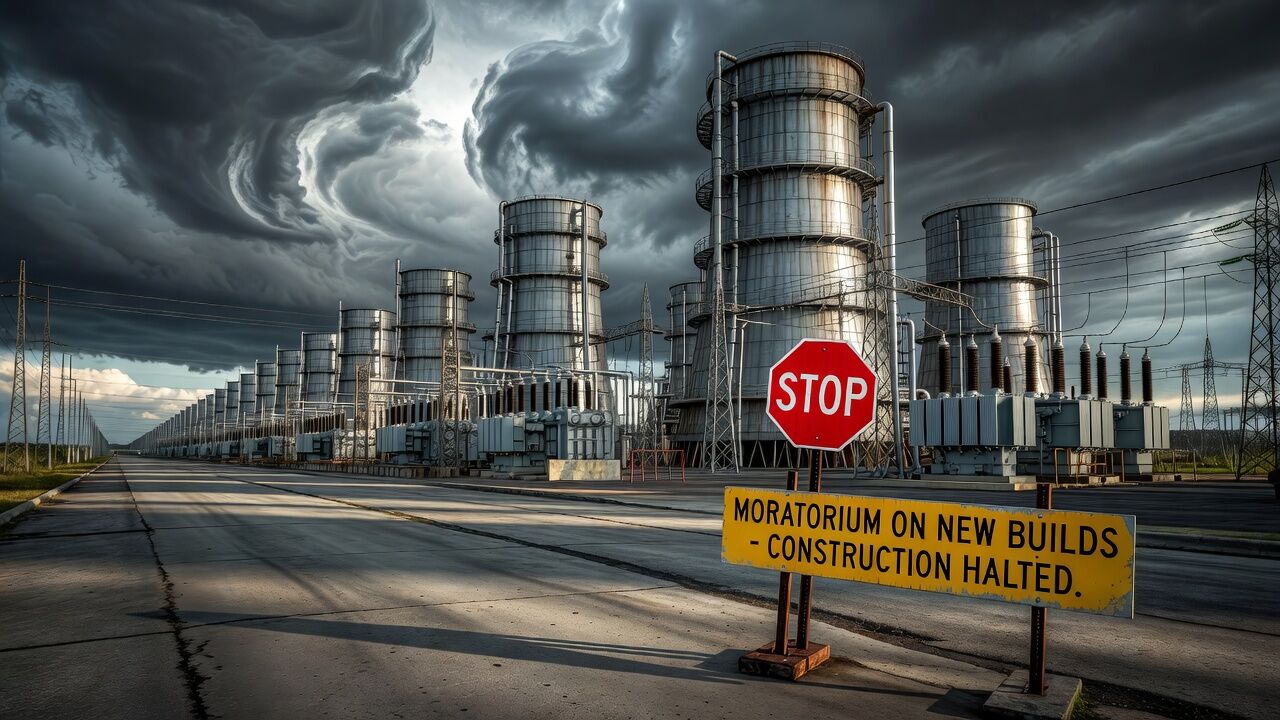
The Numbers That Should Scare Every PJM Ratepayer
If you live in any of the 13 states that PJM Interconnection serves — from Illinois to Virginia, Ohio to New Jersey — your electricity bill just got more expensive, and the reason sits inside a number the market monitor released this week: $6.3 billion.
That is what data centers cost PJM ratepayers in the grid operator's most recent capacity auction alone. Not over a decade. Not in some hypothetical future scenario. This month's auction. $6.3 billion, or 38% of the entire $16.4 billion auction tab, attributable to data centers. And the kicker? A chunk of that money is paying for data centers that have not been built yet.
Joseph Bowring, president of Monitoring Analytics — PJM's independent market monitor — put it bluntly in an interview Friday: "PJM is continuing to act like it's business as usual. You have to open your eyes and recognize that it is really a paradigm shift, and failing to do that imposes costs on other customers."
That is the polite version. Here is the real one: the grid operator that serves 67 million people is running an auction mechanism designed in the 1990s while AI data centers are placing interconnection requests measured in gigawatts. The mechanism is breaking. Ratepayers are holding the bag. And nobody in charge seems willing to admit the system needs a fundamental rebuild.
Four Auctions, $29.4 Billion — and Counting
The $6.3 billion figure from the latest auction is just the headline. The cumulative number is worse. Across PJM's last four base capacity auctions, Monitoring Analytics attributes $29.4 billion in charges to data centers — 46% of the $63.6 billion total. That is nearly half of all capacity costs across 13 states and DC, driven by one category of customer.
Capacity auctions work like this: PJM runs an auction three years ahead of each delivery year. Power plant owners bid to be available during peak demand. The clearing price sets what everyone pays. It was designed to ensure reliability by paying generators to stay online.
Here is what has happened to those prices since data center demand hit the auction floor:
- 2024/2025 delivery year: $28.92 per megawatt-day
- 2025/2026: $269.92 — a 10x jump in one year
- 2026/2027: $329.17 — another record
- 2027/2028: $333.44 — hit the price cap
- 2028/2029: $325 — hit the cap again, still short of reliability requirement by 6,831 MW
That is an 833% increase in four years. And for the first time in PJM's history, the last two auctions cleared below the grid operator's own reliability requirement. The math is not working.
You Are Paying for Data Centers That Do Not Exist Yet
Here is the part that should make you angry. Monitoring Analytics estimates that approximately $6.2 billion of the 2027/2028 auction costs related to data centers that had not been built. Developers file interconnection requests in multiple markets simultaneously, build in one, and the load forecasts count every request as real demand.
The result is that hypothetical data centers — proposals that may never break ground — are raising your electricity bill today. And as the Natural Resources Defense Council (NRDC) notes, PJM residents stay on the hook for those charges even if the data centers are never built.
Gasilov Group ran the household math. For a typical 850 kWh household in PJM territory, capacity costs went from roughly $2.30 per month in 2024/2025 to $17.10–$17.40 per month for the last three delivery years. That is a 7x increase in capacity charges alone — before you add transmission, distribution, and energy costs. NRDC projects an uncollared scenario hitting $70 per month per household by 2028 if temporary price caps expire.
Let that sink in. Seventy dollars a month. For capacity you are not using. To hold space for data centers that may never get built.
The Hyperscaler Pledge That Means Nothing
On March 4, 2026, Google, Meta, Microsoft, Amazon, OpenAI, Oracle, and xAI stood at the White House and signed the Ratepayer Protection Pledge. They committed to "build, bring, or buy" the energy their data centers need and to pay its full cost. It made headlines. It was photographed. It was celebrated.
It is also non-binding. There is no compliance mechanism. No penalty for breaking it. No change to how retail rates are set — because state commissions hold that authority, not the White House.
Bowring is direct about this: "There is only one way to do what hyperscalers agree is the right thing to do, and that is to run a separate auction. That is good for the hyperscalers because it allows them to get capacity and be served reliably, and it is good for other customers because it separates out the impact from the data center."
Separate auctions. Dedicated capacity procurement. Fifteen-year contracts. If you want to build a data center that draws hundreds of megawatts, you should buy your own capacity instead of bidding against families trying to keep their lights on. That is not radical. That is basic market design.
The Backstop Auction That September Will Decide
PJM's board is developing a backstop auction proposal that it aims to file with the Federal Energy Regulatory Commission (FERC) this month, for a September auction. The plan that received the most stakeholder support would have utilities and data centers ask PJM to buy a specific amount of capacity in a one-time auction. PJM staff proposed procuring the shortfall from the last base auction — approximately 6.8 GW.
Under Monitoring Analytics' preferred approach, data centers would be removed from the base capacity auction entirely. They would contract for their own generation, and those that cannot would buy capacity through a separate auction under 15-year contracts. That protects ratepayers from paying for unneeded capacity and removes the "speculative interconnection request" problem at its source.
Separately, FERC gave six grid operators — including PJM — 60 days from June 18 to justify or reform their large-load interconnection rules. That deadline closes around mid-August, and it will be the first real stress test of whether regulators understand what is happening to the grid.
Morningstar DBRS, the credit ratings agency, released a report this week that should be required reading for every PJM state regulator. "As states consider new taxes, restrictions, and moratoriums on data center growth," the agency wrote, "escalating stakeholder opposition could become a material credit factor, potentially weakening data center project credit quality by reducing development visibility."
Translation: the political backlash against data center construction has reached the point where credit ratings agencies are noticing. Projects are getting canceled. 300+ local bills have been filed. New York just enacted the nation's first statewide data center moratorium. Bernie Sanders and AOC introduced a federal moratorium bill. And the market is starting to price in the risk that not all of these planned facilities will be built.
What This Means: The System Is Designed to Shift Costs to You
Look at the three cost channels side by side.
Channel one: capacity auctions. Data center interconnection requests enter utility load forecasts years before construction. Those forecasts set auction prices. You pay elevated capacity charges for three delivery years to hold grid space for facilities that may never exist. No recourse, no refund.
Channel two: rate base costs. Utilities build substations, transmission lines, and gas pipelines for data centers. The cost goes into rate base with a regulated profit margin. You pay for decades through your monthly bill. Even if the data center gets canceled, the infrastructure stays in rate base.
Channel three: wholesale energy costs. Tightening supply against data center demand raises the price of every kilowatt-hour traded on the spot market. You pay it every time you flip a switch.
The Edison Electric Institute has counted 24 states with at least one approved large-load tariff as of July 2026, plus six pending. Oregon's Schedule 96 requires data centers above 20 MW to carry the specific costs of serving them. Virginia's GS-5 class for loads of 25 MW and above takes effect January 1, 2027, with 14-year minimum contracts and $1.5 million per MW collateral. These are the right direction, but they are reactive. The market is moving faster than the regulation.
The Data Center Power Crisis in Numbers
Let me put all of this in one place so you have the full picture:
- $6.3 billion: Data center costs in PJM's latest capacity auction alone
- $29.4 billion: Data center costs across the last four auctions (46% of $63.6B total)
- $6.2 billion: Costs related to data centers that have not been built yet
- 833%: Increase in PJM capacity prices in four years ($28.92 → $269.92 → $329.17)
- 6,831 MW: Shortfall in the 2028/2029 auction — a first in PJM history
- 5,400 MW: Peak load increase year over year from data center demand
- $17/mo: What the average PJM household now pays in capacity charges alone (up from $2.30)
- $70/mo: NRDC's projected household cost by 2028 if price caps expire
- 24 states: With approved large-load tariffs as of July 2026
- 300+: Local bills filed targeting data center construction
These are not projections from activists. These are the market monitor's published figures, the credit ratings agency's analysis, and the state commission's tariff sheets.
What Comes Next
The next 90 days will tell us whether the regulatory system can catch up to the infrastructure reality. PJM's backstop auction proposal lands at FERC this month. The 60-day interconnection rule deadline closes in mid-August. PJM's next base auction — for the 2029/2030 delivery year — is scheduled for December, and it will be the first real test of whether the backstop fixes the speculative load problem.
The states are not waiting. Oregon, Virginia, Georgia, Ohio, and Indiana are all writing large-load tariffs. New York hit pause entirely with a one-year moratorium. The PJM governors' collaborative — formed in September 2025 — is pushing for structural reform. And the Morningstar DBRS report confirms that the market is starting to price in regulatory risk.
Bowring is right. This is not business as usual. It is a paradigm shift. The question is whether PJM, FERC, and the state commissions will treat it like one before ratepayers get stuck with another $29.4 billion bill for infrastructure they are not using.
If you are a PJM ratepayer, here is what you can do: check whether your state public utility commission has an open docket on data center cost allocation. File a comment. Show up to the hearing. The regulatory process is the only mechanism that can force a separate auction, and it only works when ratepayers demand it.
Because if the current system holds, you will keep paying for someone else's AI training runs. And the bill is only going up.
— Allan Ali, Sylt.ing
===SUMMARY===
PJM's latest capacity auction attributed $6.3B to data centers — 38% of the $16.4B total. Over four auctions, data centers account for $29.4B of $63.6B (46%). PJM capacity prices have surged 833% in four years from $28.92 to $329/MW-day. Ratepayers are paying $17/mo in capacity charges (up from $2.30), with projections of $70/mo by 2028. The market monitor calls for separate data center auctions to protect consumers from paying for speculative facilities.
 Greek
Greek
 English
 Arabic
 French
 Spanish
 Portuguese
 Deutsch
 Turkish
 Dutch
Dutch
 Italiano
 Russian
 Romaian
 Portuguese (Brazil)