
 Monetization
New York Just Hit Pause on AI Data Centers — and It Won't Be the Last
New York Just Hit Pause on AI Data Centers — and It Won't Be the Last
On July 14, 2026, Governor Kathy Hochul signed an executive order making New York the first U.S. state to impose a formal moratorium on large data center construction. The pause targets facilities at or above 50 megawatts of critical load — essentially every hyperscale campus in the pipeline — and freezes environmental permits for up to one year. Running parallel is Assembly Bill A11560, the Responsible Data Center Development Act, which sets a lower registration and review floor at 20 MW and mandates energy, water, and greenhouse gas disclosures before local siting boards can approve zoning changes.
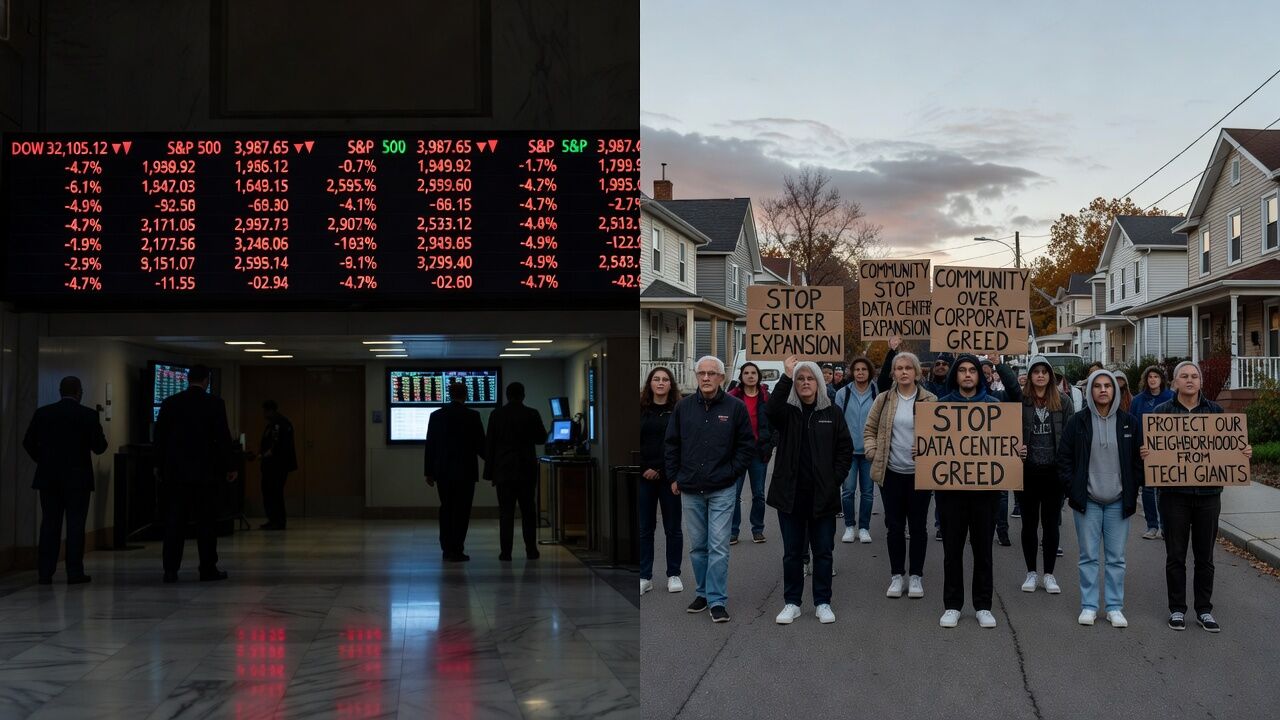
This is not a stunt. This is the first domino in what looks like a national reassessment of how America builds the physical layer of AI.
If you run servers, manage infrastructure, or deploy workloads at scale, this directly affects your timeline, your costs, and your site selection strategy for the next three to five years.
What the New York Moratorium Actually Does
The executive order directs the Department of Environmental Conservation (DEC) and the Department of Public Service to stop issuing approvals for new or expanding data centers at or above 50 MW. Projects that already hold full permits can proceed. Everything in the application pipeline freezes. Hochul's office cited incomplete cumulative impact reviews — particularly along the Hudson Valley transmission corridor and western New York gas-peaker dependencies — as the immediate trigger.
A11560 goes deeper. It requires developers to file energy, water, and GHG disclosures before local siting boards can approve zoning changes. It mandates community benefit agreements in environmental justice areas. It directs the Public Service Commission to study cost-allocation rules so that transmission upgrades tied to a single campus don't land on residential ratepayers. And it gives DEC explicit denial authority if a project would blow past New York's legally binding 2040 zero-emission electricity goal.
The two instruments overlap intentionally. The moratorium buys time for DEC to draft environmental review templates tuned to liquid cooling, diesel backup generators, and battery storage systems that standard checklists barely mention. A11560 supplies the permanent scaffolding — interagency review, public comment windows, and potential denial grounds. Developers above 50 MW face the pause now. Those between 20 and 49 MW face transparency rules that may be just as expensive in planning attorneys and delayed groundbreaking dates.
New York has 148 existing data centers and six more already planned. State Senator Kristen Gonzalez, who sponsored the bill, estimates as many as 28 more are under consideration. The moratorium slams the door on any of those that haven't cleared permitting.
Twelve States and Counting: The Moratorium Movement
New York may be the first, but it's far from alone. At least twelve states filed data center moratorium bills in 2026. Maine came within a governor's veto of becoming the first to enact one — the bill passed the legislature, and only a veto from the governor kept it from becoming law. Georgia is actively debating whether to phase out data center tax credits and pause new construction. In June, Arizona Governor Katie Hobbs signed a bill imposing a three-year moratorium on new sales tax breaks for data centers — effectively freezing the state's incentive pipeline.
At the federal level, Senators Bernie Sanders and Alexandria Ocasio-Cortez introduced the AI Data Center Moratorium Act in March 2026. The bill would freeze all new AI data center construction nationwide until Congress passes three separate bodies of legislation covering AI safety, worker protection, and energy pricing. Industry groups say it has no chance of passing. But the fact that it exists at all tells you how far the political Overton window has shifted.
According to MultiState.us tracking, more than 300 data center-related bills were filed across 30 states in the first six months of 2026. The scope spans moratoriums, energy cost mandates, environmental disclosure requirements, and outright construction bans. At the local level, Lowell, Massachusetts unanimously passed the state's first municipal data center moratorium. Counties across Virginia — the traditional capital of data center development — are slowing approvals. Bangor, Maine is fast-tracking a six-month ban while the state considers an 18-month statewide pause.
The pattern is unmistakable. Communities that once competed for data center investment with tax abatements and fast-tracked permits are now asking a different question: at what cost?
Grid, Water, and the Ratepayer Backlash
The resistance isn't coming from nowhere, and it's not coming from Luddites. It's coming from people who looked at their utility bills, their local water tables, and their transmission corridors and did the math.
Data centers load the grid differently from factories. They ramp quickly, run flat out for years, and concentrate in places with fiber routes and cheap land — often the same rural counties where residential demand has been flat for decades. When National Grid or NYSEG has to build a new substation or reconductor a 115-kilovolt line, the cost allocation is supposed to spread some charges statewide. But edge-case upgrades still move local delivery tariffs, and ratepayers are seeing the line items creep upward.
The water story is worse. Evaporative cooling for AI training halls can consume millions of gallons per day during heat waves. In the Hudson basin, where multiple towns share aquifers, environmental groups submitted permit comments in spring 2026 showing spray-pond proposals sited adjacent to trout streams. The filings gave DEC cover to argue that permit-by-permit reviews were missing additive stress on shared water resources.
Ratepayer advocates quantified the fear precisely: if hyperscalers receive legacy industrial tariffs or dodge peak-demand charges through private substations, households end up funding stranded assets when a boom turns bust. The moratorium lets the PSC model "with" and "without" scenarios for three paused projects publicly named in legislative testimony — two in Saratoga County, one outside Syracuse — before anyone pours another yard of concrete.
Half of Planned Data Centers Are Already Delayed or Canceled
This isn't a hypothetical. The market is already voting with its feet. According to Bloomberg, citing data from market intelligence firm Sightline Climate, 30 to 50 percent of data center capacity planned for 2026 in the United States is at risk of delay or cancellation. Among projects slated to open in 2027, only about 6.3 gigawatts worth of infrastructure is actually under construction, compared to 21.5 gigawatts that have been announced.
The immediate bottleneck isn't permits or public opposition — it's hardware. Transformer lead times have stretched from 24 months in 2020 to five years today. Switchgear, batteries, and medium-voltage electrical equipment face similar shortages. Trump's tariffs on imported electrical components have only made the situation worse, as Ars Technica documented in detail this April.
But the regulatory headwind is compounding the supply chain problem. When a developer finally gets their transformers delivered after a five-year wait, they now face a very real possibility that the site itself has been rezoned, the permits rescinded, or the community benefit agreement renegotiated. The uncertainty alone is causing developers to walk away from projects. One industry tracker found $85 billion in data center projects canceled over the past three years.
What This Means: The Infrastructure Bottleneck Is Now Political
The AI infrastructure buildout has always had a physical bottleneck — power, transformers, cooling, fiber. But the bottleneck everyone saw coming was the engineering one. What nobody fully priced in was the political bottleneck.
Here's the reality. AI data center power demand is projected to surge from 68 gigawatts in 2026 to 327 gigawatts by 2030. Data centers consumed about 4.4 percent of U.S. electricity in 2023; the Department of Energy projects that figure could reach anywhere from 6.7 to 12 percent by 2028. Those are not marginal increases. Those are structural shifts in the national energy economy that require public consent, not just capital allocation.
And the public is increasingly withholding that consent. The community opposition isn't about not wanting progress. It's about not wanting to subsidize it. When residents in Ulster County see their property taxes rising while a hyperscaler gets a 20-year tax abatement and a dedicated substation, the math doesn't work for them. When families in the Hudson Valley watch their aquifer levels drop while cooling towers run 24/7 for GPU clusters, the math doesn't work for them either.
New York's approach — pause, study, then regulate with teeth — is likely to become the template. The question is not whether other states will follow. History tells us they will. The question is whether the industry adapts fast enough to avoid a cascade of state-by-state moratoriums that turn the AI buildout from a sprint into a decade-long regulatory slog.
What Comes Next
For developers and operators with existing permits in New York, the next twelve months are a procedural window. Get your shovels in the ground before the pause ends and the permanent framework from A11560 locks in. For everyone else, the calculus has changed.
If you're planning a new data center campus, your site selection criteria now need to include a state-level political risk assessment alongside the usual power availability and fiber routes. States with active data center opposition movements — Virginia, Georgia, Arizona, Maine, New York — should carry a risk premium. States that haven't yet seen significant pushback may offer a shorter runway, but that window is closing.
The industry needs to start treating community engagement as a core operational function, not a PR exercise. The projects that survive the next five years will be the ones that can show host communities a genuine return — jobs that local residents can actually fill, infrastructure investments that benefit everyone on the grid, and transparency about water use, emissions, and noise. The days of showing up with a tax abatement request and a promise of "economic development" and walking away with permits are over.
New York just drew the line. The rest of the country is watching, and a dozen states are already holding their pens.
— Allan Ali, Sylt.ing
===SUMMARY=== New York enacted the nation's first statewide data center moratorium on July 14, 2026, halting permits for projects over 50MW. With 12 states filing similar bills and half of planned 2026 data centers already delayed, the AI infrastructure buildout faces its biggest political bottleneck yet. Russian
 English
 Arabic
 French
 Spanish
 Portuguese
 Deutsch
 Turkish
 Dutch
Dutch
 Italiano
 Romaian
 Portuguese (Brazil)
 Greek
Greek