
 Monetization
New York Fires the First Shot: Data Center Moratoriums Are Reshaping AI Infrastructure
The First Domino
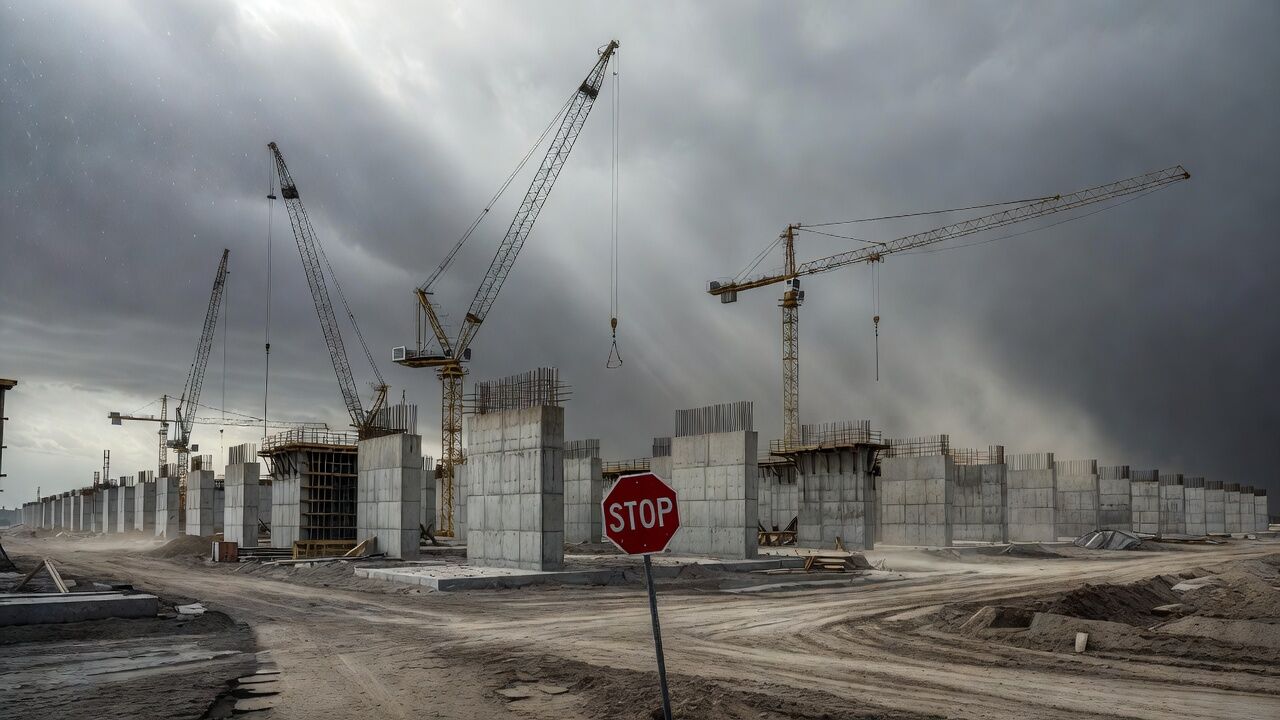
On July 14, 2026, New York Governor Kathy Hochul signed an executive order that makes the state the first in the nation to enact a statewide moratorium on large-scale data centers. The order pauses permitting for facilities drawing 50 megawatts or more for up to one year while the state examines environmental impacts, grid capacity, and consumer cost implications.
"These hyperscale AI data centers consume enormous amounts of power, truly threatening to outpace our grid's capacity, and they drive up costs for local rate payers," Hochul said at the signing. "I refuse to let those costs be passed on to New Yorkers."
The executive order requires operators to either pay a premium for increased energy supply or generate their own power. It also mandates that local communities receive direct benefits from any approved project — potentially including infrastructure improvements funded by the operators.
This is not happening in a vacuum. It's the culmination of a wave that has been building across America for months.
The Moratorium Wave in Numbers
The New York action is the headline, but it's the tail end of a much broader story. ZoneWire, a real estate intelligence platform that tracks city council meetings for zoning changes, documented a wave of data center moratoriums across multiple US markets in a roughly ten-week window during spring 2026.
Denver passed a one-year citywide moratorium on accepting new data center applications on May 18 — by a 13-0 vote. Tulsa approved a moratorium on data center building permits through December 31, 2026, on a 9-0 vote on March 25. Citrus County, Florida adopted a 12-month moratorium 5-0 on May 26. Charlotte voted unanimously to hold a public hearing on a 150-day moratorium. Pinellas County, Florida is actively discussing restrictions.
According to recent analysis, at least twelve states filed data center moratorium bills in 2026. Maine came within a veto of becoming the first to enact one. Georgia is debating whether to phase out tax credits and pause new construction. Counties across Virginia are slowing approvals. Over 300 local bills targeting data center expansions — from moratoriums to usage caps — have been introduced across more than 30 states.
The numbers at the national level are staggering. Data center electricity consumption will hit 565 TWh in 2026, according to Gartner, a 26% increase. AI-optimized servers alone account for 31% of that. US data centers already draw 46,000 MW, with Texas supplying nearly 8,000 MW and Virginia close behind at almost 7,000 MW.
Why Communities Are Revolting
The reasons driving this backlash are not abstract. They come down to three things: water, power, and jobs.
Water is the most visceral. A single data center campus in Hanover County, Virginia was projected to draw between 600,000 and 2,000,000 gallons of water per day — every single day. The county board denied it 4-3 over supply concerns. When a facility's daily water consumption could fill an Olympic swimming pool every three days, and you live in a region that's already managing drought conditions, you notice.
Power is the structural constraint. Individual data center campus requests have escalated from a typical 30 MW a few years ago to between 300 MW and several gigawatts today. Dominion Energy has reported that these requests are arriving faster than utilities can plan for. The grid isn't just straining — it's breaking. According to S&P Global, the primary constraint for AI data center expansion is now grid connectivity rather than generation capacity. You can build all the nuclear reactors you want, but if the transmission lines aren't there, they don't help.
Jobs are the political killer. A $1.1 billion, 187-acre data center project in Fort Worth was projected to create roughly 50 full-time jobs. Let that sink in. One billion, one hundred million dollars of capital investment, nearly two hundred acres of land, and the job count is fifty. The city council tabled its tax abatement amid community concerns about noise, water, air quality, and property values. When you're sitting in a city council meeting and a developer tells you they're spending a billion dollars to create the equivalent of a small restaurant's staff, the math doesn't work at the ballot box.
What This Means
For anyone running infrastructure — and I mean actually running it, not just talking about it — this shift changes the planning horizon fundamentally.
The first-order effect is straightforward: if you were planning to build or lease data center capacity in any of these markets, your timeline just got longer and your costs just went up. A one-year moratorium in Denver or New York doesn't just delay a project by twelve months. It strands predevelopment spend — legal, civil engineering, power studies, environmental review — that runs into the millions on a nine-figure project. The option clock on your land keeps ticking while the permit office stops accepting applications.
The second-order effect is more interesting. These moratoriums create a supply crunch that will ripple through the entire AI infrastructure stack. Cloud computing prices will rise as capacity tightens. AI training costs will increase. Smaller players who can't pre-pay for multi-year capacity commitments will get squeezed out. The hyperscalers — Amazon, Microsoft, Google — will absorb the cost. Everyone else will feel it.
The third-order effect is the one operators should be watching: the fragmented regulatory landscape is creating a patchwork that favors incumbents with existing permits. If you already have a permitted data center in a moratorium zone, your asset just became more valuable. If you don't, you're now competing for sites in the shrinking number of jurisdictions that haven't paused intake.
The Power Gap Nobody's Filling
This is where the nuclear conversation and the moratorium conversation collide. Tech companies have announced massive nuclear power deals — Microsoft restarting Three Mile Island, Google building three new nuclear plants, Amazon buying into small modular reactors. But nuclear timelines are measured in decades, not months. The AI buildout is happening now.
In the interim, the gap is being filled by natural gas. Behind-the-meter gas turbines are powering data centers while the nuclear paperwork works its way through the NRC. This creates its own political friction: environmental groups are opposing gas-powered data centers with as much energy as they oppose the data centers themselves.
The Sanders-AOC AI Data Center Moratorium Act, introduced at the federal level in March 2026, would freeze all new data center construction over 20 MW nationwide until Congress passes comprehensive legislation on AI safety, worker protection, and energy pricing. It won't pass in its current form, but the fact that it exists at all tells you where the political wind is blowing.
Forward-Looking: What Operators Should Do Now
If you're running infrastructure — a cloud provider, a colo operator, a managed hosting company — here's the practical takeaway.
Diversify your geographic portfolio now. The jurisdictions that are open for business today may not be open next quarter. Watch for early-warning signals: a commissioner asking staff to "explore options," a discussion item placed on a future agenda, a tabled tax abatement. Those signs appear in the meeting record weeks before the binding votes.
Build with efficiency as the primary constraint, not a nice-to-have. Every megawatt you don't need is a megawatt you don't have to fight for. Liquid cooling, power management, workload scheduling — these are no longer optimization problems. They're survival requirements.
Engage with local communities before the moratorium votes happen. The pattern is clear: communities that feel blindsided by a massive power-and-water-consuming facility show up at city council meetings. Communities that have been part of the conversation from the start are more likely to support reasonable development. The difference is months of lead time and a few town hall meetings that cost nothing compared to a stranded option.
The data center gold rush is entering its regulatory phase. The map is changing faster than any entitlement timeline, and two similar deals in two similar markets can now end in opposite places depending on which way the local board turned last Tuesday. That's not a bug in the system. It's the system now.
— Allan Ali, Sylt.ing
===SUMMARY=== New York enacted the nation's first statewide data center moratorium, joining a wave of cities halting AI infrastructure over power, water, and job concerns. Operators face a fragmented regulatory landscape that rewards incumbents and squeezes new buildout. Portuguese
 English
 Arabic
 French
 Spanish
 Deutsch
 Turkish
 Dutch
Dutch
 Italiano
 Russian
 Romaian
 Portuguese (Brazil)
 Greek
Greek