


 Monetization
74% of Pennsylvanians Oppose Data Centers — the Backlash Has Gone Mainstream
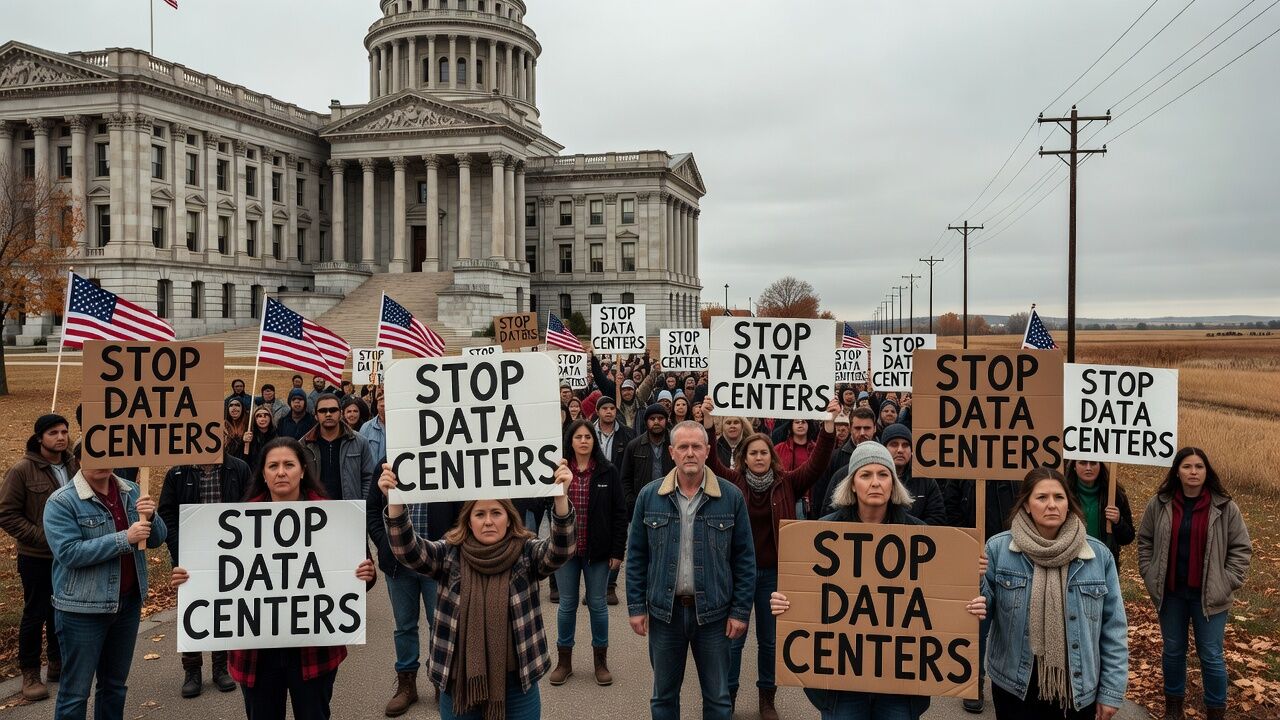
The Poll That Should Terrify the Industry
Seventy-four percent. Let that sink in. That's not a fringe activist number — that's the general electorate of Pennsylvania, a battleground state that decided the last presidential election, saying they would oppose an AI data center being built in their community. The Quinnipiac University poll, released July 15 and amplified by Food & Water Watch on July 16, surveyed 895 registered Pennsylvania voters and found that nearly three out of four would resist data center development in their backyard. That number jumped from 68% in February — which means opposition is accelerating, not leveling off.
And here's the kicker: only 24% of voters approve of Governor Josh Shapiro's handling of data centers in the state. He just signed a budget that entirely ignored data center regulation. The disconnect between Harrisburg and the people it serves could not be more glaring. Forty-two percent of voters offered no opinion — a massive undecided bloc that could swing heavily against the industry as awareness grows.
The $64 Billion Backlash
Pennsylvania is not an outlier. It's the leading edge of a national wave. According to analysis from Introl, community opposition blocked $18 billion in data center projects and delayed another $46 billion in 2025 alone. The Heatmap News poll released in June found that at least seven in 10 Americans would now oppose a data center near their home — a record low in public sentiment that represents a staggering shift from just two years ago.
What changed? People started paying attention. When a 300-megawatt data center shows up in your rural county, the power grid strains, water tables drop, diesel generators rumble 24/7, and property values become a question mark. The abstract promise of AI jobs doesn't land the same way when the concrete reality is noise, traffic, and utility hikes. In Pennsylvania specifically, the Pennhurst Holdings project in Chester County was rejected by local officials in May after sweeping resident opposition — and the developer is now appealing in court. These fights are happening in every corner of the country.
Where the Moratorium Movement Stands
At least 11 states are now considering moratorium bills on data center construction, according to the National Conference of State Legislatures. The Sanders-AOC Data Center Moratorium Act, introduced in March, would freeze all new AI data center construction nationwide until Congress passes legislation on AI safety, worker protection, and energy pricing. In New York, Governor Hochul signed the nation's first state-level data center moratorium. Ravenna, Ohio, enacted a one-year moratorium in April. Normal, Illinois, is voting on a six-month pause. Utah saw massive protests at the state capitol in May over the Stratos data center in Box Elder County.
This isn't just progressive policy anymore. In Pennsylvania, the opposition crosses party lines. The Food & Water Watch polling showed that Democrats, Republicans, and independents all oppose data center development at majority rates. You've got conservative Texas residents voting blue over data center issues. You've got Bernie Sanders and AOC on the same side as rural county commissioners. The coalition against unchecked buildout is one of the strangest political bedfellows in recent memory — and it's winning.
The Hyperscaler Blind Spot
Here's what the hyperscalers — Amazon, Google, Microsoft, Meta — don't seem to grasp. They're planning to spend a combined $725 billion on AI infrastructure in 2026, per Financial Times reporting. That's the largest non-war capital expenditure in human history, as one analyst put it. Bridgewater estimates $650 billion. Wright Research pegs the AI-specific share at roughly $450 billion. Those numbers are staggering. But if you can't get local approval to build, that money is just a number on a spreadsheet.
The industry has operated on the assumption that data centers are invisible infrastructure — nobody sees them, nobody cares. That assumption is dead. Communities are organizing on Facebook, showing up at zoning board meetings, electing candidates who run on anti-data-center platforms. The $64 billion in blocked and delayed projects is proof that this grassroots resistance has teeth. And it's not just NIMBYism — states like Washington, Oregon, and Virginia have advanced bills that shift grid infrastructure costs from ratepayers to data center operators, a regulatory shift with real financial consequences.
What This Means
The data center buildout is hitting the same wall that every major infrastructure project hits in America: local opposition. But unlike pipelines or power plants, data centers don't have a clear "public benefit" narrative. The AI they power is abstract — chatbots, image generators, recommendation algorithms. The costs are concrete: noise, water, power, traffic. When the Pennsylvania budget passed without a single data center regulation, it wasn't a win for the industry — it was a sign that the political system hasn't caught up to the public yet.
The industry has two paths forward. One is the current approach — fight every zoning battle, lobby for preemption laws that strip local control, and hope the opposition tires out. That path is failing. The other path is engagement: community benefit agreements, transparent environmental impact assessments, actual investment in local infrastructure rather than just extraction. Some operators are starting to get it — publishing water usage data, building on brownfield sites, investing in on-site renewable generation. But they're the exception, not the rule.
The Road Ahead for Infrastructure in the AI Era
Pennsylvania's 74% is a warning shot, not a death knell. The demand for compute isn't going anywhere — $725 billion in planned capex this year guarantees the buildout continues. But the shape of that buildout is going to look very different by 2027 than it does today. More projects will be sited on brownfields and industrial land. More operators will pre-negotiate community benefits before breaking ground. More states will pass cost-recovery laws that make utilities share the grid-upgrade burden.
The companies that adapt to this new reality will be the ones still building in five years. The ones that don't will find themselves stuck in zoning appeals, court battles, and public referendums — while the clock ticks on that $725 billion in committed capital. The backlash isn't going away. It's organizing. And if you're in the data center business, you need to understand that 74% is not a minority you can out-lobby.
— Allan Ali, Sylt.ing
===SUMMARY=== 74% of Pennsylvania voters oppose data centers near them, per new Quinnipiac polling. Community backlash has blocked $64B in projects nationwide as 11 states consider moratoriums. Allan Ali breaks down what the industry gets wrong. Russian
 English
 Arabic
 French
 Spanish
 Portuguese
 Deutsch
 Turkish
 Dutch
Dutch
 Italiano
 Romaian
 Portuguese (Brazil)
 Greek
Greek