
 Monetization
The AI Data Center Crackdown Isnt Coming — Its Already Here
The Politics of Power
On paper, Senator Bernie Sanders and Representative Alexandria Ocasio-Cortez introducing a bill to pause new AI data center construction sounds like standard progressive posturing. A messaging bill. Something to rally the base and generate press releases, not to actually pass.
But here's the thing about this particular bill: it's riding a wave that's already happening on the ground. The numbers tell a story that has nothing to do with partisan politics and everything to do with physics, economics, and the limits of the American power grid.
Between May 2024 and March 2025, local opposition tanked or delayed $64 billion worth of data center projects across the United States. That's not a hypothetical — that's the data from Good Jobs First, the economic development watchdog that's been tracking this since communities started pushing back. Fifty-four local moratoriums have already passed. Twelve states have active data center moratorium bills in their current legislative sessions. Maine came within a single gubernatorial veto of becoming the first state to enact one.
This bill didn't come out of nowhere. It came out of a movement that's already winning at the local level.
What the Bill Actually Does
The Artificial Intelligence Data Center Moratorium Act targets new construction of large-scale AI data centers above a defined power consumption threshold. The freeze stays in effect until Congress passes comprehensive federal AI safety legislation covering transparency, bias, labor impact, and environmental safeguards.
Key provisions include:
- A construction freeze on new hyperscale AI data centers — not general cloud facilities, not colo, but the massive GPU clusters purpose-built for training and inference
- A conditional lift — the moratorium ends once qualifying federal AI safety regulations become law
- Environmental disclosure requirements — mandatory reporting on energy and water consumption
- Worker protection provisions — reflecting broader concerns about AI-driven job displacement
Existing data centers keep running. The bill doesn't target current operations. But the pipeline of new capacity — the $725 billion in hyperscaler capex that Amazon, Alphabet, Meta, Microsoft, and Oracle have collectively guided to for 2026 — that pipeline gets shut off.
The Numbers Behind the Crackdown
The scale of this infrastructure buildout is genuinely unprecedented. The four largest hyperscalers — Amazon, Google, Microsoft, and Meta — spent $130.65 billion in capital expenditures in Q1 2026 alone. That's a single quarter. Meta's full-year 2026 capex guidance of $125-145 billion represents a 77% year-over-year increase, almost entirely going into data centers, custom silicon, and GPUs.
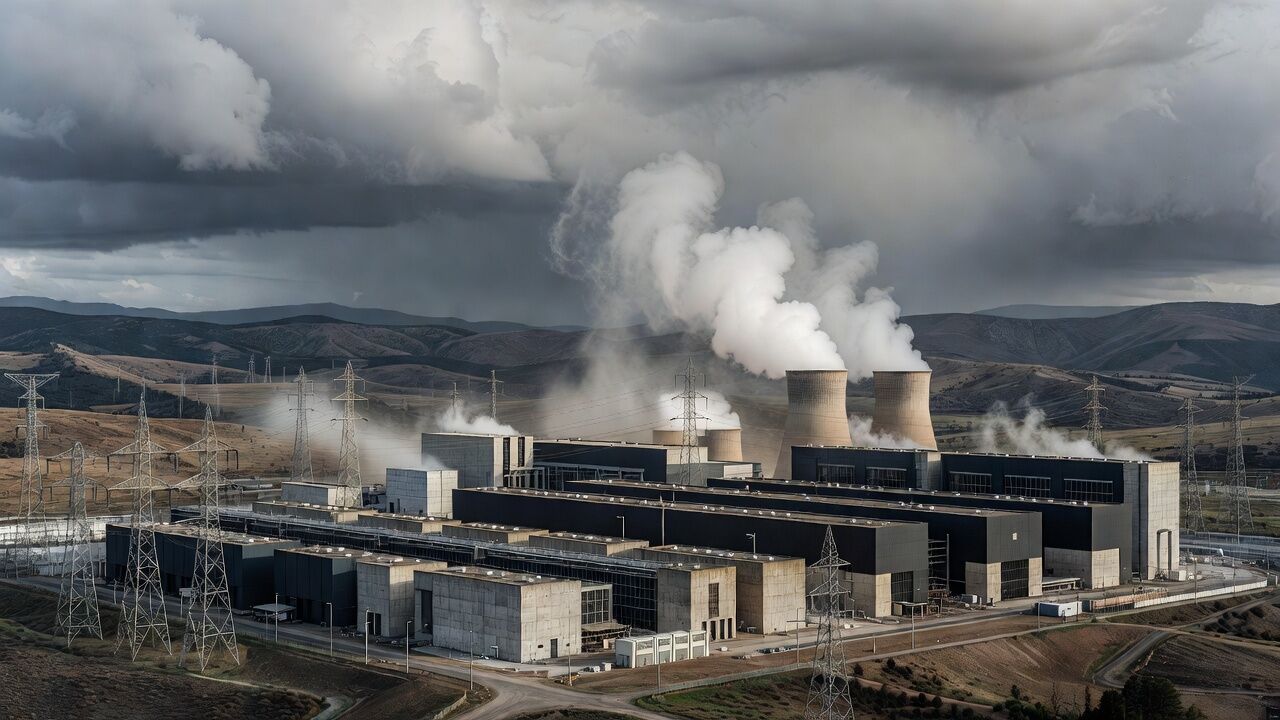
The International Energy Agency projects global data center electricity consumption will double by 2026 relative to 2022 levels. A single hyperscale facility can draw 100 to 500 megawatts — the equivalent of powering up to 2 million US households. In Virginia's Loudoun County, the epicenter of global data center density, the grid is already straining under the load.
And it's not just power. By 2028, AI data centers could consume as much water as 18.5 million US households — just for cooling. In drought-prone regions like Arizona and the Pacific Northwest, that creates direct competition with residential and agricultural users. Residential electricity rates rose 31% between 2020 and 2025, compared to just 4% in the five years prior. Local communities are quite literally paying for AI's infrastructure expansion through their utility bills.
What This Means: Winners and Losers
If the Sanders-AOC bill passed in anything close to its current form, the consequences would not be evenly distributed. Large tech companies — the very ones targeted by the legislation — would be the least affected. Microsoft, Google, Amazon, and Meta already own enormous existing data center capacity. They'd be constrained from expanding, but they'd still have the compute to deploy.
The parties most exposed to a supply crunch are:
- AI startups that rely entirely on cloud GPU access from AWS, Azure, and GCP
- Mid-market SaaS companies building AI features on top of third-party APIs
- Researchers and academics dependent on cloud credits and shared clusters
- Smaller AI model providers that lease GPU time rather than own their hardware
In other words, the entities that can least afford higher compute costs — the exact startups and open source projects the industry claims to care about — would bear the brunt of the squeeze. Compute costs for AI workloads have already been volatile. A construction freeze would push prices higher for H100 and Blackwell-class GPU access while existing hyperscaler capacity becomes even more valuable.
From an infrastructure operator's perspective, this bill would create a powerful incentive to park capacity in existing facilities at higher densities, driving demand for colocation and retrofit over greenfield development. The secondary market for data center space — already active — would become a premium game.
The Contra: Is This Even Realistic?
Let's be straight about the politics. The bill faces steep odds. Republican leadership has signaled they will oppose any construction moratorium as a threat to American AI competitiveness. The Trump administration's national AI policy framework, released earlier this year, calls for streamlining federal permitting for AI infrastructure — not restricting it. The industry lobbying apparatus, led by groups like the Data Center Coalition, is fully mobilized.
Even within the Democratic Party, there are divisions. The bill's sponsors are positioning it as a pressure tactic: pass AI safety legislation, or the construction freeze stays. But Congress has been debating AI safety frameworks since 2023 with no resolution in sight. The moratorium could theoretically stay in place for years if the underlying safety legislation never materializes.
Yet here's the reality that the industry needs to reckon with: the bill doesn't need to pass in its current form to reshape data center development. It's already changing the conversation. Developers considering new projects are now asking about community impact assessments that they never bothered with before. The $64 billion in delayed or canceled projects isn't a forecast — it's a historical fact. Local organizers are more organized, better funded, and more determined than they were two years ago.
The Infrastructure Perspective
From where I sit — managing servers, hosting platforms, and infrastructure day to day — this bill represents something deeper than politics. It's a signal that the era of building first and asking questions later is over.
The AI industry's approach to infrastructure has been remarkably similar to what happened with cryptocurrency mining during the last boom: build wherever power is cheapest, worry about the consequences later. Buy up entire towns' worth of electricity capacity. Run diesel generators when the grid can't keep up. Treat local zoning and environmental review as annoyances to be evaded rather than legitimate constraints to be designed around.
That approach is now generating blowback at every level of government. The data center industry has a PR problem, a grid capacity problem, a water consumption problem, and — increasingly — a political problem. The Sanders-AOC bill is the most prominent manifestation of that backlash, but it's far from the only one.
The smarter path for the industry would be to get ahead of this. Proactive transparency on energy and water use. Investment in onsite power generation that doesn't compete with residential grids. Genuine community benefit agreements that go beyond a few construction jobs. Quiet negotiations with regulators to establish efficiency standards before they get imposed by legislation.
The Bottom Line
The Sanders-AOC data center moratorium bill may not pass in its current form. But the forces that created it — local opposition, grid constraints, water scarcity, utility cost spikes — are not going away. And the $64 billion in already-delayed projects is not a ceiling; it's a floor.
For anyone building AI infrastructure or depending on cloud compute, planning around the assumption of unlimited data center growth is a mistake. The next few years will see more regulation, not less. Higher costs for new capacity, not lower. Tighter scrutiny on every megawatt and every gallon.
Bet on density, efficiency, and retrofit over greenfield expansion. Bet on transparency before regulators demand it. And bet on the reality that the data center building boom of 2024-2026 may be the last of its kind.
— Allan Ali, Sylt.ing
 Portuguese (Brazil)
 English
 Arabic
 French
 Spanish
 Portuguese
 Deutsch
 Turkish
 Dutch
Dutch
 Italiano
 Russian
 Romaian
 Greek
Greek