


 Monetization
New York Becomes First State to Impose Data Center Moratorium — What Infrastructure Operators Need to Know
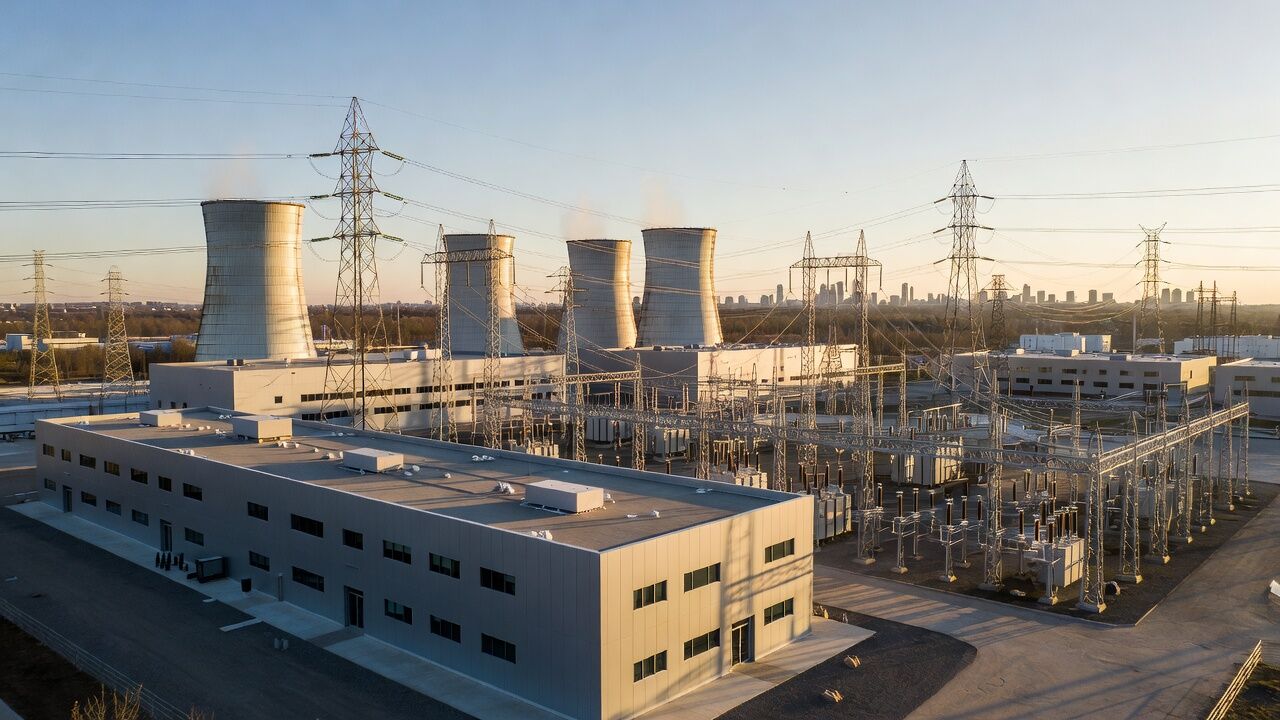
New York Just Hit Pause on the AI Infrastructure Boom. What That Means for Everyone Else
On July 14, 2026, New York Governor Kathy Hochul signed an executive order that made the state the first in the nation to impose a formal moratorium on hyperscale data centers. If you run infrastructure — or plan to — this is not a New York story. It is a canary-in-the-coal-mine story for every market where power grids, water tables, and local politics are colliding with AI's insatiable hardware appetite.
The order pauses environmental permits for new or expanding data centers at or above 50 megawatts of critical load for up to one year. That threshold catches every campus-scale build that triggers regional transmission upgrades — the kind of facility that Google, Microsoft, Amazon, and a dozen venture-backed AI startups have been racing to plant across the country. It does not touch colocation closets downtown. It targets the multi-acre, multi-hundred-million-dollar server farms that drink megawatts by the thousands.
Hochul framed the pause as a cooling-off period while state agencies write real guardrails. The legislature simultaneously passed the Responsible Data Center Development Act (Assembly Bill A11560), which sets a lower registration and review floor at 20 MW and forces developers to file energy, water, and greenhouse-gas disclosures before local siting boards can approve zoning changes. The message is clear: you can build, but you will show your work first.
Watch Gov. Hochul explain the moratorium in her ABC News Live interview:
What the Moratorium Actually Does
The executive order directs the Department of Environmental Conservation (DEC) and the Department of Public Service to stop issuing approvals that would allow construction or major expansion of qualifying data centers during the moratorium window. Projects that already hold full permits can proceed. Everything sitting in the application pipeline faces a clock freeze.
Hochul's office cited incomplete cumulative impact reviews — especially along the Hudson Valley transmission corridor and western New York gas-peaker dependencies — as the immediate trigger. The DEC gets a year to draft supplemental environmental review templates tuned to liquid cooling, diesel backup generators, and battery energy storage systems that standard checklists barely mention.
This is not a blanket ban. It is a procedural choke point. But in the world of AI infrastructure, a one-year permit freeze might as well be a century. The industry moves in quarters, not years. Land options in Genesee County and Mohawk Valley industrial parks are now in a holding pattern. Legal teams are parsing whether battery storage add-ons count toward the 50 MW cap. Venture-backed AI factory startups that marketed New York hydropower as a selling point are refreshing investor decks with moratorium risk factors — a novelty in a sector that has been running on tax-abatement adrenaline for three years straight.
The Numbers That Forced Albany's Hand
The moratorium didn't arrive in a vacuum. Utility economics made this inevitable. Data centers load the grid differently from factories or even hospitals. They ramp quickly, run flat out for years on end, and concentrate in places with fiber routes and cheap land — often the same rural counties where residential demand has been flat since 2010.
When National Grid or NYSEG must build a new substation or reconductor a 115-kilovolt line, those costs get spread. Traditional cost allocation pushes some of it statewide, but edge-case upgrades still move local delivery tariffs. Ratepayers in Ulster and Montgomery counties have been showing up at town halls angry about transformer upgrades, aquifer drawdowns, and creeping monthly utility statements. Tech firms promise jobs and tax payments. Residents ask why their air conditioners should subsidize someone else's GPU clusters.
Water is the sharper problem. Evaporative cooling for AI training halls can consume millions of gallons per day — in heat waves, even more. Environmental groups submitted filings this spring showing spray-pond proposals adjacent to trout streams in the Hudson basin. The DEC used those filings as cover to argue that permit-by-permit reviews were missing additive stress on shared aquifers. They have a point.
And the macro numbers are staggering. The hyperscalers — Alphabet, Amazon, Meta, Microsoft — collectively spent more than $130 billion in capital expenditure during Q1 2026 alone. Full-year projections sit at $700 billion for AI infrastructure globally. Goldman Sachs maps $7.6 trillion in cumulative AI infrastructure capex between 2026 and 2031. Nvidia alone is forecast to capture 75 percent of the $5.1 trillion compute layer over that period.
Those numbers are why this matters. The buildout is not slowing. The question is where it gets built, under what rules, and who pays for the grid upgrades.
What This Means for the Rest of the Country
New York is not acting in isolation. At least twelve states filed data center moratorium bills in 2026. Maine came within a governor's veto of becoming the first to enact one. Georgia is debating whether to phase out tax credits and pause new construction. Counties across Virginia — the data center capital of the world — are slowing approvals. Fort Worth city councilmembers are seeking a temporary moratorium after their zoning commission rejected proposed regulations. Lancaster, Pennsylvania just erased future data center sites through new zoning rules.
Trump responded to the New York order within 24 hours, posting that Hochul should scrap the policy "IMMEDIATELY" and arguing that a moratorium on data center construction is a moratorium on American AI leadership. The politics are strange — a bipartisan backlash uniting Bernie Sanders and Ron DeSantis-style populism against the industry, while free-market conservatives and the tech lobby push back hard.
For operators and investors, the signal is unmistakable: the era of unchecked data center development is ending. The tax-abatement race that defined data center siting from 2020 to 2025 is giving way to a new era of environmental review, community benefit agreements, and mandatory load-flexibility contracts.
A11560 is the template worth watching. It requires developers to file energy, water, and greenhouse-gas disclosures before local siting boards can approve zoning changes. It mandates community benefit agreements in environmental justice areas. It directs the Public Service Commission to study cost-allocation rules so transmission upgrades tied to a single campus do not land on residential ratepayers. If other states adopt similar frameworks, the cost of entry for new data center development just went up — both in dollars and in timeline.
The Grid Reality: AI Meets the 2040 Clock
New York has a legally binding 2040 zero-emission electricity goal under the Climate Leadership and Community Protection Act. Every gigawatt-hour devoted to AI training runs competes directly with electrifying buildings and transport in the same CLCPA ledger. The math does not work if every new data center campus requires a new gas peaker plant to backstop intermittent renewables.
Texas illustrates the tension from the other direction. The state leads the nation in proposed power plants for data centers — and those plants would emit enormous amounts of greenhouse gases. A report from the Texas Tribune on July 1 showed the scale of the problem: hundreds of new gas-fired plants proposed to serve data center load, colliding with every climate commitment the state's major cities have made.
This is not a problem you can NIMBY your way out of. The compute demand is real, and it is growing. But the infrastructure to support it — transmission capacity, water supply, firm power — does not exist at the scale required, and building it on the timeline the industry wants would require overriding every environmental review process that took decades to establish. That tension is what the New York moratorium surfaces in stark relief.
The Bottom Line
If you are running infrastructure, this is not a news story to skim. The next twelve months will determine the regulatory framework for data center development for the rest of the decade. Watch the New York PSC docket for the cost-allocation proposal — if it lands before the moratorium lifts, it will matter more than the pause itself. Watch whether other states copy the A11560 template or go further.
And watch whether the hyperscalers pivot their buildout to markets with weaker regulations — or whether they start negotiating with communities rather than bypassing them. The era of building first and asking permission later is ending. The question is what replaces it.
Watch the full ABC News Live interview with Gov. Hochul above for her own explanation of the decision. The 8-minute segment covers the rationale, the exceptions, and what she expects from the industry during the pause. Her key challenge to tech companies is worth hearing directly: bring your own power solutions, or do not expect the grid to absorb you.
— Allan Ali, Sylt.ing
===SUMMARY=== New York Gov. Hochul signed the first statewide data center moratorium on July 14, 2026, pausing hyperscale (>50MW) permits for one year. The infrastructure signal every operator needs to understand — grid, water, and politics just rewrote the playbook for AI buildout.
 Spanish
 English
 Arabic
 French
 Portuguese
 Deutsch
 Turkish
 Dutch
Dutch
 Italiano
 Russian
 Romaian
 Portuguese (Brazil)
 Greek
Greek