


 Monetization
New York Just Froze AI Data Center Construction for a Year — What That Means for Hosting
The Executive Order — What It Actually Does
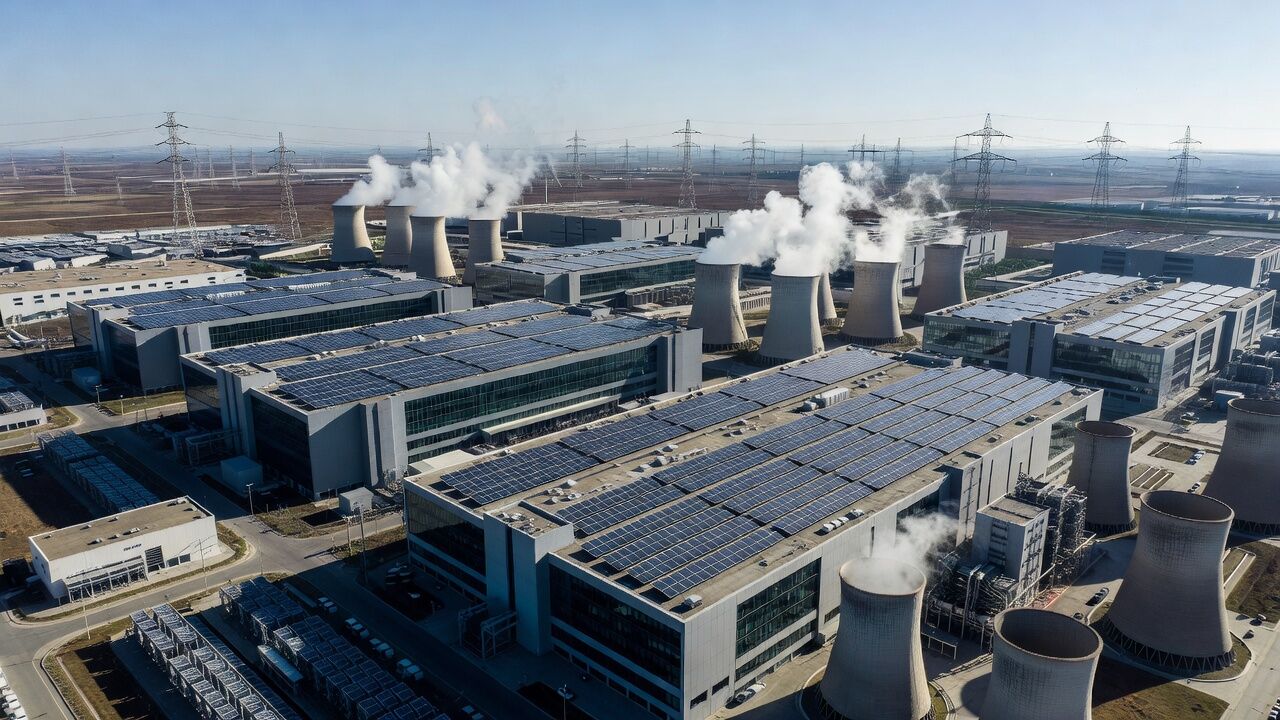
On July 14, 2026, New York Governor Kathy Hochul signed an executive order imposing a one-year moratorium on the construction of hyperscale data centers — facilities drawing more than 50 megawatts of electrical capacity. The order halts the state permitting process for new projects and directs regulators to develop a comprehensive framework addressing environmental impacts, energy demand, water usage, noise pollution, and grid reliability.
The 50 MW threshold is notable. The New York State Legislature had passed the Responsible Data Center Development Act on June 4, which set a 20 MW trigger. That bill cleared the Senate 44-16 and the Assembly 102-39. Hochul's executive order supersedes that with a higher threshold, effectively exempting smaller facilities while targeting the hyperscale campuses that Big Tech has been racing to build across the state.
"As datacenter development threatens to hike up utility bills, deplete our natural resources, and create uncertainty for New Yorkers, it's my responsibility to take action and lead," Hochul said at the signing press conference in Brooklyn.
Former President Donald Trump criticized the move on social media, calling it a job-killer that would push AI development to other states. But Hochul's office countered that the pause is designed to get the regulatory framework right — not to permanently block development.
Why Now? The Power Crisis Nobody Wants to Talk About
The moratorium didn't come out of nowhere. The numbers have been building toward a breaking point for years.
Gartner reported in June 2026 that worldwide data center electricity demand would grow 27% in 2026, reaching 132 gigawatts. Goldman Sachs projects US data center power demand will climb from 31 GW in 2025 to 66 GW by 2027 — more than doubling in two years. A single hyperscale AI training facility now requires between 100 MW and 1,000 MW of dedicated power, equivalent to the electricity needs of 80,000 to 800,000 homes.
The Brookings Institution estimates that data center energy consumption could approach 1,050 terawatt-hours by 2026. If data centers were a country, they would be the fifth-largest energy consumer on the planet, between Japan and Russia.
New York's grid is not exempt from this pressure. The state's aging transmission infrastructure was never designed for the kind of concentrated load that a 500 MW AI data center represents. Utility bills for residential customers have been rising, and the prospect of rate hikes driven by industrial-scale power demand created political pressure that Albany could not ignore.
A Siena Research Institute poll in June found 46% of New Yorkers believed a one-year moratorium would be good for the state, versus 21% who thought it would be bad. A national Heatmap poll showed nearly three-quarters of Americans oppose having a data center built near their homes.
14 States and Counting — The Moratorium Wave
New York is the first state to actually enact a moratorium, but it's far from alone in considering one. According to the Rockefeller Institute of Government, as of June 2026, 14 states have considered or are considering data center construction moratoriums.
Maine's legislature passed a moratorium on facilities over 20 MW until November 2027, but Governor Janet Mills vetoed the bill in April, saying she would have signed it if it exempted an existing development at the former Androscoggin Mill in the town of Jay. Seattle approved a one-year ban on data center development in June, becoming the largest city to do so. A small city in Southern California enacted a moratorium via ballot measure last month — the first municipality to do it by direct vote.
States actively debating moratoriums include Maryland, Virginia, Georgia, South Dakota, Oklahoma, Illinois, Texas, Michigan, and Ohio. In Ohio, a proposed constitutional amendment to ban data centers over 25 MW failed to qualify for the 2026 ballot after gathering only 70,000 of the 413,488 required signatures, but backers plan to try again in 2027.
The pattern is unmistakable: what started as a local zoning issue has become a state-level policy tsunami. And it's only going to accelerate.
What This Means for Hosting Providers and Clients
This is where the story hits home for Sylt.ing readers. If you run servers in New York — or were planning to — this moratorium has direct implications for your infrastructure strategy.
First, existing data centers are not affected. The moratorium applies to new permitting for hyperscale facilities. But that doesn't mean your colo provider is safe. If their upstream power supplier is negotiating new contracts in a constrained market, your rates are going up. Period.
Second, any hosting provider who was scouting New York as a location for a new facility just lost that option for at least a year. Major players like Equinix, Digital Realty, and CyrusOne will redirect their Northeast expansion plans to New Jersey, Pennsylvania, Connecticut, or Massachusetts — states that haven't (yet) imposed moratoriums. That means increased demand and higher prices in those markets.
Third, the downstream effects on cloud pricing are real. AWS, Azure, and Google Cloud all have significant infrastructure in the New York region. If they can't expand capacity in-state, they'll shift workloads to other regions, increasing latency for New York-based clients and driving up compute costs across the board as regional capacity tightens.
For smaller hosting providers and independent operators, this creates both a threat and an opportunity. The threat: rising costs across the Northeast corridor. The opportunity: an opening to position smaller, out-of-state facilities as alternatives to the hyperscale campuses that are now blocked from entering the New York market.
What Comes Next
Hochul's executive order gives state regulators one year to produce a framework. The key questions they'll need to answer:
- Should hyperscale data centers pay higher industrial electricity rates or be required to supply their own power?
- What environmental review process should apply to facilities drawing 50+ MW?
- How should water usage for cooling be regulated in a state with drought concerns?
- Should there be geographic restrictions — keeping data centers out of residential areas or sensitive watersheds?
- What happens to the 20 MW threshold from the legislative bill versus the 50 MW threshold from the executive order?
Hochul explicitly stated that once the policy framework is in place, the moratorium will be reviewed and lifted. So this is not a permanent ban — it's a timeout to build guardrails. But timeouts have a way of stretching, especially when the public is on your side.
A federal bill introduced by Representative Alexandria Ocasio-Cortez in June would impose a nationwide moratorium on AI data centers until Congress passes safeguards. That bill has nine cosponsors and is unlikely to pass the current Congress, but it signals the direction of political momentum.
The Bottom Line
New York's moratorium is a warning shot for the entire hosting and infrastructure industry. The era of building hyperscale data centers with minimal regulatory friction is ending. Power constraints, environmental concerns, and community opposition are combining to create a new reality: data center construction is becoming a politically contested activity.
For hosting providers, the smart play is diversification. Don't put all your infrastructure eggs in one regional basket. Spread across multiple states, monitor the moratorium tracker, and build relationships with smaller municipal utilities that may be more receptive than state-level regulators.
For clients, expect higher prices in the Northeast and plan accordingly. If you're running latency-sensitive workloads that require Northeast placement, lock in multi-year contracts now. If you can tolerate higher latency, explore regions in the South and Midwest where power is cheaper and regulatory headwinds are weaker.
New York is first. It won't be last. The data center industry is entering a new phase — one where the biggest constraint isn't chip supply or cooling technology, but the decision of a governor with a pen and a poll number.
Plan accordingly.
— Allan Ali, Sylt.ing
 French
 English
 Arabic
 Spanish
 Portuguese
 Deutsch
 Turkish
 Dutch
Dutch
 Italiano
 Russian
 Romaian
 Portuguese (Brazil)
 Greek
Greek