


 Monetization
New York Just Hit Pause on the AI Buildout - And That Changes Everything
What Just Happened
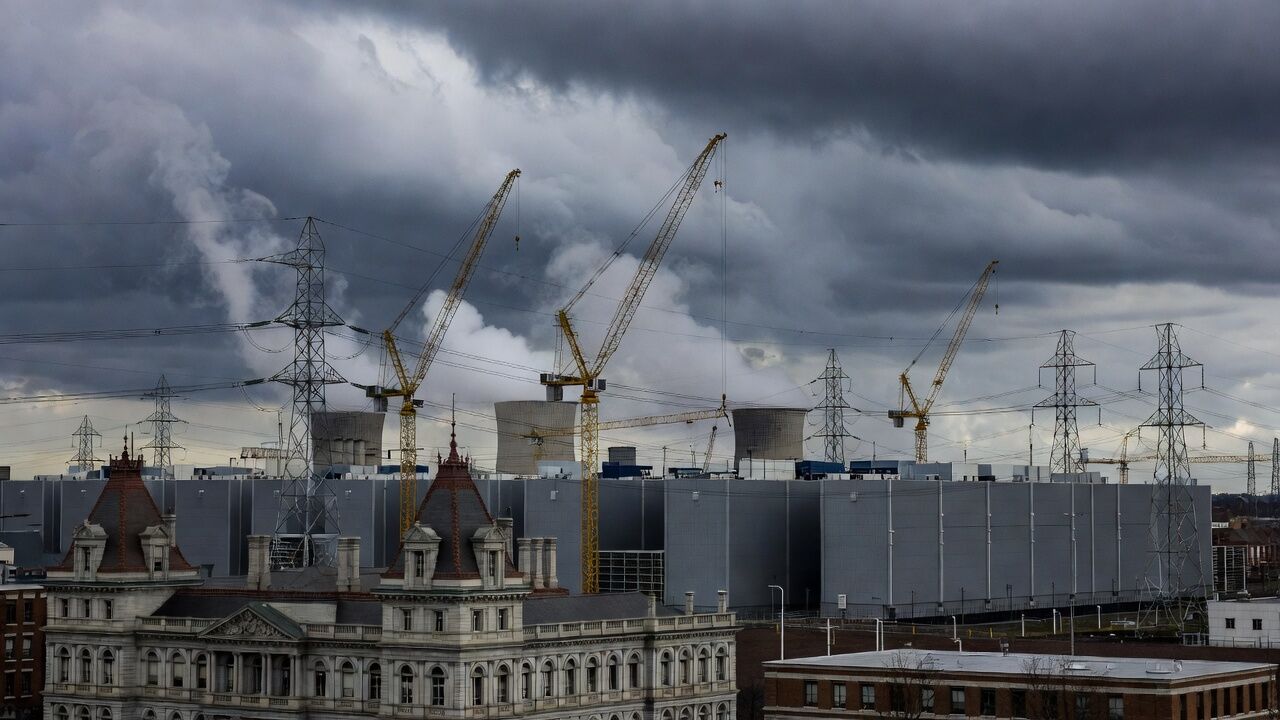
On July 14, 2026, New York Governor Kathy Hochul signed an executive order imposing a statewide moratorium on the construction of new hyperscale data centers — defined as facilities requiring more than 50 megawatts of power — for up to a year. The order pauses state permitting for projects that have not yet received approval, capturing developments already in the pipeline while regulators develop binding standards on energy demand, water usage, and environmental impact.
New York became the first US state to enact this kind of pause. It's not a ban. It's not permanent. But it's a shot across the bow of every hyperscaler with a shovel and a greenfield site on the Eastern Seaboard.
Hochul's framing is worth quoting directly: data center development, she said, "threatens to hike up utility bills, deplete our natural resources, and create uncertainty for New Yorkers." That's a ratepayer-first argument, not a technology-skeptic one — and the distinction matters. The order doesn't touch existing facilities. It doesn't ban data centers permanently. It's an executive pause, reversible by a subsequent administration or challengeable in court.
The Numbers That Matter
The threshold is 50 megawatts. That's roughly the power draw of 40,000 homes. Any new facility above that line gets paused. According to the FourWeekMBA analysis, the order's scope runs for approximately 12 months while standards are written across three domains: energy, water, and environment.
For context, a single hyperscale data center campus can draw 200–500 MW. The largest AI training clusters being built today require 1 GW or more. Meta's Project Hyperion in Louisiana is a $50 billion commitment. Google's Project Tembo in Wyoming is procuring generation capacity off the public grid entirely because the public grid cannot keep pace.
New York is not a dominant data center market — Northern Virginia, Dallas, Phoenix, and Silicon Valley absorb the bulk of US hyperscale capacity — so the immediate capacity impact is limited. What matters is the precedent. No US state had previously enacted a statewide construction moratorium on large data centers. Now one has, and the playbook is public.
The Political Fallout
Predictably, the backlash was immediate. Former President Donald Trump called data centers "liquid gold" and slammed New York's pause, warning of lost economic opportunities and jobs. "New York state has made a terrible decision," Trump said, framing the moratorium as letting AI-driven investment slip away to other states.
The Data Center Coalition's Dan Diorio put it in blunter terms: the moratorium "will ensure that those investments, jobs, and economic activity flow elsewhere rather than to New York — with impacts far beyond the data center industry." Labor unions and business groups in the state echoed the warning, arguing the pause jeopardizes billions in potential investment and thousands of skilled construction and operations jobs.
Hochul didn't back down. In a response that landed like a grenade, she wrote: "If data centers are really 'LIQUID GOLD,' then New Yorkers deserve more than scraps. We hit pause because the communities powering AI should share in its success. Maybe that's a novel concept in Washington. We call it doing our job."
What This Means
This is the story everyone in infrastructure should be watching. Here's why.
The binding constraint on the AI buildout has shifted. Two years ago, the bottleneck was chips — GPU allocation was the only game in town. Last year, it migrated to power — hyperscalers started signing nuclear PPAs and building substations. Now it's moved to political license. You can have all the chips and all the power in the world, but if a governor can pause your permit on a Tuesday morning, your trillion-dollar capex plan has a new variable in it.
The externality has a political name now. Goldman Sachs estimates roughly $1 trillion in AI infrastructure capex over the next several years. That's a supply-side number. The demand-side reality is that this capital is being deployed against shared infrastructure — grids that residential ratepayers also rely on, water systems that municipalities maintain, transmission lines that everyone shares. Hochul's order explicitly frames AI infrastructure spending as a distributional question: who pays, and how much. That framing will gain traction in other capacity-constrained states.
This is a template, not an outlier. The mechanism is clear: an executive order, a MW threshold, a multi-domain standards process, and a ratepayer-harm rationale. Other governors in states with tight grids and rate-sensitive electorates now have a replicable playbook. Voters in Ohio, Wisconsin, Nevada, and California are already pursuing data center ballot measures and moratoriums. Bernie Sanders has called for a national-level pause. The frictionless-siting assumption that underpins hyperscaler expansion just became less certain everywhere, not only in New York.
The Permission Layer Is Real
This is the concept that infrastructure operators need to internalize. The AI stack has a permission layer — the regulatory and social-license inputs that determine which capabilities actually get built and at what scale. For the past two years, that layer was essentially passive: data centers got built, permits were issued, communities adapted. New York just flipped the switch.
Political license is not an afterthought in infrastructure. It's a layer in the stack. And when infrastructure spending reaches a measurable share of US economic output — which it now has — it attracts distributional politics. That's what happened on July 14. It will happen again.
Where We Go From Here
Three things to watch in the coming months:
First, the standards process. The executive order promises new rules on energy, water, and environmental impact over the next year. The specific thresholds and requirements will determine whether this becomes a genuine bottleneck or a negotiated settlement. Facilities under 50 MW are unaffected — which tells you the regulatory floor is already being set higher than the existing legislative proposals, which would have captured projects at 1 MW.
Second, copycat states. The most important audience for Hochul's order wasn't New Yorkers. It was every other governor whose state is facing capacity constraints on its grid, water system, or housing stock. If even one major data center market — Virginia, Texas, Ohio — follows with its own version, the cumulative effect on the buildout is material.
Third, the hyperscaler response. Google and Meta have already moved to self-supply power in Wyoming and Louisiana. Will they also start front-loading community benefit agreements, ratepayer subsidies, and grid contributions as a preemptive strategy? Or will they fight this through litigation and lobbying? The next six months will tell us whether the buildout adapts to political constraints or tries to override them.
One thing is certain: the era of frictionless data center siting is over. The AI buildout now has a political dimension, and no amount of GPU allocation can solve for that.
Watch the video above for the full interview with Governor Hochul on ABC News Live, where she lays out the reasoning behind the order and her challenge to the tech industry.
— Allan Ali, Sylt.ing
===SUMMARY=== New York Gov. Kathy Hochul signed the first US statewide moratorium on hyperscale data centers (>50 MW) on July 14, 2026. A one-year pause on new permits while regulators develop energy, water, and environmental standards. Trump slammed the move. Business groups warned of economic loss. This is the AI buildout hitting its political-economy wall — and it changes the risk calculus for every hyperscaler in America. Spanish
 English
 Arabic
 French
 Portuguese
 Deutsch
 Turkish
 Dutch
Dutch
 Italiano
 Russian
 Romaian
 Portuguese (Brazil)
 Greek
Greek