


 Monetization
New York Just Hit Pause on AI Infrastructure. Here's What That Means for the Rest of Us.
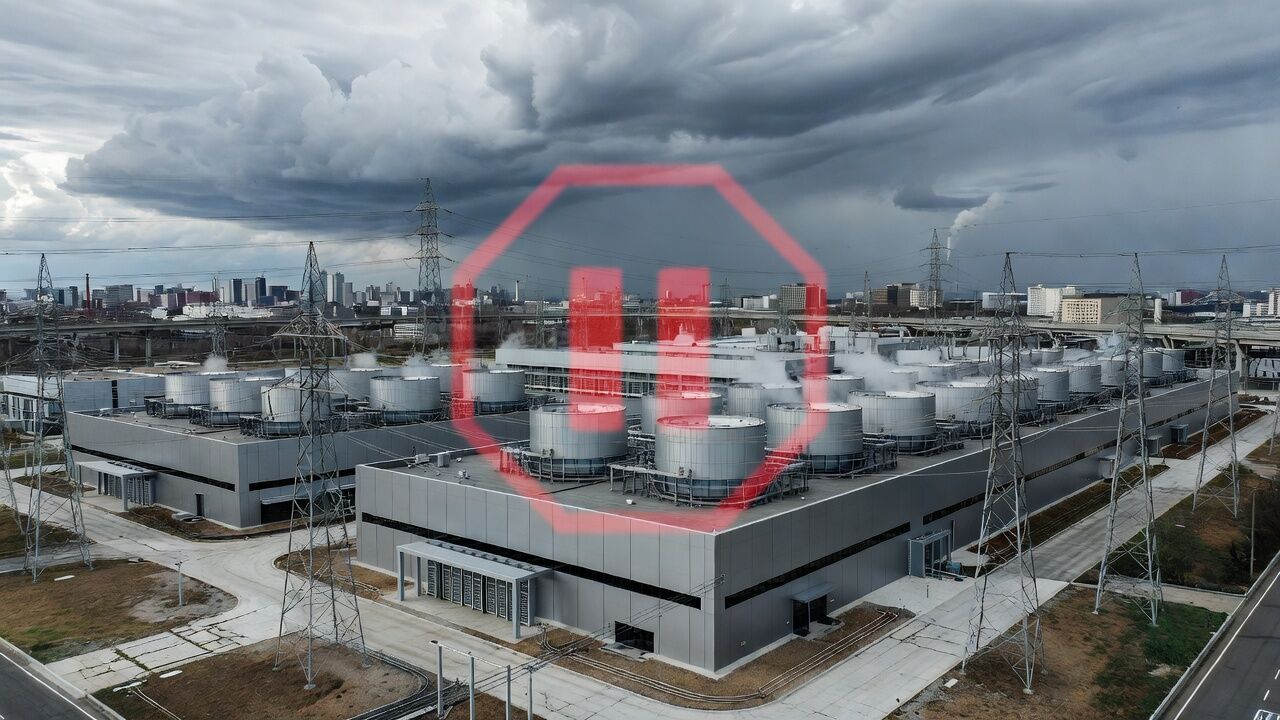
The First Domino Falls
On July 14, New York Governor Kathy Hochul signed Executive Order No. 62 — a one-year moratorium on new hyperscale data centers drawing 50 megawatts or more. It's the first statewide pause of its kind in the United States, and it's not happening in a vacuum.
This is the story of how AI infrastructure ran headfirst into the limits of American energy politics. And the fallout is going to reshape where — and whether — the next generation of data centers gets built.
What Executive Order 62 Actually Does
Let's be precise about what Hochul signed. The order pauses state-level environmental permitting for data center projects that require 50 MW or more of power capacity. It's not a ban on all data centers. Small colocation facilities, enterprise server rooms, and edge nodes are not affected. The target is hyperscale — the kind of facility that consumes as much electricity as 50,000 homes, which is the comparison Hochul herself used on Bloomberg's Odd Lots podcast.
The order directs state agencies — the Department of Environmental Conservation, the Public Service Commission, and the New York State Energy Research and Development Authority — to spend the next year developing permanent environmental standards for data center development. Until those standards are in place, no new environmental permits for large facilities will be issued.
Notably, the executive order sets the threshold at 50 MW, which is higher than the 20 MW trigger in the Responsible Data Center Development Act that passed the state legislature in June. Hochul chose the more permissive threshold, but the moratorium itself goes further than the legislature's bill by acting immediately rather than waiting for a full legislative process.
$130 Billion in Projects Already Blocked
The New York moratorium didn't happen in isolation. According to Data Center Watch, at least 75 data center projects worth approximately $130 billion were blocked or delayed in the first quarter of 2026 alone. That figure nearly matches the total for all of 2025 — $156 billion — in a single quarter.
Ars Technica reported in June that roughly $130 billion in projects had been stalled nationwide by protests, with 120 demonstrations across 37 states. What started as isolated NIMBY fights in Northern Virginia has become a coordinated, bipartisan backlash. In Maine, Governor Janet Mills vetoed a data center moratorium bill in April — but it came within one vote of becoming law. In Virginia, counties are slowing approvals. In Georgia, lawmakers are debating whether to phase out data center tax credits. And now New York has actually pulled the trigger.
The message is clear: the window for building anywhere, anytime, without community pushback has closed.
The Energy Reality Behind the Pause
You can't understand the moratorium without understanding the numbers underneath it. The International Energy Agency projects that data center electricity consumption will reach roughly 1,000 terawatt-hours by 2026 — equivalent to Japan's entire annual electricity consumption. In 2024, data centers used about 460 TWh. The doubling in roughly two years is driven almost entirely by AI workloads.
Virginia's experience is instructive. Data centers already consume about 26% of the state's total electricity supply. Dominion Energy proposed its first base-rate increase since 1992 in early 2025, citing data center demand growth, adding roughly $8.51 per month to a typical household bill. That kind of rate shock directly translates into political pressure.
Hochul framed the moratorium as consumer protection: "As data center development threatens to hike up utility bills, deplete our natural resources, and create uncertainty for New Yorkers, it's my responsibility to take action." She's not wrong — but she's also not telling the whole story.
What This Means: The AI Infrastructure Bottleneck Is Real
Let me be direct about what this signals to operators and builders. AI training infrastructure requires power at a scale that most urban and suburban grids were never designed to support. A single 100 MW data center is the electrical equivalent of a small steel mill — but steel mills are typically located in industrial zones far from residential areas, not in exurban office parks where most data center construction has been concentrated.
The industry has spent the last two years assuming that permitting risk was manageable. That assumption is no longer valid. When the first state enacts a moratorium, every other state legislator thinking about data center policy gets a template. New York's executive order isn't just a New York story — it's a precedent that at least a dozen other states are watching closely. At least 12 states have already filed moratorium bills in 2026.
For operators, this means site selection just got much harder. The cheapest land with the best grid access is often in precisely the areas where political resistance is strongest. The push to co-locate data centers with nuclear power plants — Meta's 6.6 GW agreement with TerraPower and Oklo, Google's three new nuclear plants — starts to look less like green marketing and more like a survival strategy. If you can't build on the grid, you build next to the generation source.
The Political Reaction: Bipartisan Chaos
Hochul's executive order has produced one of the stranger political alignments of 2026. Former President Trump called it a "terrible decision" and posted that the order should be rescinded immediately. Senator John Fetterman texted a two-word response: "China wins." The editorial board of the Washington Reporter called a data center moratorium "surrendering to China."
On the other side, progressive groups like Food & Water Watch praised the order as "a huge step forward." The Sanders-AOC Data Center Moratorium Act, introduced in the Senate in March, would freeze new construction nationwide pending legislation on AI safety, worker protection, and energy pricing. The issue cuts across ideological lines in ways that make the politics genuinely unpredictable.
For infrastructure operators, the takeaway is uncomfortable but unavoidable: data center construction is now a wedge issue. You can't build your way past this with better engineering alone. The politics have to be solved, and nobody has a clear answer yet.
What Happens Next
The most important question isn't whether New York's moratorium holds — it's what replaces it. Hochul has tasked state agencies with building a permanent regulatory framework within a year. If that framework is clear, predictable, and technically sound, the moratorium becomes a speed bump rather than a roadblock. If it becomes a protracted political fight, the pause extends indefinitely, and New York effectively prices itself out of the AI infrastructure market.
For the rest of the country, the pattern is now established. Expect more states to follow one of three paths: moratoriums like New York's, aggressive tax-incentive plays to attract the same projects that New York is rejecting (Alberta's embrace of data centers, as covered by Ezra Levant, is the counterexample), or regulatory frameworks that create clear permitting pathways with environmental standards baked in.
For builders and operators, the playbook has to change. Site selection now requires a political feasibility study as thorough as the power availability study. Building next to generation — nuclear, gas peaker plants, or behind-the-meter renewables — is no longer optional optimization. It's becoming the only reliable path forward.
New York hit pause. The rest of the industry needs to use that time wisely — because the pause button isn't just in Albany anymore. It's spreading.
— Allan Ali, Sylt.ing
===SUMMARY=== New York just enacted the first statewide data center moratorium, pausing hyperscale construction for a year. With $130 billion in projects already stalled nationwide and energy demand doubling, this marks a turning point for AI infrastructure. Allan breaks down what it means for operators, builders, and the future of AI. ===ENDSUMMARY=== English
 Arabic
 French
 Spanish
 Portuguese
 Deutsch
 Turkish
 Dutch
Dutch
 Italiano
 Russian
 Romaian
 Portuguese (Brazil)
 Greek
Greek