


 Monetization
Europe's AI Infrastructure Reckoning: Mistral's Data Center Bet and the Grid That Can't Keep Up
Europe's AI Infrastructure Reckoning: Mistral's Data Center Bet and the Grid That Can't Keep Up
Here is the uncomfortable truth about European AI: the companies building the models are now being forced to build the power plants, the substations, and the data centers too. Because nobody else built them fast enough.
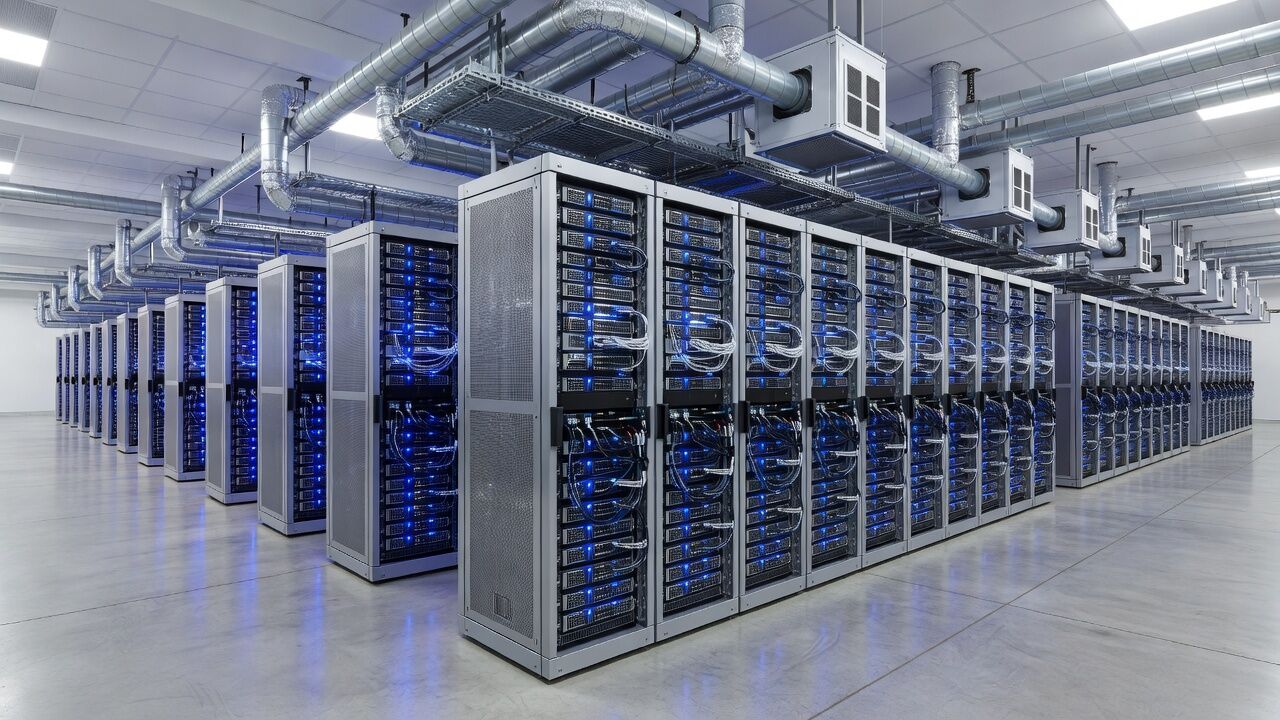
Mistral AI, the three-year-old French startup positioned as Europe's answer to OpenAI, just took the most concrete step yet. It secured $830 million in debt financing from a seven-bank consortium including BNP Paribas, Credit Agricole CIB, HSBC, and MUFG to build its own AI data center near Paris. The facility at Bruyeres-le-Chatel will house 13,800 Nvidia GPUs with a 44-megawatt power capacity and came online in the second quarter of 2026.
This is not a side project. It is a strategic pivot. Mistral has until now relied entirely on cloud providers — Microsoft Azure, Google Cloud, and CoreWeave — for compute. By moving from tenant to landlord of its own stack, the company is signalling that European AI cannot afford to leave its infrastructure in someone else's hands.
The Numbers Behind the Move
Founders Arthur Mensch, Guillaume Lample, and Timothee Lacroix — all former DeepMind and Meta researchers — have built Mistral into Europe's highest-valued AI startup at a $13.8 billion valuation after its September 2025 Series C. Total equity raised exceeds $3 billion. The company now employs around 860 people.
The revenue trajectory makes the infrastructure bet credible. Mistral's annual recurring revenue crossed $400 million in February 2026, up from $20 million one year prior, with a stated target of $1 billion by end of year. That kind of growth demands compute capacity that renting alone cannot guarantee at scale or predictable pricing.
The debt facility funds the nearer-term Bruyeres-le-Chatel facility, but Mistral is thinking bigger. In March 2026, it joined MGX, Bpifrance, and Nvidia to announce plans for a 1.4-gigawatt AI campus near Paris, with construction starting in the second half of 2026 and operations by 2028. That is an entirely different scale — enough power for roughly 1.4 million homes.
Why Debt Instead of Equity
Mistral chose bank debt over another equity round, and that choice tells you something. The founders believe revenue will service the debt without diluting shareholders. More importantly, Mistral's lenders see infrastructure as an asset class with independent value. The data center has residual value. The GPUs have resale value. Banks understand physical assets in a way they do not always understand AI model valuations.
This mirrors the CoreWeave playbook in the US — using debt to pre-buy GPU capacity and data center space, then leasing at a margin. CoreWeave's revenue backlog now exceeds $55 billion with $30 billion in planned 2026 capex. Mistral is running the same model, but captive, and at European scale.
The Sovereign Infrastructure Crunch
Mistral's data center bet sits inside a broader European reckoning. Gartner forecasts European sovereign IaaS spending will rise 83 percent in 2026, from $6.9 billion to $12.6 billion, as part of a global sovereign cloud market valued at $80 billion. The European Commission's Cloud and AI Development Act, adopted June 3, aims to at least triple the bloc's data center capacity within five to seven years. The EU AI gigafactory programme adds 20 billion euros in public funding for large-scale compute facilities.
Public money is moving. In April, the Commission awarded a 180-million-euro framework to four European providers for sovereign cloud services, proving that Brussels will back its sovereignty rhetoric with real contracts.
The problem is physical delivery. Onnec, a data center infrastructure specialist, surveyed 300 senior operators across the UK, Ireland, and the Nordics between May and June 2026. The headline: 74 percent see sovereign cloud as a major opportunity. The catch: power availability, planning delays, rising build costs, supply constraints, and skills shortages are blocking delivery. As Matt Salter, global head of data centers at Onnec, put it: "Operators need to stop thinking about sovereignty as just a policy issue. It is an infrastructure issue."
The Grid Does Not Care About Policy
The hardest constraint is not money or regulation. It is the physics of power delivery. Europe's grid was never designed for AI data center load profiles, and the gap is widening fast.
Denmark's Energinet froze all new data center grid connections in March 2026 after its interconnection queue hit 60 gigawatts — nine times the country's peak electricity demand. Ireland's grid operator has effectively halted new large-load connections in Dublin since 2021. The Netherlands imposed a moratorium in Amsterdam years earlier. A single 500-megawatt AI campus adds more load than a medium European city consumes in a decade. When ten such campuses land in the same grid area within three years, planning frameworks break.
The supply chain compounds this. Transformers have 18-month to three-year lead times. High-voltage cable is backlogged to 2028. Total global data center spending is projected at $475 billion in 2026, up 42 percent from 2024, against a supply chain dimensioned for a fraction of that demand.
What This Means
Three takeaways for operators and investors.
First, owning infrastructure is becoming a competitive moat. Mistral's move from tenant to operator is the direction of travel, not an outlier. Companies that control their compute stack can guarantee capacity and offer data residency in ways renters cannot. Data center assets will become standard on AI company balance sheets.
Second, grid-constrained markets will bifurcate. Markets that can deliver power and approvals within AI deployment timelines capture the investment. Markets that cannot will lose projects to northern Scandinavia, southern Europe, and regions with interconnection headroom. The queue is now a strategic weapon, and operators who secured early positions are locking competitors out.
Third, retrofitting live data centers for higher-density AI racks is one of the industry's hardest operational challenges. Operators who can execute retrofits at scale will have pricing power. Those who can only build greenfield face timelines stretching into the next decade.
The Bottom Line
Mistral's $830 million debt raise is a bet on two things: that European AI demand is real and growing, and that the infrastructure to serve it cannot be imported. The company is saying that if the market will not build the data centers Europe needs, Mistral will build them itself.
That bet is credible but not safe. The grid constraints, supply chain bottlenecks, and planning delays documented by Onnec will affect Mistral's buildout as much as anyone else's. The 1.4-gigawatt campus with MGX and Nvidia will test whether Europe can execute AI infrastructure at hyperscale, or whether policy ambitions remain permanently ahead of physical delivery.
For now, the direction is clear. Sovereign IaaS spending growing at 83 percent. A regulatory framework finally putting contracts behind policy. And a homegrown AI champion putting its money where its mouth is. The infrastructure question will decide whether Europe's AI story is genuine sovereignty or just dependency in different packaging.
— Allan Ali, Sylt.ing
===SUMMARY===Europe's AI infrastructure race hits a critical juncture as Mistral AI secures 830 million dollars in debt to build its own Paris data center. With sovereign cloud spending rising 83 percent but grid constraints threatening delivery, the infrastructure gap has never been wider.
 Spanish
 English
 Arabic
 French
 Portuguese
 Deutsch
 Turkish
 Dutch
Dutch
 Italiano
 Russian
 Romaian
 Portuguese (Brazil)
 Greek
Greek