


 Monetization
AI Is Taking Over Video Games — Here's How Creators Can Use It
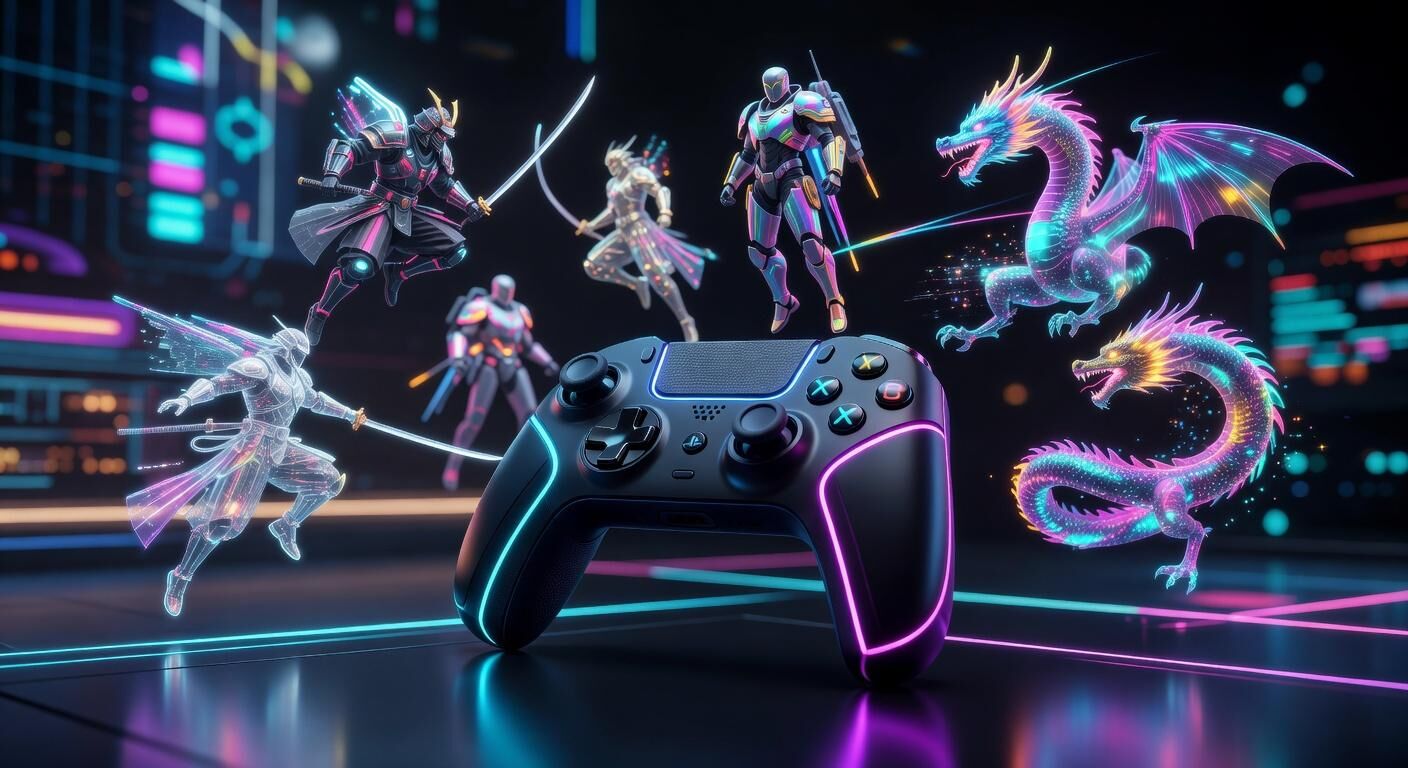
AI Revolution in Gaming: Matthew Berman's Take on Procedural Worlds and Smart NPCs
In the fast-evolving landscape of game development, artificial intelligence is no longer a futuristic concept—it's a practical tool reshaping how worlds are built and stories are told. Tech analyst Matthew Berman recently dove deep into this transformation in one of his signature breakdowns, highlighting how AI is moving beyond simple automation to enable truly dynamic experiences. From algorithmically generated landscapes to NPCs that learn and adapt in real time, developers are leveraging AI to cut costs, boost creativity, and deliver replayability that was once impossible. This shift isn't just technical; it's redefining player expectations in 2024 and beyond.
Procedural Content Generation: Infinite Worlds at Scale
Procedural content generation (PCG) has been a staple in games like Minecraft and No Man's Sky for years, but AI is taking it to new heights. Berman points out how modern machine learning models can now create vast, coherent environments that feel hand-crafted rather than random. Tools powered by generative AI analyze player data and design rules to produce levels, quests, and even entire ecosystems tailored to specific genres or difficulty curves.
For instance, developers are using diffusion models and reinforcement learning to generate terrain that respects physics and narrative logic. Imagine an open-world RPG where every playthrough features unique biomes, hidden dungeons, and side stories that evolve based on collective player behavior. This approach slashes development time—traditionally a multi-year endeavor—while allowing indie studios to compete with AAA titles. Berman emphasizes that the real breakthrough lies in controllability: AI no longer spits out chaotic output but refines it through iterative prompts, much like how artists use Midjourney for concept art today.
Intelligent NPCs: From Scripted Lines to Living Characters
Where procedural generation handles the "where," AI is revolutionizing the "who" through intelligent non-player characters. Traditional NPCs follow rigid dialogue trees that break immersion the moment players stray off-script. Berman highlights emerging systems where large language models (LLMs) power NPCs with memory, personality, and emotional intelligence.
Games like Inworld AI-integrated titles or experimental mods for engines like Unity now let characters remember past interactions, form relationships, and even improvise responses using real-time inference. A merchant might recall your previous haggling tactics and adjust prices accordingly, or a companion could develop unique quirks based on shared adventures. This creates emergent storytelling that feels organic and personal. The implications are profound for narrative-driven genres—RPGs, adventures, and simulations—where replay value skyrockets because no two conversations unfold the same way.
Beyond the Basics: AI in Design, Balancing, and Player Engagement
Berman's exploration extends past core mechanics to how AI assists the entire pipeline. Automated playtesting uses AI agents to simulate thousands of hours of gameplay, identifying balance issues or bugs far faster than human QA teams. Generative tools also aid in asset creation, from textures to voice lines synthesized with emotional nuance. On the player side, adaptive difficulty systems powered by AI analyze behavior patterns to keep challenges engaging without frustration.
Current examples include Ubisoft's experiments with AI-driven crowd simulation and smaller studios integrating GPT-like models for quest generation. These advancements align perfectly with the growing indie scene, where resources are limited but ambition is high.
Challenges and the Road Ahead
Of course, this revolution comes with hurdles. Hallucinations in AI-generated content can lead to inconsistent worlds, while ethical concerns around data privacy and creative ownership loom large. Berman stresses the need for hybrid approaches—AI as a collaborator rather than a replacement—to preserve human vision. Looking forward, integration with multimodal models could enable fully voice-actuated worlds or VR experiences where environments respond to gestures and emotions.
As AI tools become more accessible through platforms and marketplaces, the barrier to entry for innovative game design continues to drop. Whether you're a seasoned developer or an aspiring creator experimenting with new tech, the message is clear: the games of tomorrow will be smarter, more expansive, and infinitely more personal.

 French
 English
 Arabic
 Spanish
 Portuguese
 Deutsch
 Turkish
 Dutch
Dutch
 Italiano
 Russian
 Romaian
 Portuguese (Brazil)
 Greek
Greek