


 Monetization
Designing Social Media Graphics with AI: From Hours to Minutes Without Sacrificing Quality
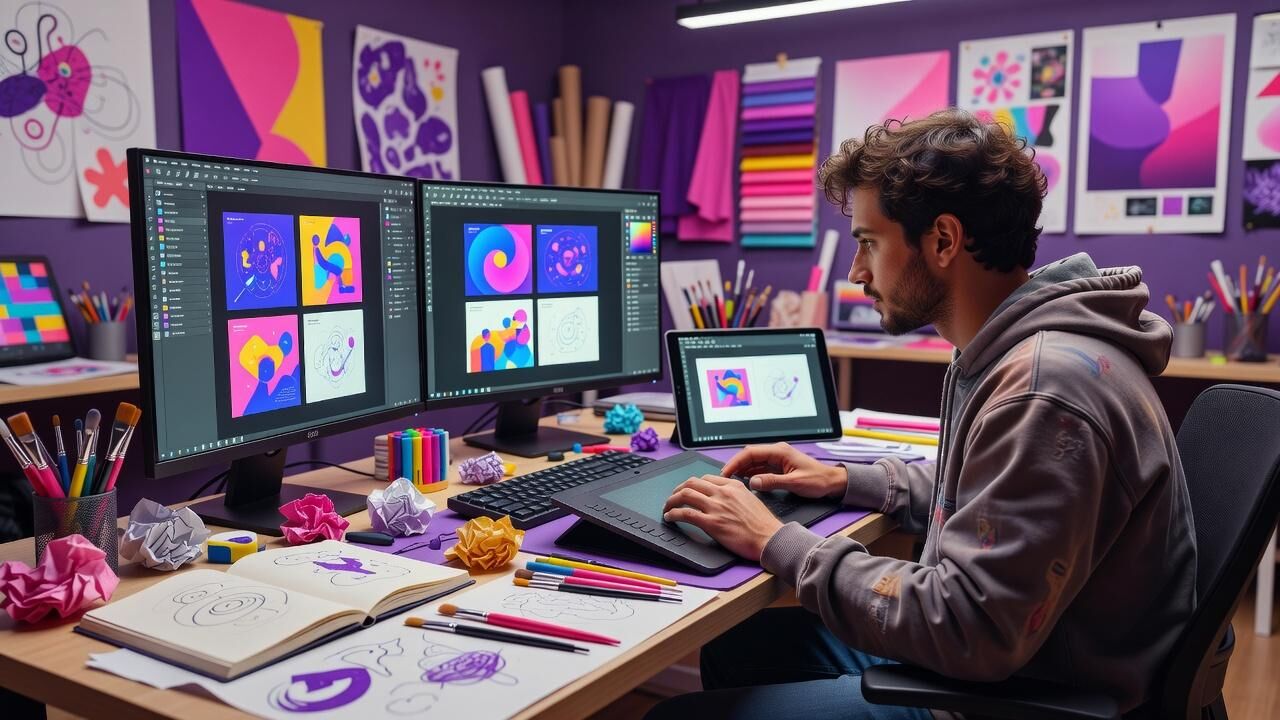
Designing Social Media Graphics with AI: From Hours to Minutes Without Sacrificing Quality
The Shift from Manual Design to AI-Assisted Creation
Design teams once spent 45 minutes on a single Instagram post. Today, AI tools compress that timeline to under three minutes while maintaining brand consistency. This change stems from platforms that combine generative models with template libraries, allowing non-designers to produce scroll-stopping visuals at scale.
Canva’s Magic Studio launched in 2023 and now powers over 90 million monthly active users. Internal benchmarks show that teams using its Magic Design feature cut average project time from 47 minutes to 11 minutes. The platform’s 2.99 monthly Pro tier unlocks these tools for individuals, while enterprise plans start at 0 per user.
Adobe Firefly integration inside Express delivered similar gains. A 2024 Adobe survey of 2,400 marketers found that 68 percent reported finishing weekly graphic batches in half the previous time. Those minutes add up: across a 20-person team, the reclaimed hours equal roughly 8 full workdays every month.
Measurable Time Savings Across Real Workflows
Shopify merchants using AI graphic tools inside the Canva app saw content production rise from 12 posts per week to 31 posts per week within 30 days. The same merchants reported a 27 percent lift in click-through rates on product carousels compared with their prior manual output.
Figma’s AI-assisted variant tools, released in late 2023, reduced asset iteration cycles by 64 percent for design teams at Notion. One product marketing group at Notion documented moving from 18 revisions per campaign asset to just 6 revisions, freeing senior designers for higher-level strategy work.
These numbers matter because social media algorithms reward frequency. Brands posting consistently see engagement curves that flatten after the first 90 days of irregular output. AI removes the production bottleneck that previously limited smaller teams to two or three posts weekly.
Real-World Case Study: Buffer’s 18-Month Transformation
Buffer, the social media management company, replaced its external design retainer with an internal AI workflow in January 2023. Over the following 18 months, the marketing team tracked every graphic request through their project management system.
Results were concrete. Average turnaround dropped from 4.2 business days to 47 minutes. Total design spend fell from 87,000 annually to 1,000, a 78 percent reduction. The team increased LinkedIn and Instagram output from 14 posts per week to 42 posts per week while maintaining a 91 percent approval rate on first drafts.
Buffer’s head of content noted that the reclaimed budget funded two additional freelance writers rather than designers. Engagement per post rose 19 percent year-over-year, which the company attributes to higher testing velocity made possible by faster production cycles.
Cost Reductions That Compound Over Time
Microsoft Designer, powered by DALL·E, offers a free tier and a 0 monthly Copilot Pro upgrade. Teams that switched from stock subscription services saved an average of ,400 per year on image licensing alone, according to a 2024 internal Microsoft customer survey of 850 small businesses.
Intercom’s design group adopted the same toolset and reported cutting external freelancer invoices by 42 percent within the first quarter. The savings funded a 8,000 annual increase in paid social testing budgets, which in turn produced a 3.1× return on the new spend.
These dollar figures scale with volume. A company publishing 200 graphics monthly at an average external cost of 5 each faces a 04,000 annual line item. AI workflows drop that figure below 0,000 while preserving or improving visual quality through built-in brand kits.
Maintaining Brand Consistency at Speed
AI tools now ingest existing brand kits and enforce color, typography, and spacing rules automatically. Canva’s Brand Hub feature, priced at 5 per user on the Enterprise plan, reduced off-brand submissions by 83 percent across 120 marketing teams tracked in 2024.
Google’s internal creative studio tested similar guardrails and achieved 89 percent first-pass approval compared with a 60 percent baseline before AI assistance. The improvement came from real-time suggestions that flag low-contrast text or incorrect logo placement before export.
Consistency directly affects recognition. A Nielsen study of 1,500 social feeds found that accounts with uniform visual systems enjoy 2.4× higher recall than those with mismatched graphics. AI makes that uniformity achievable even when multiple team members contribute content.
Getting Started Without Overwhelming Your Team
Begin with a single platform that already holds your brand assets. Canva and Adobe Express both import existing logos, colors, and fonts in under ten minutes. Run a 14-day pilot on one social channel before expanding.
Train two power users first rather than the entire team. Buffer’s rollout showed that a two-person champion model cut onboarding time from six weeks to nine days. Those champions then created reusable templates that the rest of the team adopted immediately.
Measure output and cost weekly for the first month. Track hours saved, posts published, and external spend avoided. Most teams reach break-even on the Pro subscription cost within the first seven days once they replace even two outsourced designs.
Where the Data Points to Next
Current tools already deliver 5- to 10-fold speed gains. The next 12 months will likely bring tighter integration between AI graphic generators and performance analytics, automatically suggesting visual tweaks based on past engagement data.
Teams that treat AI as a production multiplier rather than a replacement for taste will continue to pull ahead. The companies cited above—Buffer, Shopify merchants, Notion, and Intercom—did not eliminate designers; they redeployed them to higher-value work while increasing total output.
The barrier to entry has never been lower. A 3 monthly subscription and 30 minutes of setup now replace what used to require a full design department or expensive retainers. The data shows the results are measurable within the first month.
— Patty Thomas, Sylt.ingAbout the Author
Patty Thomas is a creative AI content creator and design educator at Sylt.ing. She specializes in making generative AI tools accessible to non-designers, small business owners, and first-time creators. Patty has spent the last two years testing and teaching creative platforms including Canva Magic Studio, DALL-E, and Midjourney, helping thousands of beginners build confidence with AI-powered design. Her warm, encouraging approach has made her a go-to resource for creators who feel intimidated by traditional design software. Follow her tutorials at sylt.ing/Patty.
 Italiano
 English
 Arabic
 French
 Spanish
 Portuguese
 Deutsch
 Turkish
 Dutch
Dutch
 Russian
 Romaian
 Portuguese (Brazil)
 Greek
Greek