


 Monetization
Google Took 6,000 Community Contributions, Then Locked the Door
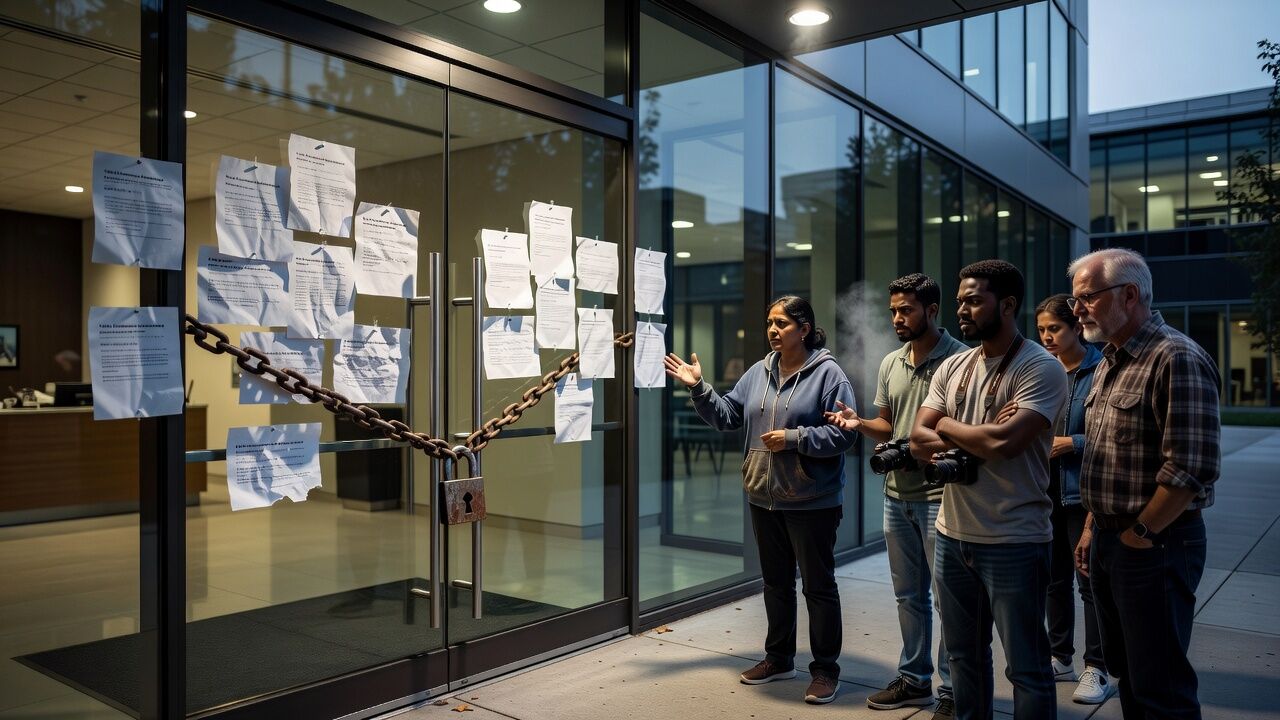
Google Took 6,000 Community Contributions, Then Locked the Door
Pour one out for Gemini CLI. On June 18, 2026, Google pulled the plug on free and individual paid access to its open-source AI terminal tool — the one the company launched with splashy blog posts about community and collaboration, the one that accumulated over 100,000 GitHub stars and more than 6,000 merged pull requests from external contributors over twelve months. The replacement is Antigravity CLI: closed-source, Go-based, incomplete at launch, and available only through a proprietary channel no contributor voted on.
The developer response has been sharp, sustained, and entirely predictable to anyone who has watched Google kill developer tools before. But this one hurts differently — because it is not just another product sunset. It is a pattern the open-source community has seen accelerating in the AI era, and Gemini CLI is Exhibit A.
The Numbers That Tell the Story
Gemini CLI launched in June 2025 under the Apache 2.0 license. TypeScript-based, terminal-first, free to use — Google positioned it as a direct open-source competitor to Claude Code and GitHub Copilot's CLI integrations. The pitch was straightforward: inspect the code, contribute improvements, run it locally, access Gemini models through a shared backend.
Over the following year, the community responded at scale. One hundred thousand GitHub stars. Six thousand merged pull requests. Hundreds of individual contributors submitting everything from bug fixes to full feature implementations. Google cited those contributions in internal metrics as evidence of the project's success.
Then on May 19, 2026, the company announced at Google I/O that on June 18, Gemini CLI would stop serving requests for Google AI Pro, Ultra, and free-tier users. Individual Gemini Code Assist subscribers were also cut off. Enterprise customers with Standard or Enterprise licenses? They keep access indefinitely. Gemini CLI stays alive — just not for the people who built it.
The Bait and Switch Nobody Voted For
Developer Andrea Alberti had a 27-commit pull request merged the same day as the shutdown announcement. Her question, posted publicly on GitHub: "Essentially working for free on a code base that will only be used in enterprises?"
That is the core of it. Google did not change the license. The Apache 2.0 repository remains publicly accessible. But an open-source license governs code, not API access. It says nothing about authentication tokens, model quotas, or the cloud infrastructure that turns source code into a working tool. Gemini CLI's code without the Google backend is an archive — forkable, theoretically, but useless in practice without independent access to a compatible large language model.
The Hacker News threads tell the same story from every angle. Commenters pointed out that Google's own announcement cited community contributions as evidence of the project's success, and then used that success to justify consolidating into a closed-source replacement that excludes the community. FOSS Force's Christine Hall, who has covered open source since 2002, called it "a new twist on a game that's become increasingly common in recent years" — noting that the sunsetting effectively removes only the open-source part of the equation, because enterprise customers keep both tools while everyone else gets a locked door.
The community now has a name for it: the bait and switch. Open-source release to attract labor. Community builds the product. Enterprise captures the value. Community gets a closed replacement. It is not new. But the scale of it — 100,000 stars, 6,000 PRs, a year of community labor folded into a product that then excludes the contributors — is a new watermark.
What Antigravity CLI Actually Ships
Antigravity CLI is not a port. It is a full rewrite in Go, invoked with the agy command. Google claims it is faster, supports native asynchronous multi-agent workflows, and shares an underlying architecture with the Antigravity 2.0 desktop application. The company's own documentation acknowledges it "won't have 1:1 feature parity right out of the gate."
Subagents, hooks, and plugin imports from Gemini CLI are supported at launch. Other features are still in progress, with no timeline. Meanwhile, users on the Antigravity CLI issues tracker reported exhausting their weekly quota within roughly 2,000 lines of generated code — a steep downgrade from Gemini CLI's previous 1,000-request daily free tier. The quota refreshes weekly now, not daily. Your week's worth of work fits in roughly two productive coding sessions.
The Antigravity CLI GitHub repository contains a changelog, a readme, and a demonstration GIF. No source code. Developers noticed the absence within hours of the announcement.
Enterprise Exceptions Expose the Real Logic
The detail that strips away any pretense of technical necessity: enterprise customers get to keep both. Gemini CLI continues receiving model updates, bug fixes, and security patches for paying enterprise users. The consolidation Google describes as an architectural imperative for free users is, for paying customers, entirely optional.
This is not about unifying backends. It is about moving individual developers — the expensive ones who consume API tokens without generating enterprise contract revenue — onto a separate, more restrictive track. The free-tier developer contributed code, tested features, filed bug reports, and generated the community momentum that made the tool attractive to enterprise buyers. Then, at the moment the project reached maximum community investment, the free tier was turned off.
The pattern has a name in the developer community, as noted. But it also has a specific structural cause: when enterprise licensing generates the overwhelming majority of a tool's revenue, individual users are not customers. They are lead generation. And when the lead gen stops being worth the infrastructure cost, the on-ramp closes.
What Apache 2.0 Actually Protects (and What It Does Not)
A lot of the discussion around this story focuses on the license, and that is the wrong conversation. Apache 2.0 protects the code. It protects the right to fork, modify, and redistribute. What it does not protect is any guarantee that the tool will remain usable for the purpose for which it was designed.
Gemini CLI's codebase is still Apache 2.0. A determined developer could set up a fork, provision their own model endpoint, rewrite the authentication layer, and keep using the terminal tool. The engineering effort to do that is non-trivial — it effectively requires access to a compatible LLM, which for most individuals means either paying another vendor or running local models that do not match Gemini's capabilities. The open-source code is there. The practical access is gone.
This distinction — between open-source code and open-source access — is the defining tension of AI-era developer tools. When the tool depends on a cloud-hosted model that only the vendor controls, the license on the source code is a secondary concern. The real gatekeeping is at the API level.
The Linux Foundation spotlighted this exact dynamic at Open Source Summit North America 2026, introducing a Model Openness Tool designed to identify this kind of pattern. Gemini CLI became the exhibit. The tool measures not just whether the code is open, but whether the infrastructure required to run it is independently replicable. By that measure, Gemini CLI was never meaningfully open — the community just did not see the wall until they hit it.
What This Means: The Trust Hole Just Got Deeper
The immediate impact is straightforward: developers who embedded Gemini CLI in CI/CD pipelines, GitHub Actions workflows, shell scripts, and cron jobs broke on June 18. Those on free or Pro tiers either migrated to Antigravity CLI (accepting a closed-source tool with tighter quotas and incomplete features), switched to Claude Code, Aider, or OpenCode, or lost a workflow they had depended on for months.
The broader impact is harder to quantify but more significant. Every corporate open-source project in the AI tooling space now carries a trust discount. Developers evaluating a new tool will ask not just "is the code open?" but "does the tool actually work without the vendor's permission?" The answer to the second question is increasingly no for AI developer tools that depend on vendor-controlled model APIs.
For Google specifically, the pattern compounds. Firebase free-tier changes. Cloud Run pricing restructures. Google Code shut down. Stadia sunset. The Gemini CLI shutdown is not an isolated incident in the developer community's memory — it is the latest data point in a longer arc. Google's developer tools division now carries a trust deficit that no individual product launch can fix, because the problem is structural, not tactical.
The engineers who contributed to Gemini CLI are not going to stop writing code. They are going to be more careful about whose infrastructure they build on top of. That is rational. It is also a long-term problem for any vendor whose growth strategy depends on community-driven adoption of platform-dependent tools. You cannot outsource your R&D to the open-source community and then lock them out of the result without paying a reputational cost that compounds with every repetition.
What Comes Next
The short-term migration wave has already happened. Claude Code picked up the largest share of displaced Gemini CLI users, based on community signals, with Aider and OpenCode splitting the open-source-first segment. Google's Antigravity CLI will likely improve over time — the company has resources and incentive to close the feature gap — but the trust deficit is not something a changelog can fix.
Longer-term, this episode accelerates a shift that was already underway: developers choosing tools based on exit cost, not just feature set. The question is no longer "what can this tool do?" but "what happens when the vendor changes the terms?" Tools that work with local models, use open protocols, or support provider-agnostic backends gain a structural advantage that no amount of vendor marketing can match.
The Gemini CLI story is not the first of its kind, and it will not be the last. But it should be the one that makes the community stop pretending that an open-source license on the code means open access to the tool. The code was never the bottleneck. The API was. And the API always belonged to Google.
— Allan Ali, Sylt.ing
 English
 Arabic
 French
 Spanish
 Portuguese
 Deutsch
 Turkish
 Dutch
Dutch
 Italiano
 Russian
 Romaian
 Portuguese (Brazil)
 Greek
Greek