


 Monetization
New York Just Hit Pause on AI Data Centers — and Every State Is Watching
New York Just Hit Pause on AI Data Centers — and Every State Is Watching
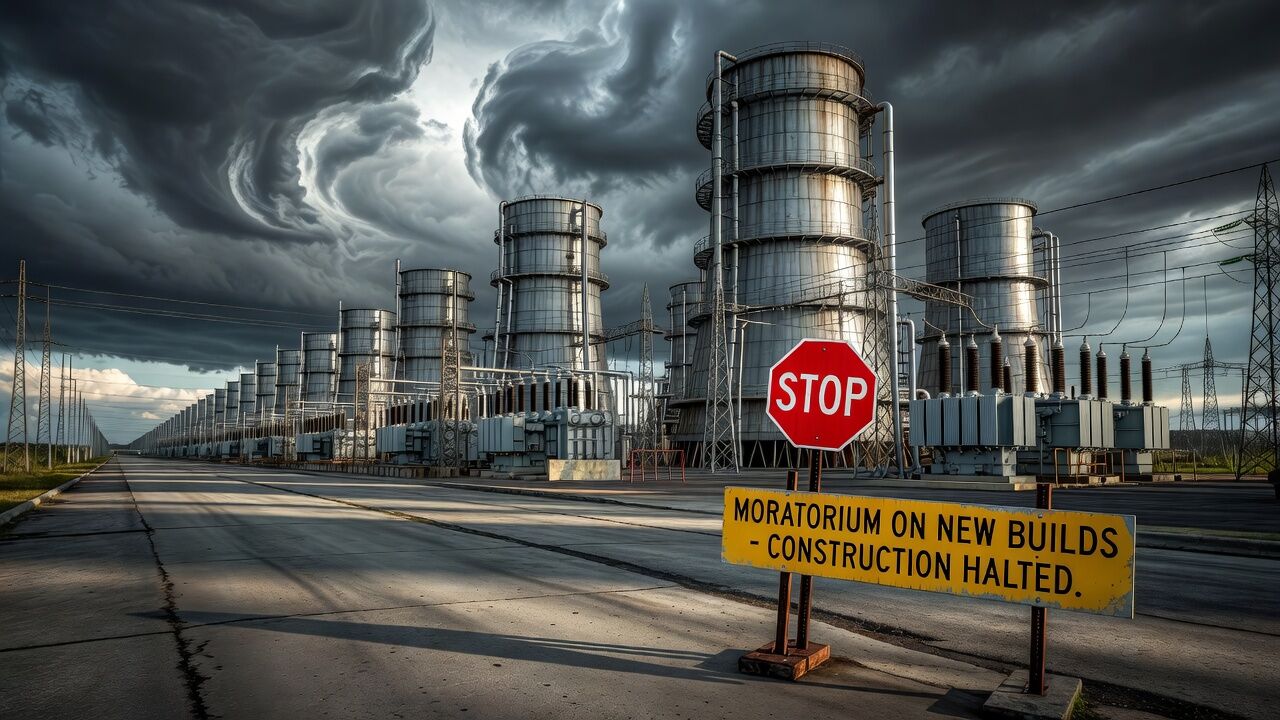
On July 14, 2026, New York Governor Kathy Hochul signed an executive order imposing the nation's first statewide moratorium on hyperscale data center construction. The one-year pause targets facilities larger than 50 megawatts — the exact class of infrastructure that powers the AI industry. It is a watershed moment for the hosting and cloud sector, and it will not stay contained to New York.
This is not a niche regulatory blip. It is the opening salvo in a national reckoning between AI's insatiable infrastructure appetite and the physical limits of the American power grid. If you run servers, build data centers, or depend on cloud compute — and let's be honest, if you're reading this, you do — you need to understand what just happened and where this is going.
The Executive Order: What Hochul Actually Did
Hochul's order imposes an immediate one-year moratorium on permitting new hyperscale data centers over 50 MW in New York state. The governor cited three specific drivers: grid capacity strain, rising residential electricity costs, and environmental impact. New Yorkers already pay 56 percent above the national average on price per kilowatt-hour — the fourth highest energy costs in the nation, according to the Empire Center, a nonpartisan think tank.
"These hyperscale AI data centers consume enormous amounts of power, truly threatening to outpace our grid's capacity, and they drive up costs for local ratepayers," Hochul said at the press conference. "I refuse to let those costs be passed on to New Yorkers who already pay too much for their utility bills."
The moratorium will remain in place for up to one year while the state develops a regulatory framework that includes: requiring data centers to contribute to a statewide grid fund, ending tax subsidies for the industry, enforcing local zoning and approval requirements, and imposing labor standards on construction projects. Once the framework is in place, Hochul said, the moratorium will be lifted.
This Is Not an Isolated Event — 10 States Now Have Active Restrictions
New York is the headline, but the trend is national. According to Data Center Moratoriums tracker, 10 states now have active bans or moratoriums on data center construction. Eight more have legislation advancing through their statehouses. Sixteen are under active discussion. That covers the overwhelming majority of the United States.
Georgia's HB 1012, introduced earlier this year, would bar counties and cities from issuing permits for new data centers until March 2027. New Jersey enacted its Data Center Fair Share Act on July 7, requiring facilities over 50 MW to commit to paying at least 85 percent of projected power costs for a decade. Virginia ended a budget standoff on June 30 by adding a first-of-its-kind energy consumption tax of $0.011 per kWh, capped at $600 million per year. Arizona and Illinois both paused data center tax incentives in June. Local moratoriums have hit Seattle, Spokane, Minneapolis, Reno, Baltimore County, and a dozen other municipalities.
The pattern is unambiguous. The era of unrestricted data center buildout is ending, not just in one state but across the country.
The Numbers Behind the Backlash: 565 TWh and Climbing
To understand why this is happening, follow the power. Gartner estimates that data center electricity consumption will hit 565 terawatt-hours in 2026, a 26 percent increase year over year. AI-optimized servers alone account for 31 percent of that — and Gartner projects they will surpass conventional servers by 2027.
Goldman Sachs projects AI will drive a 160 percent increase in data center power demand. US data centers already consume roughly 46,000 MW. S&P Global expects that figure to more than double between 2026 and 2030, driven almost entirely by high-density AI workloads. The primary constraint, S&P notes, is not generation capacity — it is grid connectivity. You cannot plug a 500 MW facility into a residential distribution line.
And the construction is already in motion. Microsoft unveiled a roughly 2 GW campus near Pecos, Texas with a co-located Chevron-built gas plant under a $9 billion power deal. Meta is spending $27 billion on its Hyperion build in Louisiana. xAI confirmed an 810,000-square-foot facility in Mississippi. Google committed $15 billion to a campus in Missouri. The pipeline is enormous, and the grid was not built for this.
Trump Entered the Chat — and the Politics Are Complicated
The day after Hochul signed the order, President Donald Trump posted on Truth Social, calling the moratorium "a terrible decision" that would hurt New York's economy and cede AI leadership to China. Politico reported that Trump's team reached out to New York business groups to coordinate opposition. Hochul pushed back, saying "we're doing it in a smart way" and that "other states should follow our lead."
This is the political fault line the data center industry now sits on. On one side: AI nationalism, the argument that slowing domestic infrastructure cedes ground to Beijing. On the other: ratepayer protection, grid reliability, and environmental justice. Neither side is wrong, and that tension is going to define hosting policy for the next five years.
Hochul's framing is instructive. She explicitly said New York is not anti-technology: "People aren't afraid of technology, they're just afraid of being left behind by it." But she also made clear that the blank-check era is over. Data centers will have to bring their own power, pay a premium for grid access, or both.
What This Means for Hosting, Cloud, and DevOps
If you run infrastructure, here is how this hits your bottom line — and it is not theoretical.
New supply is now uncertain. New York was a prime market for new data center builds. The North Virginia market is already saturated. If New York, Georgia, Maryland, and New Jersey all restrict permitting simultaneously, the available build locations shrink dramatically. That means existing capacity in unconstrained markets — Texas, the Midwest, the Mountain West — will command a premium.
Power costs are going up everywhere. Even in states that are not imposing moratoriums, the regulatory response is raising costs. New Jersey's Fair Share Act, Virginia's energy consumption tax, Oregon's new data center power rate law — these are not moratoriums but they function the same way: they make power more expensive for operators, which flows downstream to every cloud customer.
The nuclear pivot is accelerating. Hyperscalers have already signed 9.8 GW in small modular reactor deals according to SMR Intel's tracker. Microsoft, Amazon, Google, and Meta are all signing direct nuclear power purchase agreements. If you are planning infrastructure for 2028-2030, you should be thinking about where the SMR-capable sites are. They will be the next generation of data center hubs.
Self-generation will become a competitive moat. The data centers that survive the regulatory wave will be the ones that can bring their own power. Chevron-Microsoft in Texas is the template. Expect more gas turbine, fuel cell, and on-site solar plus battery configurations on data center campuses. If your hosting provider cannot demonstrate a power strategy beyond "buy from the grid," that is now a risk factor.
The Bottom Line
New York's moratorium is the signal event of 2026 for infrastructure operators. It validates what many of us in the industry have been saying for two years: the AI buildout is hitting hard physical constraints, and the policy response is just getting started. Ten states with active restrictions, 16 more discussing them, and the hyperscalers spending $700 billion in capex this year alone — those lines are on a collision course.
The hosting companies that navigate this will be the ones that plan for power scarcity, not abundance; that build in secondary markets instead of fighting for permits in restricted zones; and that treat regulatory intelligence as a core operational capability, not an afterthought.
New York hit pause. The rest of the country is deciding whether to follow. If you are building infrastructure in 2026, you need to be watching every statehouse, not just your own.
— Allan Ali, Sylt.ing
Sources: New York Governor's Office press conference (July 14, 2026); ABC News; Data Center Moratoriums tracker (datacenterbans.com); Gartner AI Infrastructure Forecast 2026; Goldman Sachs Research; S&P Global Market Intelligence; SMR Intel nuclear deal tracker; Politico; CNBC; Empire Center energy cost data.
===SUMMARY===New York Governor Kathy Hochul signed the nation's first statewide moratorium on hyperscale AI data centers over 50 MW, reflecting a national backlash against the infrastructure strain from AI's insatiable power demand. With 10 states imposing active restrictions and hyperscalers spending $700 billion on AI infrastructure in 2026, the hosting industry faces a structural shift: power is now the bottleneck, regulation is tightening, and self-generation is becoming a competitive necessity.
 Italiano
 English
 Arabic
 French
 Spanish
 Portuguese
 Deutsch
 Turkish
 Dutch
Dutch
 Russian
 Romaian
 Portuguese (Brazil)
 Greek
Greek