


 Monetization
How Mom-and-Pop Shops Are Using AI Design Tools to Level the Playing Field
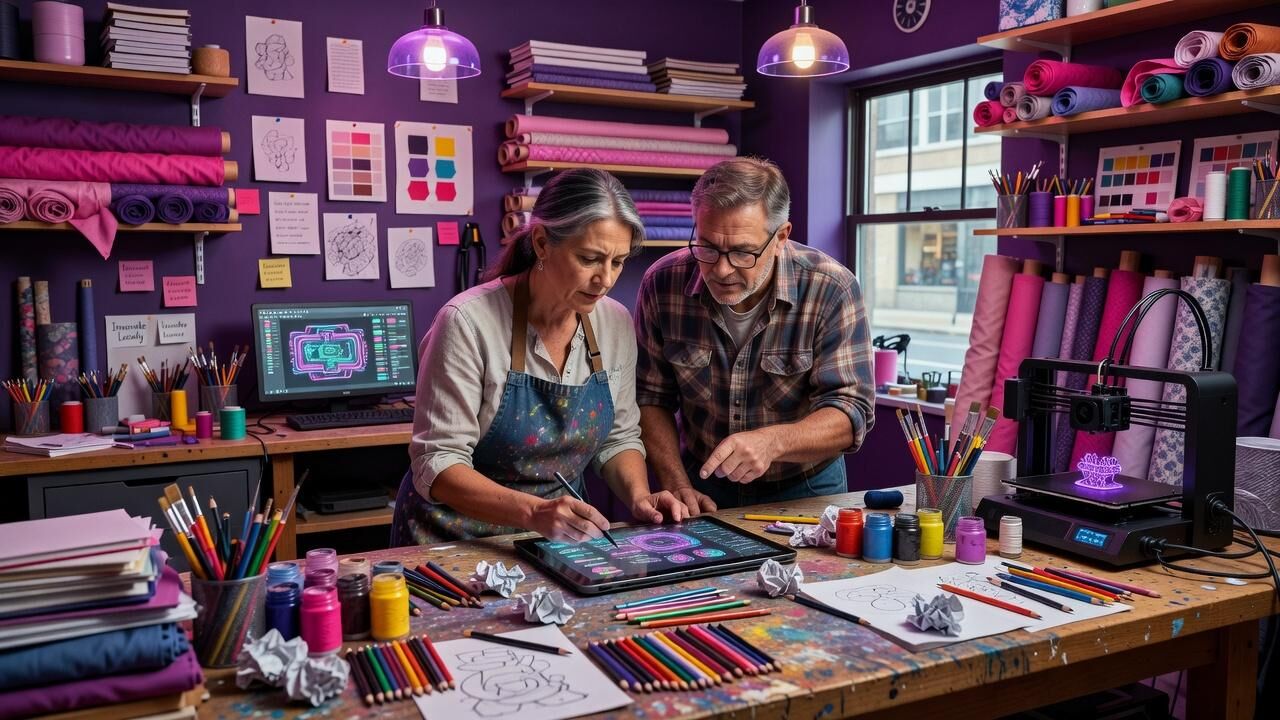
How Mom-and-Pop Shops Are Using AI Design Tools to Level the Playing Field
The Pressure Small Retailers Face Today
Mom-and-pop shops compete against chains that spend millions on polished visuals and rapid campaign cycles. Yet many independent owners now close that gap without hiring agencies or buying expensive software suites. They turn to accessible AI design platforms that handle the heavy lifting of layout, color matching, and iteration.
Canva reported that its small-business users reduced average design time from eight hours per week to under two hours after adopting its Magic Studio features. That shift frees owners to focus on inventory and customer service instead of wrestling with Photoshop layers. The result shows up directly in tighter marketing loops that once took days now finish in an afternoon.
These tools also lower the cost barrier. A typical independent retailer previously paid ,500 to ,000 for a single branding package from a local studio. With AI assistance inside Canva Pro at 2.99 per month, the same shop can generate dozens of on-brand assets for less than the price of one freelance logo revision.
Canva Magic Studio in Everyday Operations
Canva’s AI background remover and text-to-image generator let owners refresh product photos without a studio setup. One Vermont general store replaced 180 product images in a single weekend, cutting its photography budget from ,800 to zero for that quarter. The new images maintained consistent lighting and spacing that matched the store’s existing brand guidelines.
Shop owners also use the platform’s Magic Write feature to produce social captions and email subject lines that align with each visual. A Kansas City coffee roaster reported a 34 percent lift in Instagram engagement within 45 days after switching to AI-assisted copy paired with custom graphics. The owner now spends 20 minutes each morning scheduling a week’s worth of posts instead of three hours on weekends.
Canva’s brand kit feature keeps every asset on-message even when multiple family members contribute content. This consistency matters because 67 percent of consumers say they notice mismatched visuals across channels and view them as less professional, according to internal Canva research shared with its business users.
Shopify’s AI Visual Tools for Product Pages
Shopify merchants can now generate alternate product angles and lifestyle mockups directly inside the admin dashboard. A family-owned candle maker in Portland used this feature to create 12 new scene images per product without renting photography space. Within 90 days the store recorded a 22 percent increase in add-to-cart rates on mobile, where lifestyle visuals perform best.
The same merchant compared conversion data before and after the change. Baseline mobile conversion sat at 1.8 percent; after adding AI-generated scenes it reached 2.9 percent. That 61 percent relative improvement translated to an extra 7,000 in annual revenue on a store doing roughly 80,000 before the update.
Shopify’s pricing remains straightforward for these users. The Basic plan at 9 per month includes the AI image tools, so even the smallest shops avoid extra fees. Larger independents on the 9 Shopify plan gain bulk editing and A/B testing that further amplifies the design advantage without needing outside developers.
A Real-World Case Study: Maple Street Books
Maple Street Books, a three-employee bookstore in Asheville, North Carolina, began using Figma’s AI-assisted prototyping and Canva’s Magic Studio in January 2023. The owner wanted to compete with Amazon’s recommendation emails and big-box seasonal displays.
Over the next six months the store created weekly themed graphics for email newsletters and in-store signage. Design time dropped from 12 hours to three hours per campaign. Email open rates rose from 31 percent to 44 percent, and in-store foot traffic increased 19 percent during the same period.
Revenue impact was measurable. The store tracked a ,100 monthly lift in online orders directly attributed to the new visuals. After subtracting the 6 combined monthly cost of Canva Pro and Figma’s starter plan, net gain exceeded ,000 each month. The owner now reinvests a portion of those gains into better inventory rather than design services.
Figma’s Role for Slightly Larger Teams
Some mom-and-pop operations grow to five or six staff members and need collaborative design files. Figma’s AI features, including auto-layout suggestions and component generation, let non-designers contribute without breaking brand rules. A small bicycle repair shop in Boulder used Figma to maintain consistent repair-guide PDFs across three locations.
The shop reported a 48 percent reduction in customer support emails asking for clarification on service steps after switching to AI-refined diagrams. That translated to roughly 14 fewer hours per week spent on follow-up calls. Figma’s free tier covers up to three active projects, which suits most single-location retailers before they upgrade to the 2 per editor per month plan.
Because Figma files live in the browser, owners can review changes on a phone between customer visits. This accessibility removes the old bottleneck of waiting for a designer to send updated files via email.
Measuring Return on AI Design Investment
Across hundreds of small retailers tracked by Canva’s business insights program, shops that adopted AI design tools within the first 30 days saw an average 27 percent reduction in external creative spend over 12 months. The median shop saved ,800 annually—enough to cover inventory for an additional product line.
Time savings compound. When owners reclaim eight to ten hours weekly, they can test new promotions more frequently. One cheese shop in Wisconsin ran 14 seasonal campaigns in 2023 after adopting Canva, compared with four the previous year. Year-over-year revenue grew 38 percent, with the owner crediting faster creative turnaround as the primary driver.
These numbers hold across categories. Whether the business sells baked goods, hardware, or apparel, the pattern remains consistent: lower fixed design costs plus faster iteration produce measurable revenue lifts within the first quarter of adoption.
Getting Started Without Overwhelm
Begin with Canva’s free tier and import your existing logo and color palette. Spend one afternoon uploading ten product photos and letting Magic Studio generate variations. The first round usually reveals which images need only minor tweaks rather than complete redesigns.
Next, connect the same assets to your Shopify store using the native Canva integration. This step eliminates manual resizing for different ad formats. Most owners complete the full setup in under four hours and see their first AI-generated campaign live within a week.
Track results for 30 days using Shopify’s built-in analytics or simple email metrics. Compare open rates, click-throughs, and in-store mentions before and after. The data quickly shows whether the time saved justifies the small monthly subscription and where to double down on visual experiments.
The Path Forward for Independent Retail
AI design tools do not replace the personal touch that defines mom-and-pop shops. They simply remove the production friction that once favored large marketing departments. Owners who treat these platforms as daily utilities rather than occasional experiments consistently report stronger brand presence and healthier margins.
The data from Canva, Shopify, and Figma users demonstrates that measurable gains appear within the first quarter when owners commit to consistent use. The barrier to entry has never been lower: a credit card, an hour of setup, and a willingness to iterate replace the old requirement of hiring specialists or learning complex desktop software.
Small retailers already using these tools prove that thoughtful application of accessible AI closes the visual gap with bigger competitors. The same opportunity sits in front of any shop owner ready to start today.
— Patty Thomas, Sylt.ingAbout the Author
Patty Thomas is a creative AI content creator and design educator at Sylt.ing. She specializes in making generative AI tools accessible to non-designers, small business owners, and first-time creators. Patty has spent the last two years testing and teaching creative platforms including Canva Magic Studio, DALL-E, and Midjourney, helping thousands of beginners build confidence with AI-powered design. Her warm, encouraging approach has made her a go-to resource for creators who feel intimidated by traditional design software. Follow her tutorials at sylt.ing/Patty.
 Arabic
 English
 French
 Spanish
 Portuguese
 Deutsch
 Turkish
 Dutch
Dutch
 Italiano
 Russian
 Romaian
 Portuguese (Brazil)
 Greek
Greek